

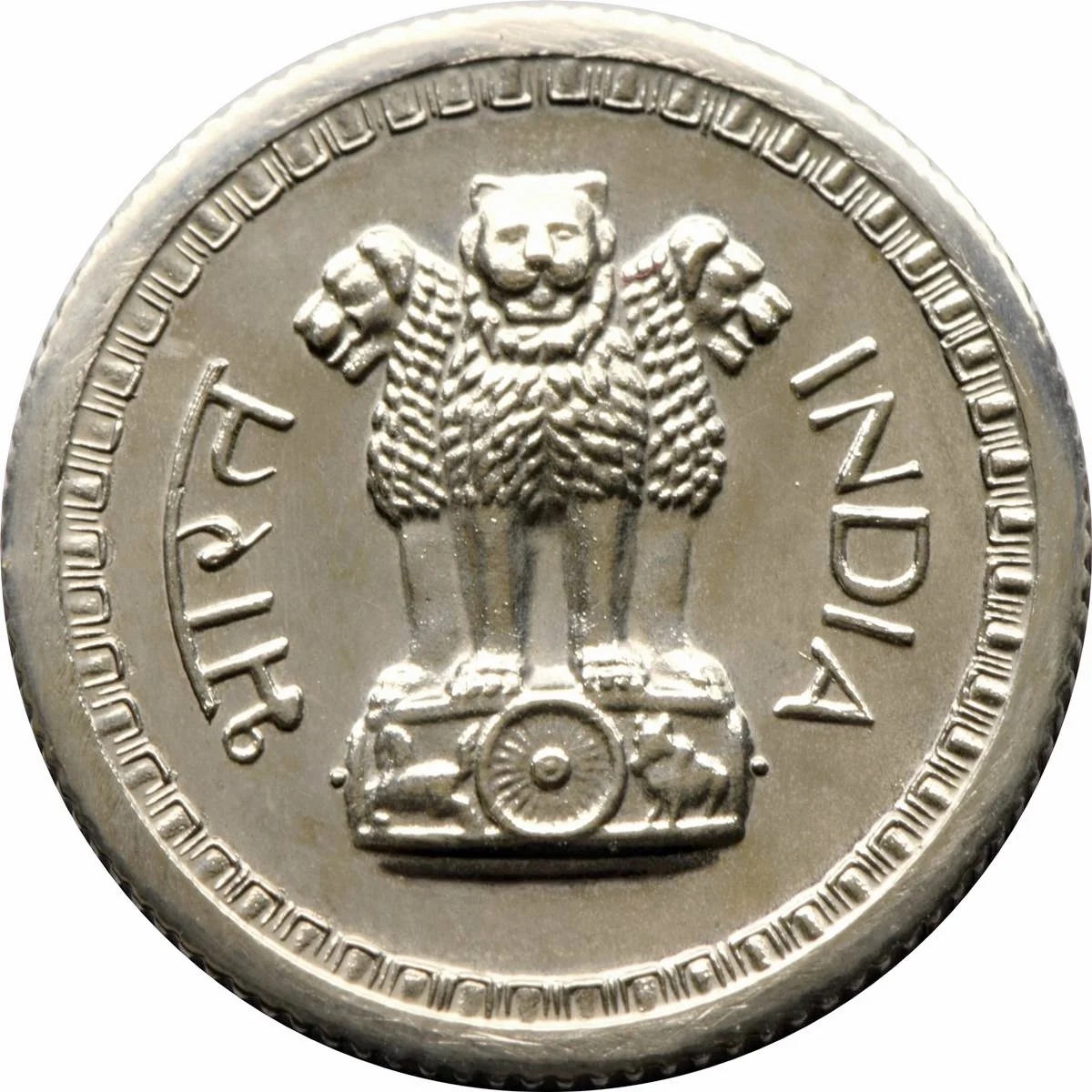


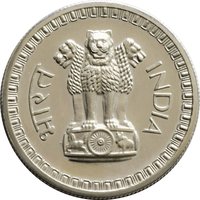
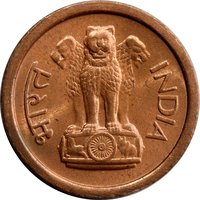
Obverse
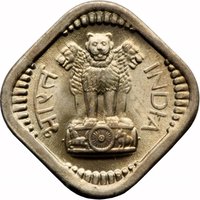
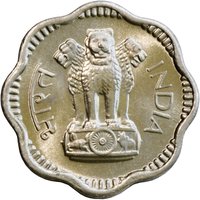
Description:
Lion Capital of Ashoka
Inscription:
भारत INDIA
Translation:
India
Scripts: Devanagari, Latin
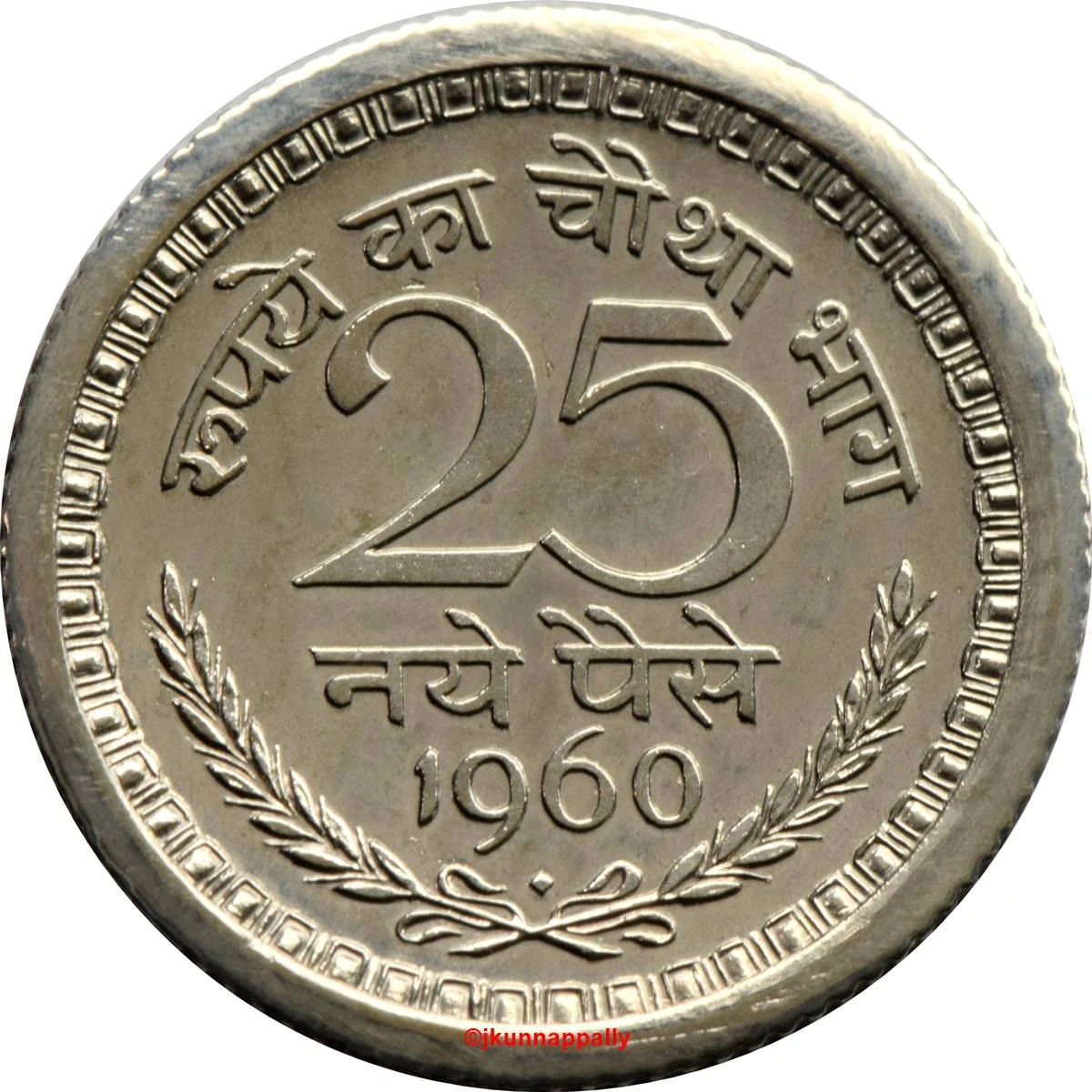
Reverse
Description:
Denomination and date below.
Inscription:
रूपये का चौथा भाग
25
नये पैसे
1960
25
नये पैसे
1960
Translation:
Quarter Rupee
25
New Paise
1960
25
New Paise
1960
Script: Devanagari
Language: Hindi
Edge
Reeded
Mints
| Name | Mark |
|---|---|
| Kolkata / Calcutta / Murshidabad | — |
| Mumbai / Bombay | ♦ |
Mintings
Historical background
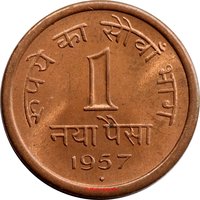
In 1957, India's currency situation was defined by the early challenges of a planned economy and the lingering effects of the 1956 decimalization. The previous year, the Indian rupee had been officially decimalized, moving from the complex system of 16 annas to 100 naye paise ("new paise"). While this modernizing reform was legislatively complete, 1957 was a year of practical consolidation, as the public and the financial system adapted to the new coins and accounting. The older annas remained in circulation but were gradually being phased out, creating a temporary dual system that required public education and administrative adjustment.
Economically, the period was marked by significant strain. India was in the midst of its Second Five-Year Plan (1956-1961), which heavily emphasized rapid industrialization and capital-intensive projects. This ambitious import-substitution strategy led to a growing balance of payments deficit, as imports of machinery and raw materials far exceeded exports. Consequently, foreign exchange reserves were under severe pressure, necessitating strict controls and import licensing. The rupee's external value was maintained under a fixed exchange rate regime tied to the pound sterling, but its internal stability was challenged by inflationary pressures stemming from deficit financing of the Plan.
Overall, the currency landscape of 1957 reflected a young republic navigating the transition from a colonial monetary legacy to a managed national system. While the decimal reform pointed toward a modern future, the immediate reality was one of foreign exchange scarcity, controlled convertibility, and the government's tight management of money supply to fund developmental goals, setting the stage for the persistent "foreign exchange gap" that would characterize subsequent decades.
Economically, the period was marked by significant strain. India was in the midst of its Second Five-Year Plan (1956-1961), which heavily emphasized rapid industrialization and capital-intensive projects. This ambitious import-substitution strategy led to a growing balance of payments deficit, as imports of machinery and raw materials far exceeded exports. Consequently, foreign exchange reserves were under severe pressure, necessitating strict controls and import licensing. The rupee's external value was maintained under a fixed exchange rate regime tied to the pound sterling, but its internal stability was challenged by inflationary pressures stemming from deficit financing of the Plan.
Overall, the currency landscape of 1957 reflected a young republic navigating the transition from a colonial monetary legacy to a managed national system. While the decimal reform pointed toward a modern future, the immediate reality was one of foreign exchange scarcity, controlled convertibility, and the government's tight management of money supply to fund developmental goals, setting the stage for the persistent "foreign exchange gap" that would characterize subsequent decades.
Series: 1957 India circulation coins
🌱 Very Common