

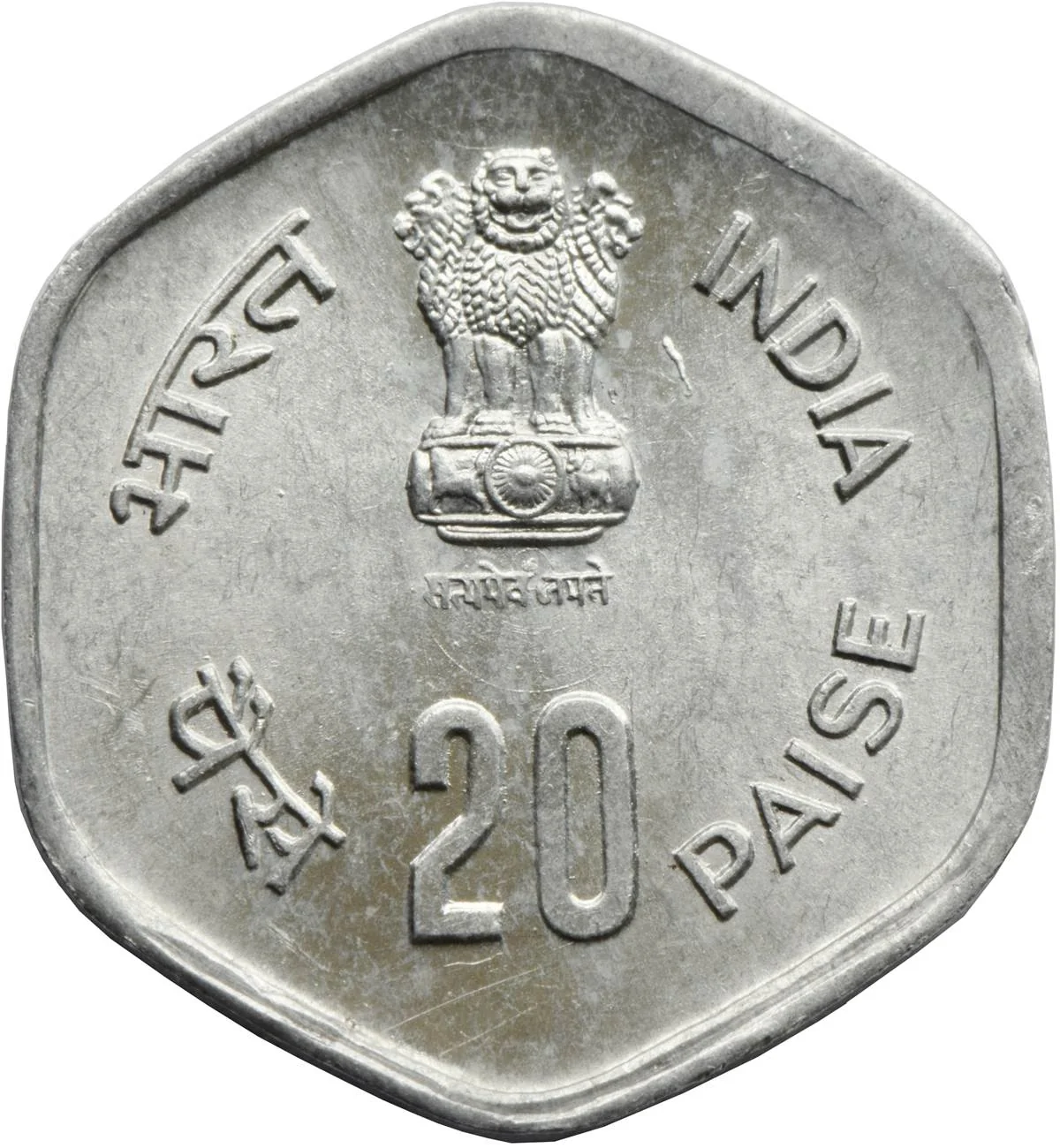
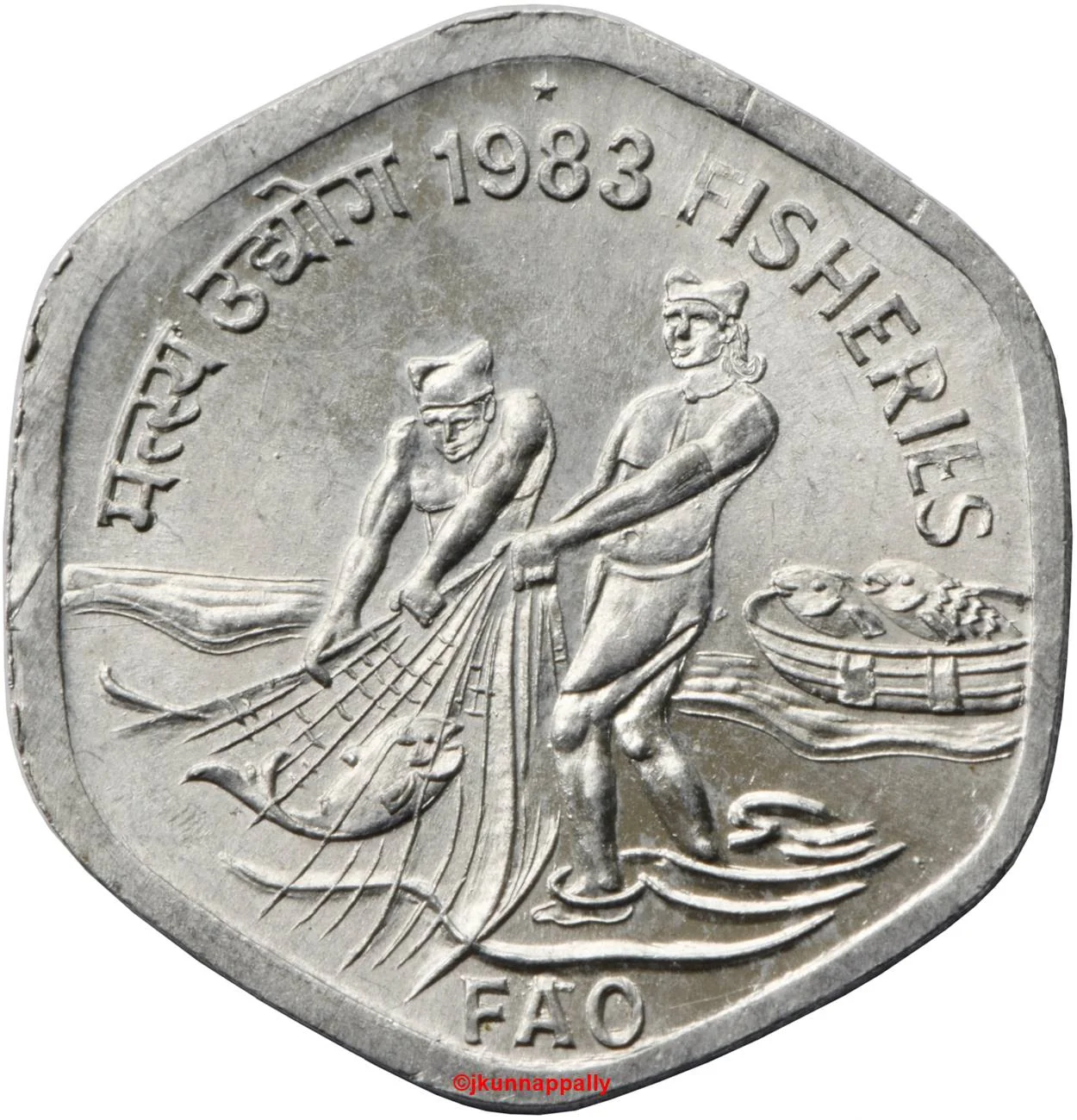
20 Paise – India
Circulating commemorative coins
Commemoration: FAO - World Food Day - Fisheries
India
Context

Material
References
KM: #Click to copy to clipboard46
Numista: #7808
Value
Exchange value: 0.20 INR = $0.00
Inflation-adjusted value: 4.01 INR
Obverse
Reverse
Edge
Plain
Categories
| Animal> Fish |
| Organization> FAO |
Mintings
| Year | Mint Mark | Mintage | Quality | Collection |
|---|---|---|---|---|
| 1983 | — | — | ||
| 1983 | * | — |
Historical background
In 1983, India's currency situation was characterized by a tightly controlled and complex exchange rate system, operating within a broader context of a planned, inward-looking economy. The Indian Rupee (INR) was not freely convertible and was pegged to a basket of currencies of its major trading partners, with the Reserve Bank of India (RBI) managing the rate. This period fell under the era of the "License Raj," where foreign exchange was a scarce commodity, strictly rationed by the government. Citizens and businesses faced severe restrictions on holding foreign currency or making overseas payments, requiring approvals for even basic international transactions.
The external sector was under significant strain. India was running persistent trade and current account deficits, financed largely by external borrowing and remittances from Indian workers in the Gulf. Foreign exchange reserves were perilously low, hovering around $5-6 billion, which provided import cover for only a few weeks. This chronic shortage led to a thriving black market for foreign currency, where the US Dollar traded at a significant premium to the official rate, highlighting the disparity between the government-controlled value and market perception.
Overall, the currency situation in 1983 reflected the fragilities of India's pre-liberalization economy. The administrative control over the rupee aimed to conserve foreign exchange and promote self-reliance but also created inefficiencies, suppressed trade, and encouraged illicit flows. This precarious balance would become increasingly unsustainable, setting the stage for the severe balance of payments crisis that would hit at the end of the decade and ultimately force radical economic reforms in 1991.
The external sector was under significant strain. India was running persistent trade and current account deficits, financed largely by external borrowing and remittances from Indian workers in the Gulf. Foreign exchange reserves were perilously low, hovering around $5-6 billion, which provided import cover for only a few weeks. This chronic shortage led to a thriving black market for foreign currency, where the US Dollar traded at a significant premium to the official rate, highlighting the disparity between the government-controlled value and market perception.
Overall, the currency situation in 1983 reflected the fragilities of India's pre-liberalization economy. The administrative control over the rupee aimed to conserve foreign exchange and promote self-reliance but also created inefficiencies, suppressed trade, and encouraged illicit flows. This precarious balance would become increasingly unsustainable, setting the stage for the severe balance of payments crisis that would hit at the end of the decade and ultimately force radical economic reforms in 1991.
🌱 Common