

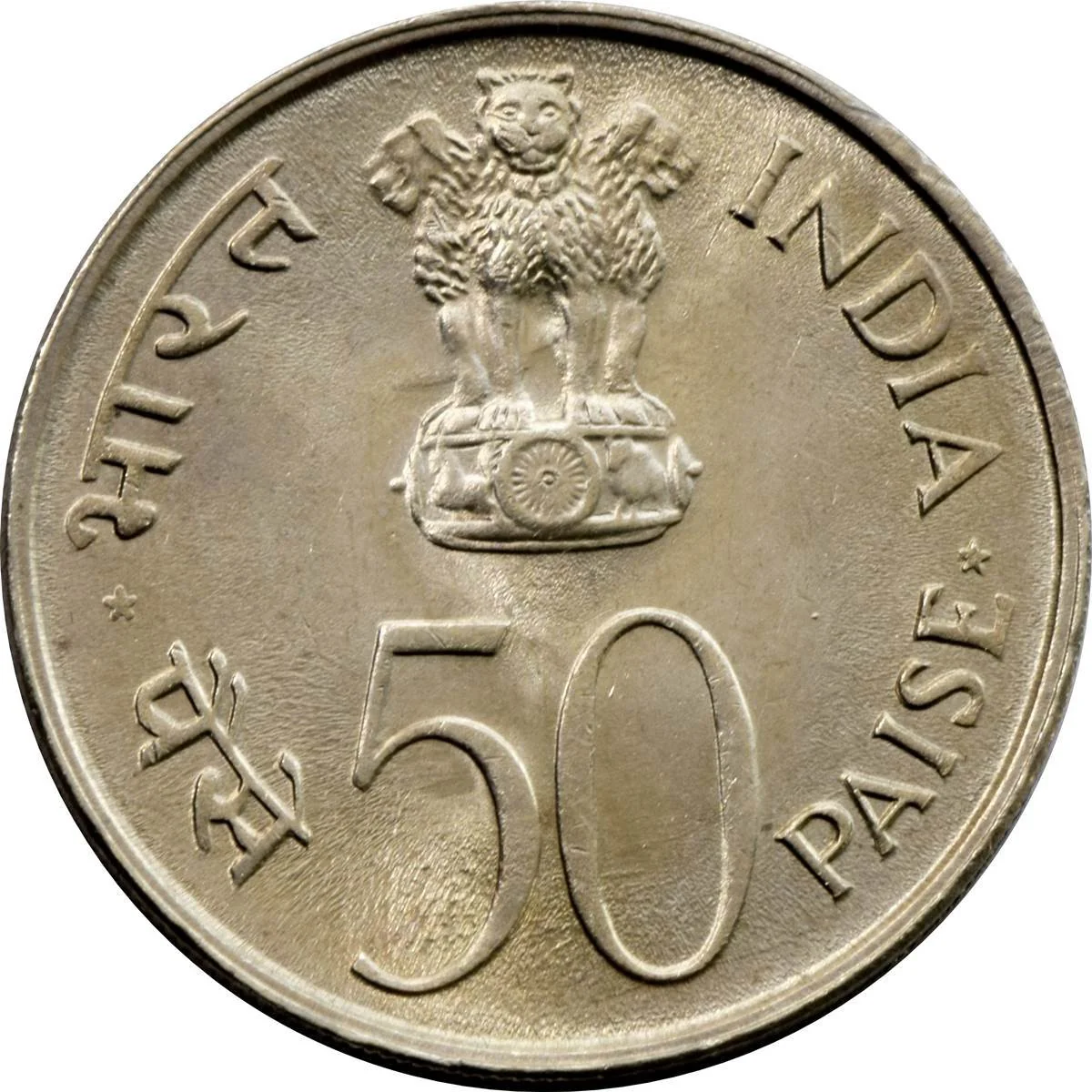
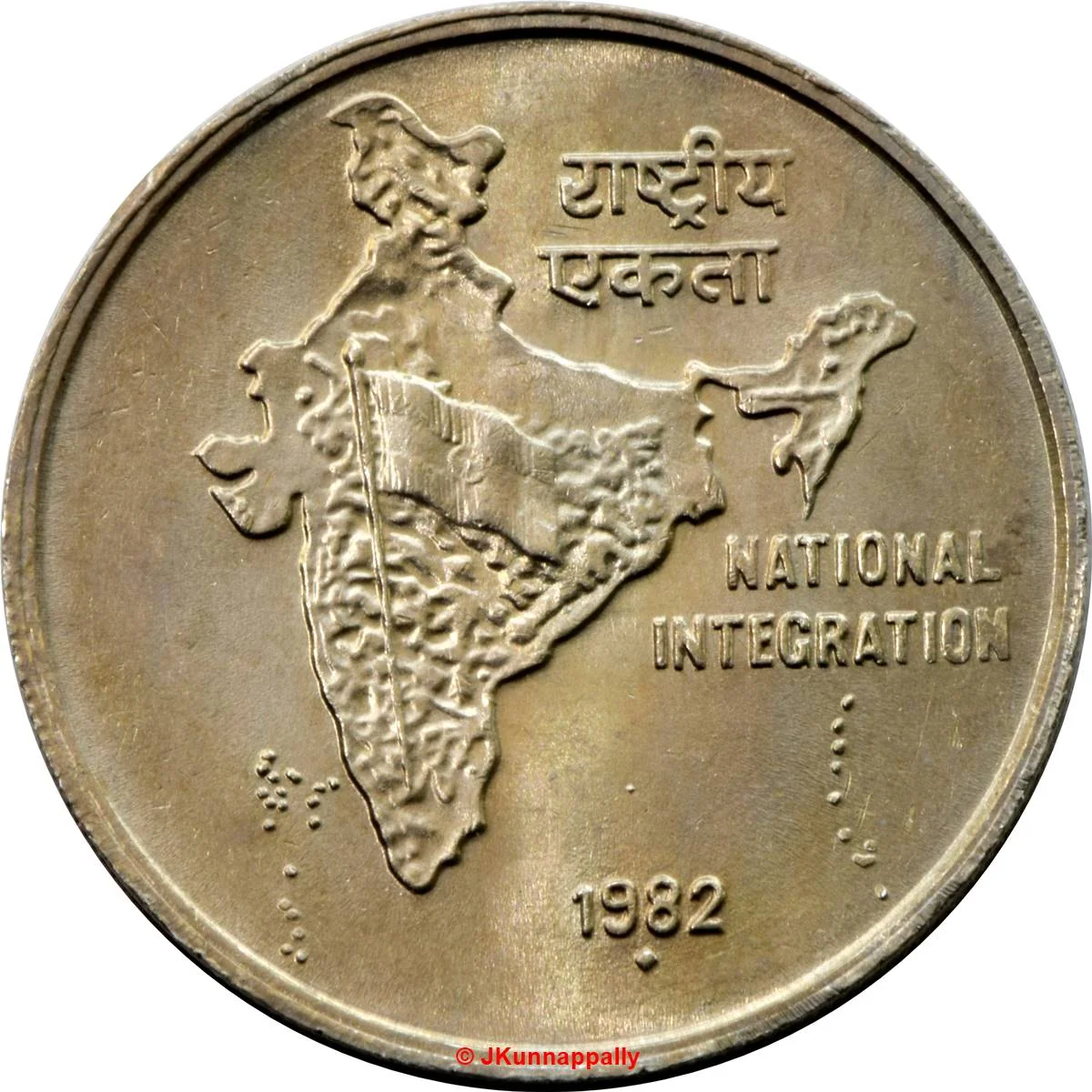
50 Paise – India
Circulating commemorative coins
Commemoration: National Integration
India
Context

Material
Diameter: 24 mm
Weight: 5 g
Thickness: 1.65 mm
Shape: Round
Composition: Copper-nickel
Technique: Milled
Alignment: Medal alignment
flip
References
KM: #Click to copy to clipboard64
Numista: #15940
Value
Exchange value: 0.50 INR = $0.01
Inflation-adjusted value: 10.81 INR
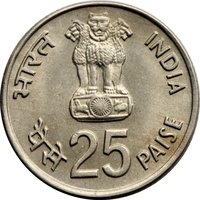
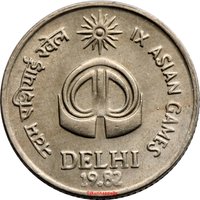
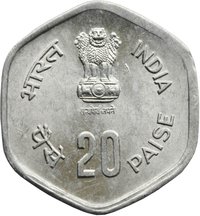
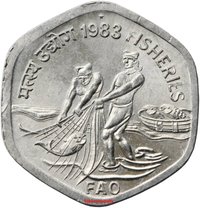
Obverse
Reverse
Edge
Security
Mintings
| Year | Mint Mark | Mintage | Quality | Collection |
|---|---|---|---|---|
| 1982 | B | — | Proof | |
| 1982 | — | — | ||
| 1982 | ♦ | 9,804,000 |
Historical background
In 1982, India's currency situation was characterized by a tightly controlled and complex exchange rate regime under the License Raj. The Indian Rupee (INR) was pegged to a basket of currencies of its major trading partners, but this was not a transparent, market-driven peg. The Reserve Bank of India (RBI) managed the exchange rate with the primary objectives of maintaining stability and conserving scarce foreign exchange reserves, which were perpetually under pressure due to the country's chronic trade deficits. Internally, the currency was stable but this external management required stringent capital controls and import restrictions, creating a significant gap between the official exchange rate and black market rates for currencies like the US Dollar.
The year fell within a period of persistent economic challenges, including high inflation and a large fiscal deficit. While the early 1980s saw some liberalization in industrial policy, the external sector remained heavily regulated. The current account deficit widened due to the second oil shock (1979) and a rise in imports of gold and petroleum, further straining foreign reserves. Consequently, access to foreign exchange for businesses and individuals was severely limited and required extensive bureaucratic approvals, fostering a thriving hawala (illegal money transfer) market that operated at a premium to the official rate.
Overall, the 1982 currency landscape reflected a defensive and inward-looking economic strategy. The system successfully prevented a balance of payments crisis in that specific year but at the cost of efficiency and global integration. It was a system built for control rather than convertibility, setting the stage for the more severe balance of payments crisis that would hit at the end of the decade and ultimately force a dramatic liberalization of the currency regime in 1991.
The year fell within a period of persistent economic challenges, including high inflation and a large fiscal deficit. While the early 1980s saw some liberalization in industrial policy, the external sector remained heavily regulated. The current account deficit widened due to the second oil shock (1979) and a rise in imports of gold and petroleum, further straining foreign reserves. Consequently, access to foreign exchange for businesses and individuals was severely limited and required extensive bureaucratic approvals, fostering a thriving hawala (illegal money transfer) market that operated at a premium to the official rate.
Overall, the 1982 currency landscape reflected a defensive and inward-looking economic strategy. The system successfully prevented a balance of payments crisis in that specific year but at the cost of efficiency and global integration. It was a system built for control rather than convertibility, setting the stage for the more severe balance of payments crisis that would hit at the end of the decade and ultimately force a dramatic liberalization of the currency regime in 1991.
🌱 Very Common