

1 Fanon – Puducherry
India
Context

Material
Weight: 1.55 g
Silver weight: 1.55 g
Shape: Round
Composition: Silver
Standard: Gold twentieth ounce
Magnetic: No
References
KM: #Click to copy to clipboard45
Numista: #113571
Value
Bullion value: $4.44
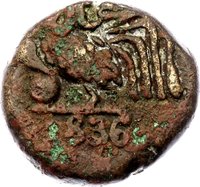
Obverse
Description:
Ornate crown.
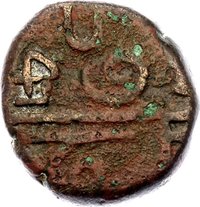
Reverse
Description:
Five fleurs-de-lis.
Edge
Mintings
| Year | Mint Mark | Mintage | Quality | Collection |
|---|---|---|---|---|
| 1835 | — | — |
Historical background
In 1835, the currency situation in the French Indian colony of Puducherry (then Pondicherry) was a complex reflection of its colonial position and regional trade. The official currency was the French franc, which was minted into specific coins for the Indian establishments, such as the "fanon" and the "roupie de Pondichéry." However, these French-issued coins circulated alongside a multitude of other currencies, creating a heterogeneous monetary environment. The most significant of these was the British Indian rupee, which dominated due to the colony's economic integration with the surrounding British-controlled territories and the broader Indian Ocean trade networks.
This multiplicity led to persistent challenges of exchange rate fluctuations and valuation disputes. Merchants and the administration had to constantly navigate the relative values of the French franc, the British rupee, and even older Portuguese and Mughal coins still in circulation. The French colonial administration periodically issued fixed exchange rate tariffs (ordonnances) to regulate these relationships, but market forces and the sheer volume of cross-border trade with British India often rendered these official rates ineffective or contentious. This created an environment of financial uncertainty for both commerce and daily transactions.
Ultimately, the currency landscape of 1835 underscored Puducherry's economic duality: officially tied to France but practically dependent on the British Indian economic sphere. The French authorities struggled to assert monetary sovereignty, while the local populace and mercantile community pragmatically used whatever currency was most stable and widely accepted for their needs. This situation would persist and evolve, later leading to the formal adoption of the Indian rupee as the legal tender in French India in the late 19th century, a clear acknowledgment of the region's inextricable economic links to the subcontinent.
This multiplicity led to persistent challenges of exchange rate fluctuations and valuation disputes. Merchants and the administration had to constantly navigate the relative values of the French franc, the British rupee, and even older Portuguese and Mughal coins still in circulation. The French colonial administration periodically issued fixed exchange rate tariffs (ordonnances) to regulate these relationships, but market forces and the sheer volume of cross-border trade with British India often rendered these official rates ineffective or contentious. This created an environment of financial uncertainty for both commerce and daily transactions.
Ultimately, the currency landscape of 1835 underscored Puducherry's economic duality: officially tied to France but practically dependent on the British Indian economic sphere. The French authorities struggled to assert monetary sovereignty, while the local populace and mercantile community pragmatically used whatever currency was most stable and widely accepted for their needs. This situation would persist and evolve, later leading to the formal adoption of the Indian rupee as the legal tender in French India in the late 19th century, a clear acknowledgment of the region's inextricable economic links to the subcontinent.

✨ Legendary