

1 doudou – Puducherry
Add to wishlist
India
Context
Material
Diameter: 16 mm
Weight: 4 g
Thickness: 3.16 mm
Shape: Irregular round
Composition: Bronze
Magnetic: No
References
KM: #
Numista: #22017
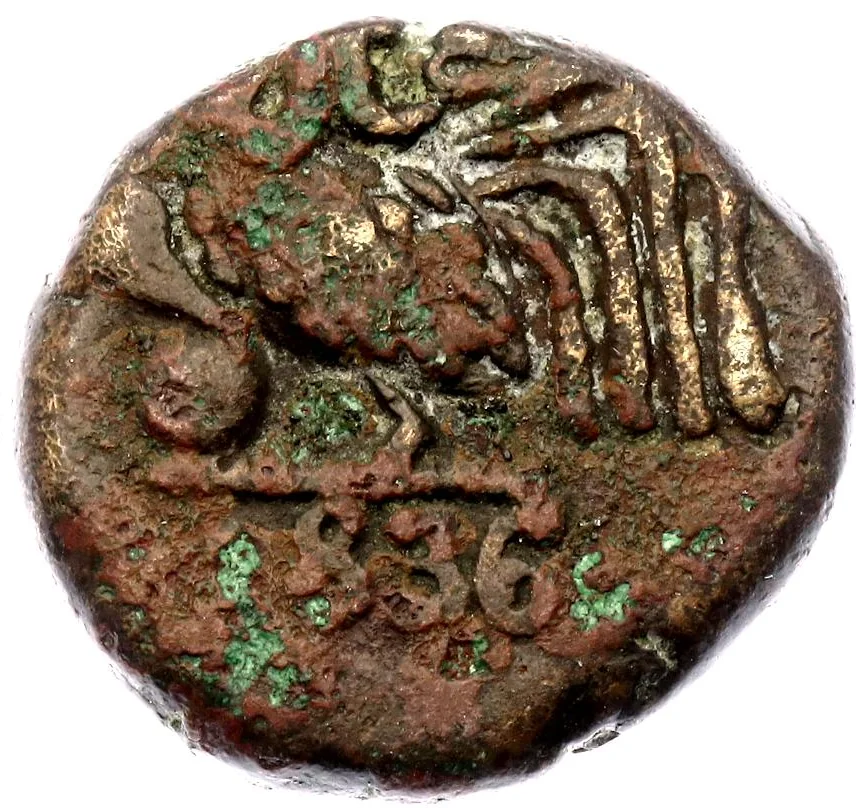
Obverse
Description:
Crowing barnyard bird.
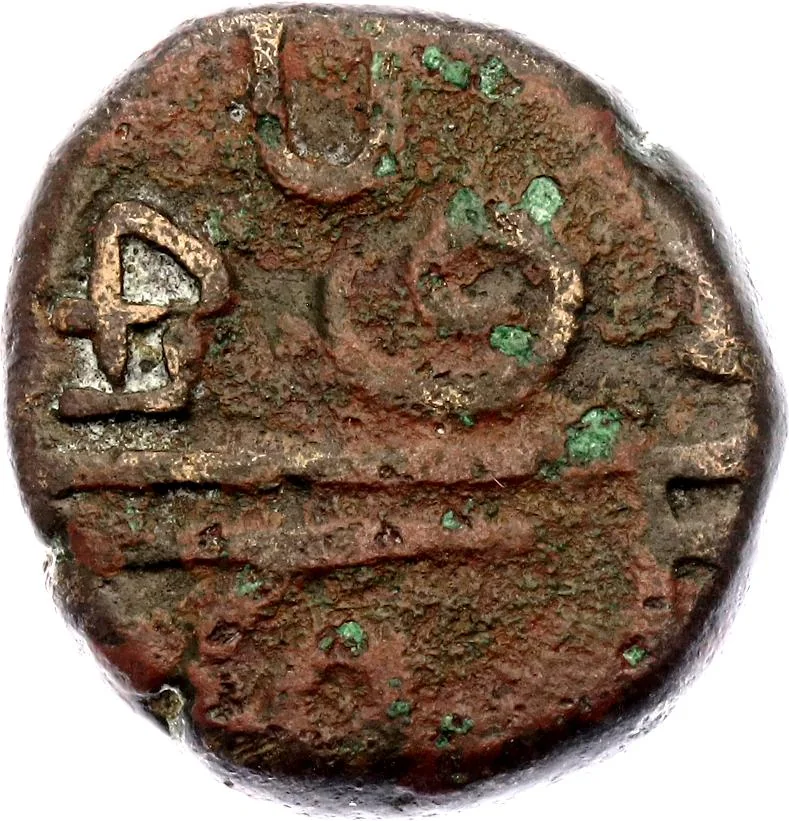
Reverse
Edge
Plain
Mints
| Name | Mark |
|---|---|
| Pondicherry | — |
Mintings
| Year | Mint Mark | Mintage | Quality | Collection |
|---|---|---|---|---|
| 1836 | — | — | ||
| 1837 | — | — |
Historical background
In 1836, the currency situation in the French colony of Puducherry was complex and transitional, reflecting its unique position as a European enclave within the broader Indian monetary landscape. The official currency was the French franc, and specifically the piastre de commerce, a silver trade coin. However, the practical day-to-day economy was dominated by a multitude of Indian and other foreign coins. The most important of these was the British East India Company's rupee, which circulated widely due to Puducherry's deep economic integration with the surrounding British-controlled territories of the Madras Presidency. Alongside these, older French colonial issues, Portuguese xerafins, and various local fanams and pagodas also saw use, creating a confusing system of exchange.
This monetary pluralism necessitated a constant and formalized process of valuation and conversion. The French colonial administration published official cours de change (exchange rates) to fix the value of the franc against the dominant rupee and other circulating coins. These rates were crucial for government receipts, trade duties, and salary payments to soldiers and officials, who were often paid in a mix of currencies. The system was inherently unstable, as the value of silver coins fluctuated with global and regional bullion markets, leading to periodic shortages, hoarding, and disputes in commercial transactions.
Ultimately, the currency situation of 1836 highlighted Puducherry's dual identity: administratively French but economically intertwined with British India. The persistent circulation of the Company rupee underscored the colony's dependency on regional trade networks that operated on a British monetary standard. This friction between official French currency and the de facto rupee economy would remain a defining feature of Puducherry's financial life until the fall of French India in 1954, with the franc struggling to establish true supremacy in a market that naturally gravitated towards the rupee.
This monetary pluralism necessitated a constant and formalized process of valuation and conversion. The French colonial administration published official cours de change (exchange rates) to fix the value of the franc against the dominant rupee and other circulating coins. These rates were crucial for government receipts, trade duties, and salary payments to soldiers and officials, who were often paid in a mix of currencies. The system was inherently unstable, as the value of silver coins fluctuated with global and regional bullion markets, leading to periodic shortages, hoarding, and disputes in commercial transactions.
Ultimately, the currency situation of 1836 highlighted Puducherry's dual identity: administratively French but economically intertwined with British India. The persistent circulation of the Company rupee underscored the colony's dependency on regional trade networks that operated on a British monetary standard. This friction between official French currency and the de facto rupee economy would remain a defining feature of Puducherry's financial life until the fall of French India in 1954, with the franc struggling to establish true supremacy in a market that naturally gravitated towards the rupee.

🌟 Uncommon