

50 cents – Ceylon
Add to wishlist
Sri Lanka
Context
Material
Diameter: 24 mm
Weight: 5.54 g
Thickness: 2 mm
Shape: Round
Composition: Nickel brass
Magnetic: No
Technique: Milled
Alignment: Medal alignment
flip
References
KM: #
Numista: #7776
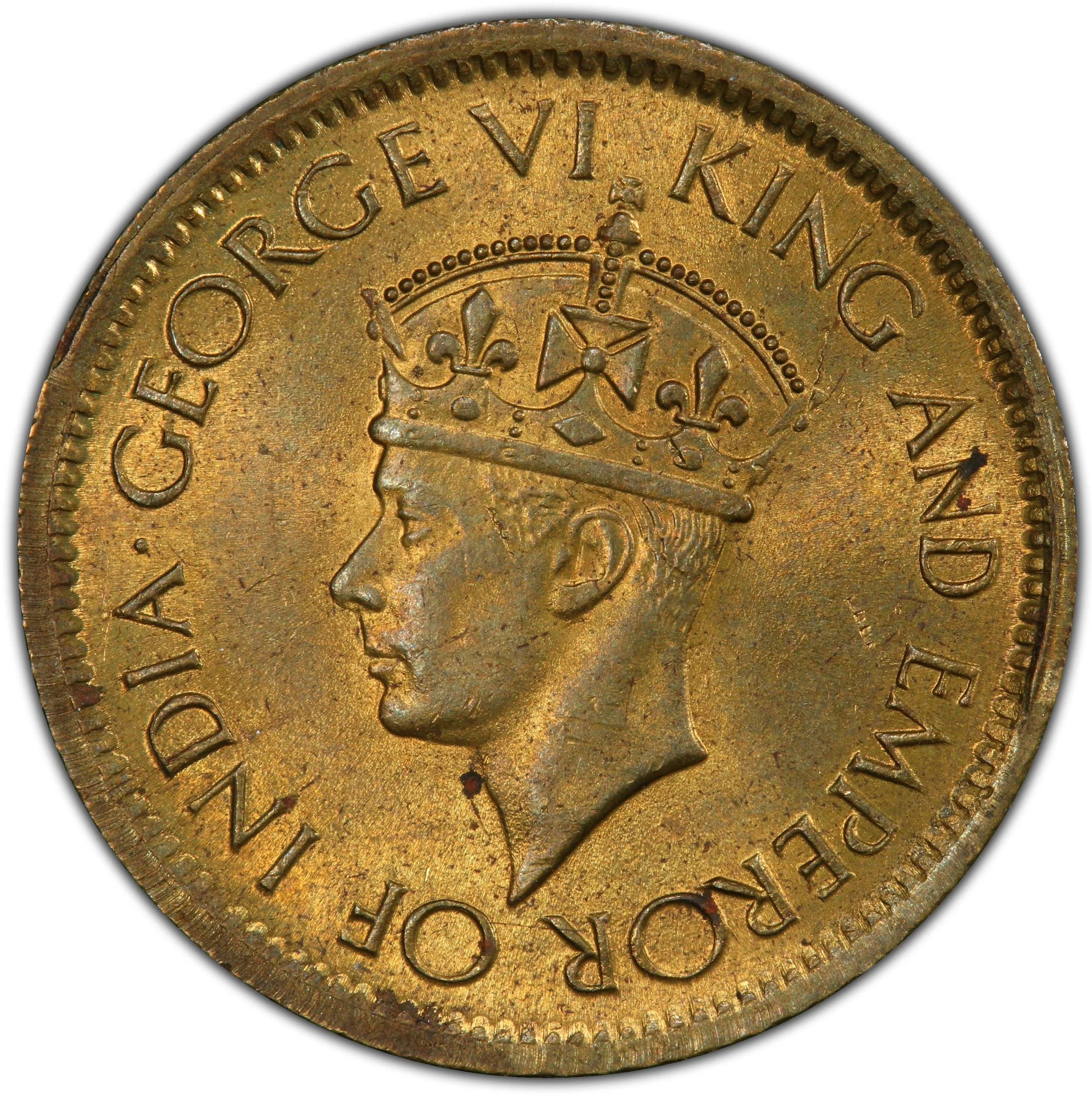
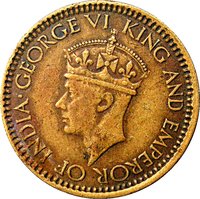
Obverse
Description:
Crowned left-facing bust.
Inscription:
GEORGE VI KING AND EMPEROR OF INDIA·
Translation:
GEORGE VI KING AND EMPEROR OF INDIA
Language: English
Engraver: Percy Metcalfe
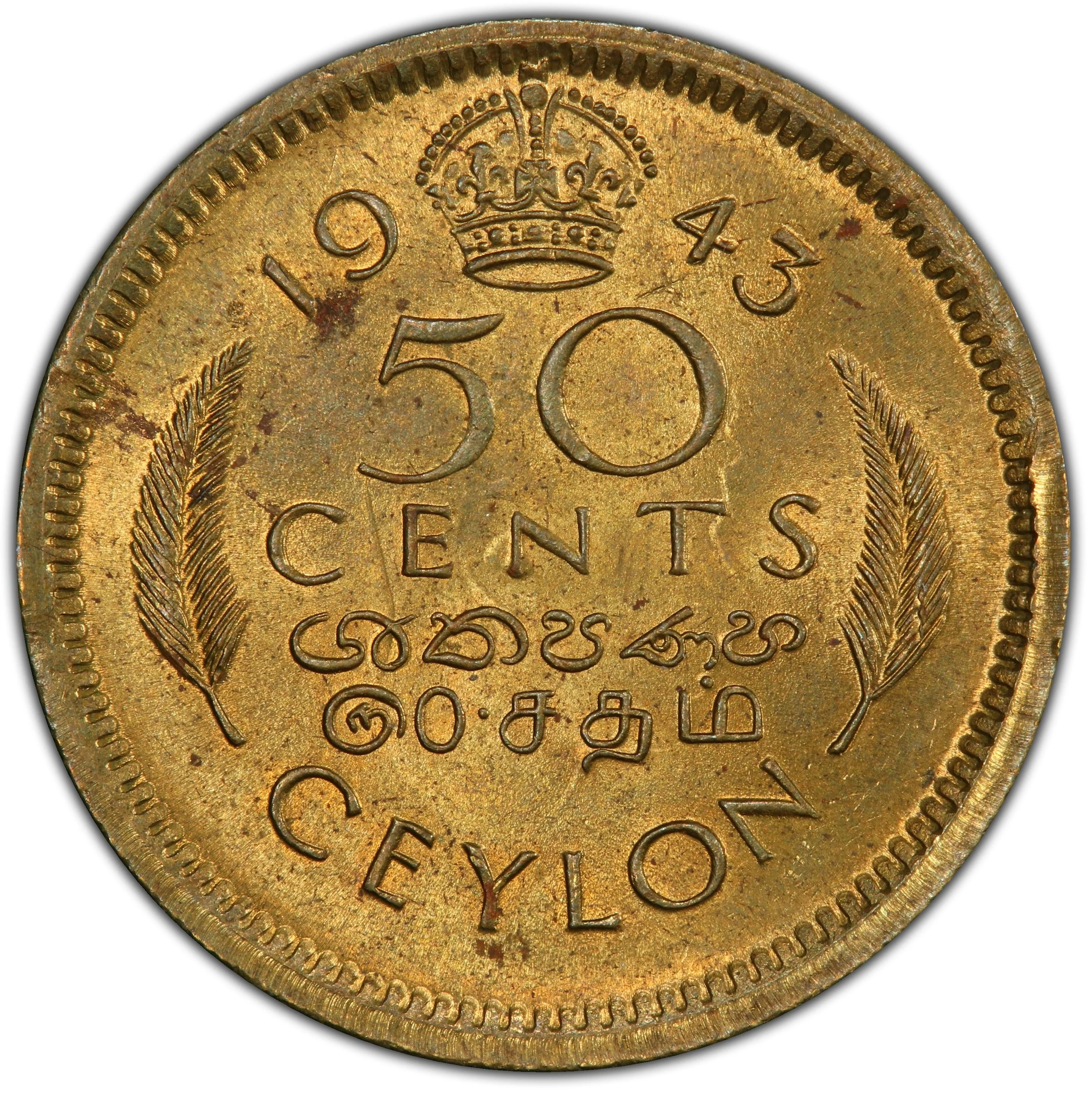
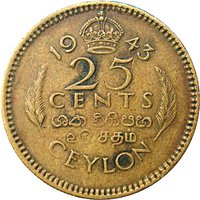
Reverse
Edge
Security edge (Indented).
Mints
| Name | Mark |
|---|---|
| Kolkata / Calcutta / Murshidabad | — |
| Mumbai / Bombay | — |
Mintings
| Year | Mint Mark | Mintage | Quality | Collection |
|---|---|---|---|---|
| 1943 | — | 8,600,000 |
Historical background
In 1943, Ceylon's currency situation was fundamentally shaped by its role within the British Empire during the peak of World War II in the Asia-Pacific theater. Following the fall of Singapore in 1942, Ceylon became a crucial Allied military and naval base, leading to a massive influx of British and Allied troops. This sudden wartime presence created intense inflationary pressures, as military spending injected large amounts of sterling into the local economy, chasing a limited supply of goods and services. The colonial government, operating under a Currency Board System that issued Ceylonese rupees fully backed by sterling reserves, faced a severe strain as imports were drastically curtailed by enemy action and wartime shipping priorities.
Authorities responded with a combination of strict price controls, rationing of essential items like food and fuel, and propaganda campaigns urging austerity. However, these measures were only partially successful in curbing inflation and a growing black market. A significant monetary feature was the circulation of "British Military Administration" currency notes, issued to pay troops and for military procurement, which further complicated the money supply. The Sterling balances accumulated in London as a result of Ceylon's export earnings and military expenditures grew substantially, creating a complex financial claim that would become a point of contention in post-war negotiations for independence.
Thus, the currency situation of 1943 was one of controlled crisis, characterized by the contradictions of a rigid colonial monetary system strained by extraordinary wartime demands. The economy was outwardly stable under the Currency Board, but internally it was pressured by inflation, scarcity, and expanding money supply driven by military necessity. This period highlighted the island's economic vulnerability and dependence on imperial structures, setting the stage for post-war debates about monetary sovereignty and the management of the accumulated sterling balances.
Authorities responded with a combination of strict price controls, rationing of essential items like food and fuel, and propaganda campaigns urging austerity. However, these measures were only partially successful in curbing inflation and a growing black market. A significant monetary feature was the circulation of "British Military Administration" currency notes, issued to pay troops and for military procurement, which further complicated the money supply. The Sterling balances accumulated in London as a result of Ceylon's export earnings and military expenditures grew substantially, creating a complex financial claim that would become a point of contention in post-war negotiations for independence.
Thus, the currency situation of 1943 was one of controlled crisis, characterized by the contradictions of a rigid colonial monetary system strained by extraordinary wartime demands. The economy was outwardly stable under the Currency Board, but internally it was pressured by inflation, scarcity, and expanding money supply driven by military necessity. This period highlighted the island's economic vulnerability and dependence on imperial structures, setting the stage for post-war debates about monetary sovereignty and the management of the accumulated sterling balances.
🌱 Very Common