

2 cents – Ceylon
Add to wishlist
Sri Lanka
Context
Material
Diameter: 18 mm
Weight: 2.54 g
Thickness: 1.59 mm
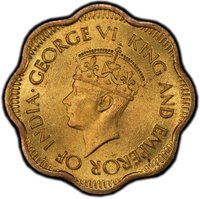
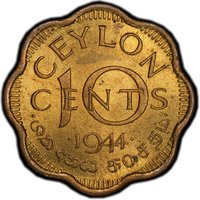
Shape: Scalloped
Composition: Nickel brass
Magnetic: No
Technique: Milled
Alignment: Medal alignment
flip
References
KM: #
Numista: #5692
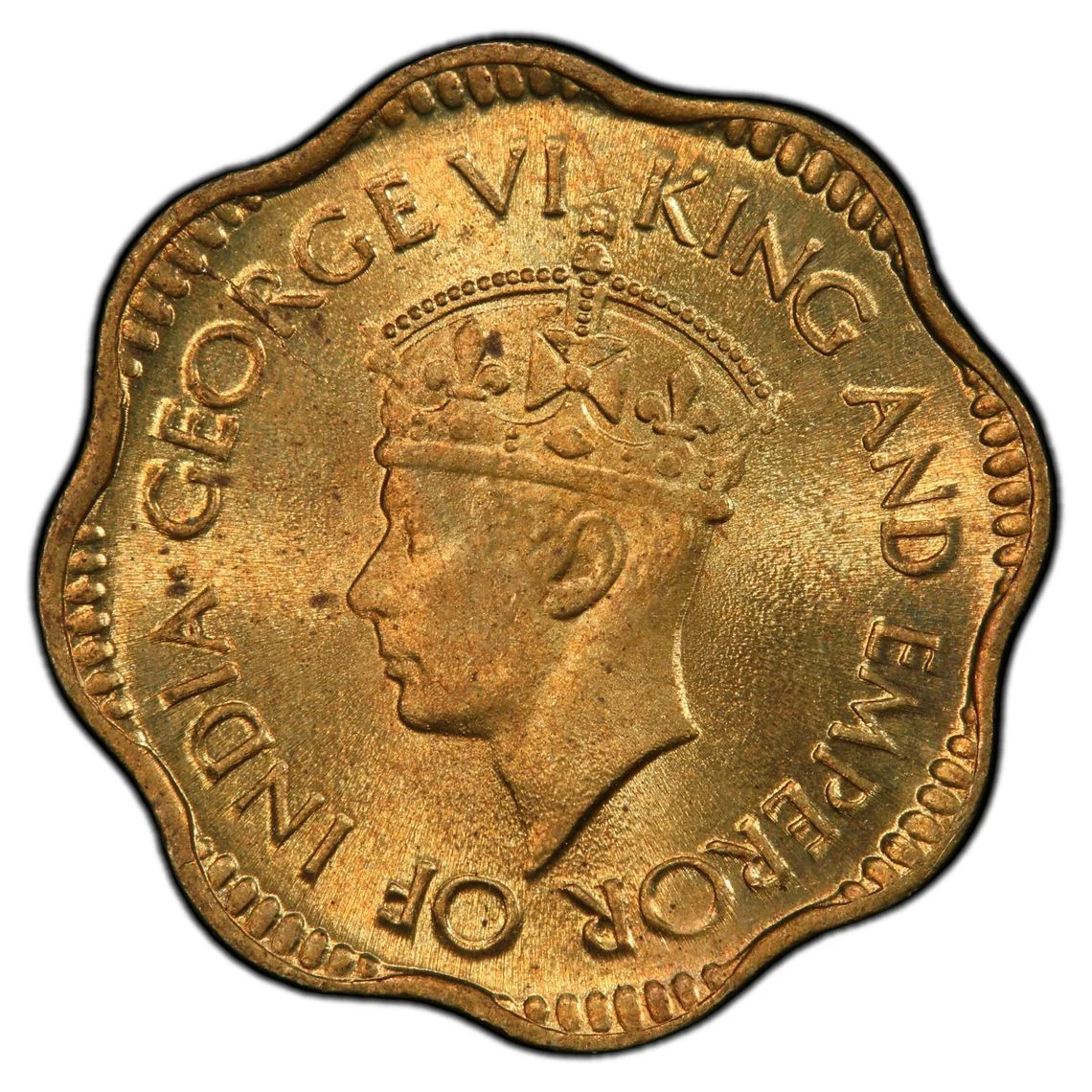
Obverse
Description:
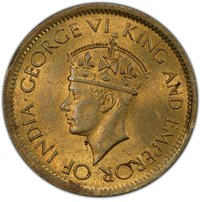
Crowned left-facing bust.
Inscription:
GEORGE VI KING AND EMPEROR OF INDIA.
Translation:
GEORGE VI KING AND EMPEROR OF INDIA.
Language: English
Engraver: Percy Metcalfe
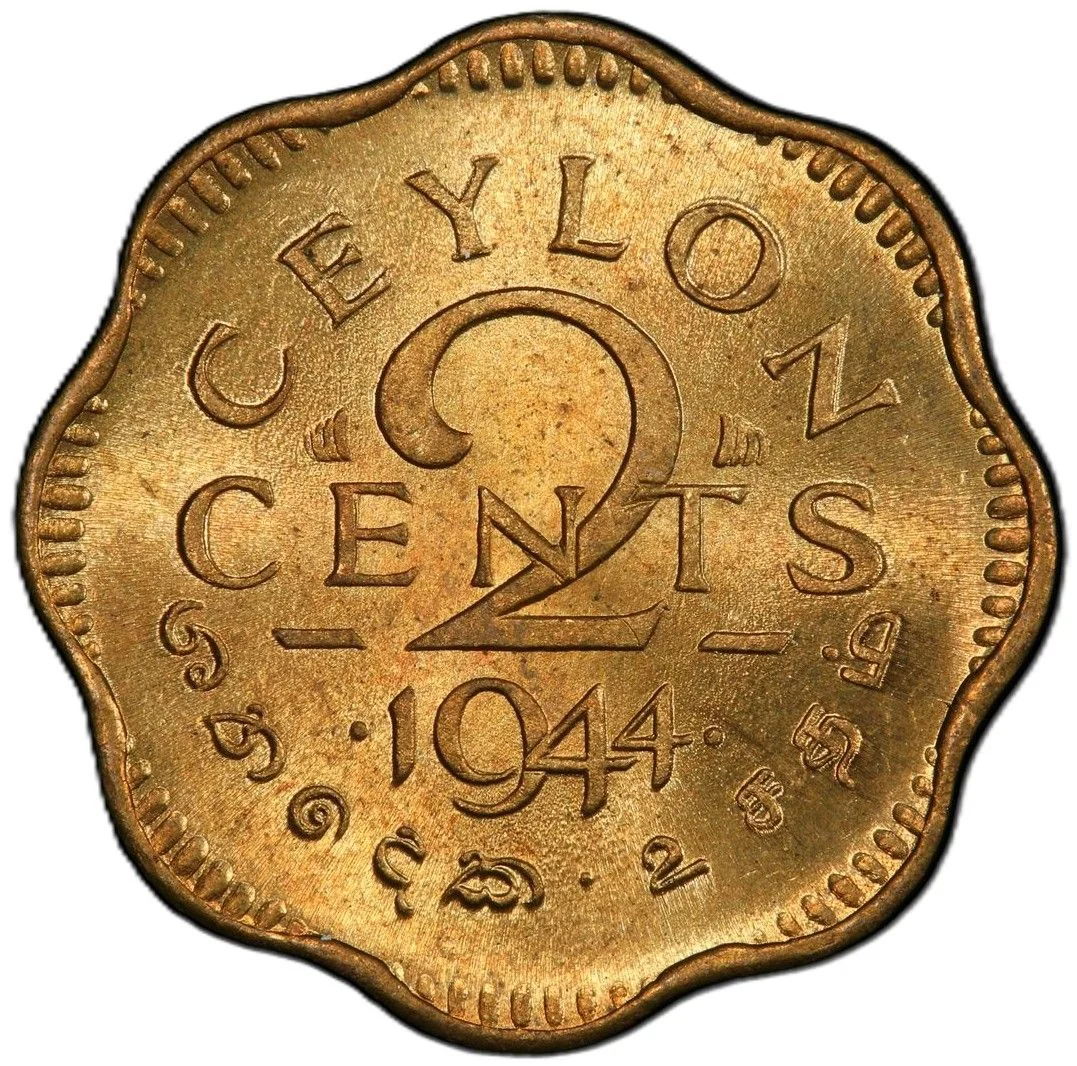
Reverse
Edge
Plain
Mints
| Name | Mark |
|---|---|
| Kolkata / Calcutta / Murshidabad | — |
| Mumbai / Bombay | — |
Mintings
| Year | Mint Mark | Mintage | Quality | Collection |
|---|---|---|---|---|
| 1944 | — | 30,165,000 |
Historical background
In 1944, Ceylon's currency situation was fundamentally shaped by its position within the British Empire during World War II. The island operated under a Currency Board system, established in 1884, which pegged the Ceylonese rupee at a fixed rate to sterling and required full reserve backing in British government securities. This orthodox system provided stability and guaranteed convertibility, but it also meant monetary policy was entirely subservent to London's needs and the island had no independent central bank to manage its economy.
The war placed immense strain on this arrangement. Ceylon became a crucial Allied strategic hub in the Asia-Pacific theatre, leading to a massive influx of British military spending. This created a large sterling balance credited to Ceylon in London, but within the colony, it caused a surge in rupee circulation and severe inflationary pressures. Essential goods were scarce due to import restrictions and submarine warfare disrupting trade, leading to a growing disconnect between the officially stable currency and plummeting purchasing power for its citizens.
Consequently, 1944 was a year of mounting economic tension. The colonial government attempted to curb inflation through price controls and rationing, with limited success. Politically, the situation fueled nationalist criticism of the colonial economic structure. Ceylonese leaders began to argue forcefully that the Currency Board system drained resources and constrained development, laying the groundwork for post-war demands for monetary autonomy and the eventual establishment of a central bank after independence in 1950.
The war placed immense strain on this arrangement. Ceylon became a crucial Allied strategic hub in the Asia-Pacific theatre, leading to a massive influx of British military spending. This created a large sterling balance credited to Ceylon in London, but within the colony, it caused a surge in rupee circulation and severe inflationary pressures. Essential goods were scarce due to import restrictions and submarine warfare disrupting trade, leading to a growing disconnect between the officially stable currency and plummeting purchasing power for its citizens.
Consequently, 1944 was a year of mounting economic tension. The colonial government attempted to curb inflation through price controls and rationing, with limited success. Politically, the situation fueled nationalist criticism of the colonial economic structure. Ceylonese leaders began to argue forcefully that the Currency Board system drained resources and constrained development, laying the groundwork for post-war demands for monetary autonomy and the eventual establishment of a central bank after independence in 1950.
🌱 Common