

1 Cent – Malaya and British Borneo
Malaysia
Context
Year: 1962
Country: Malaysia 
Issuer: Malaya and British Borneo
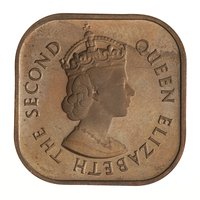
Ruler: Elizabeth II
Currency:
(1953—1967)
Demonetized: Yes
Total mintage: 45,000,025
Material
References
KM: #Click to copy to clipboard6
Numista: #7766
Obverse
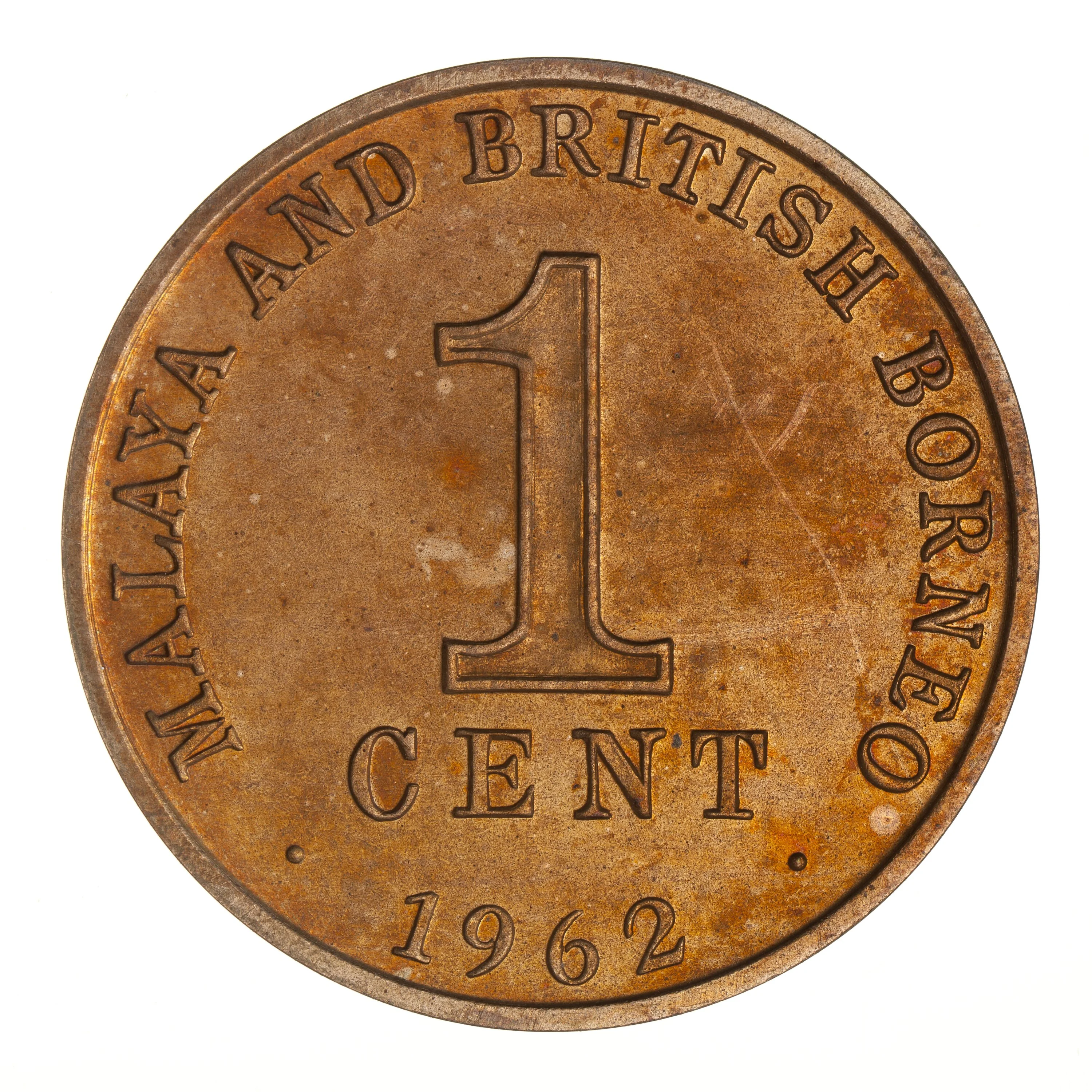
Description:
Denomination
Inscription:
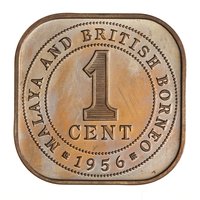
MALAYA AND BRITISH BORNEO
1 CENT
· 1962 ·
1 CENT
· 1962 ·
Translation:
MALAYA AND BRITISH BORNEO
1 CENT
· 1962 ·
1 CENT
· 1962 ·
Language: English
Reverse
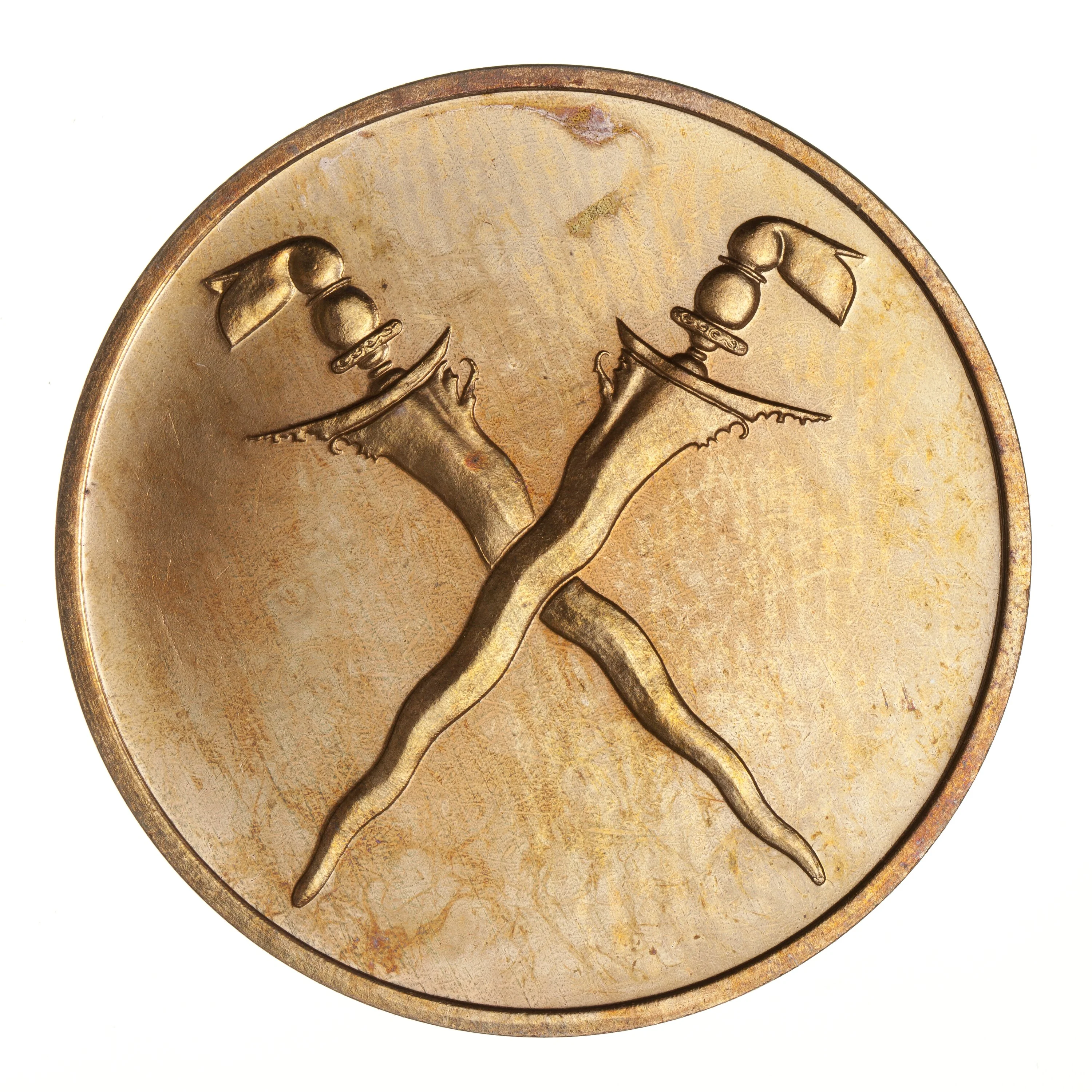
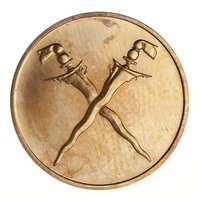
Description:
Crossed Malay kris swords.
Edge
Plain
Categories
| Object> Cold weapons |
Mints
| Name | Mark |
|---|---|
| Royal Mint (Tower Hill) | — |
Mintings
| Year | Mint Mark | Mintage | Quality | Collection |
|---|---|---|---|---|
| 1962 | — | 45,000,000 | ||
| 1962 | — | 25 | Proof |
Historical background
In 1962, the currency situation in Malaya and British Borneo was defined by the operations of the Board of Commissioners of Currency, Malaya and British Borneo. This unified currency board, established in 1952, issued a common currency—the Malaya and British Borneo dollar—that was legal tender across the Federation of Malaya, Singapore, and the British Borneo territories of Sarawak, North Borneo (now Sabah), and Brunei. The system was fundamentally a sterling exchange standard, where the local currency was fully backed by sterling reserves held in London, ensuring its fixed parity and convertibility with the British pound sterling. This provided monetary stability and facilitated seamless trade within the region and with the Commonwealth.
However, this unified system was under growing political strain. The Federation of Malaya had gained independence in 1957, and by 1962, discussions were advancing towards the formation of a new political entity: Malaysia. The proposed federation would include Malaya, Singapore, Sarawak, and North Borneo, but excluded Brunei, which had decided against joining. The impending political realignment raised urgent questions about the future of the common currency, as the new sovereign states would naturally seek control over their own monetary sovereignty and central banking functions.
Consequently, 1962 was a pivotal year of transition and negotiation. The governments involved began planning for the dissolution of the common currency board and the creation of separate central banks and national currencies. This process would culminate in the establishment of Bank Negara Malaysia in 1959 (which began issuing the Malaysian dollar in 1967) and the eventual creation of the Singapore dollar and the Brunei dollar, all of which would temporarily maintain parity with each other after the currency union ended. Thus, the currency situation in 1962 was one of a stable but soon-to-be-obsolete system awaiting dismantlement in the face of decolonisation and new national ambitions.
However, this unified system was under growing political strain. The Federation of Malaya had gained independence in 1957, and by 1962, discussions were advancing towards the formation of a new political entity: Malaysia. The proposed federation would include Malaya, Singapore, Sarawak, and North Borneo, but excluded Brunei, which had decided against joining. The impending political realignment raised urgent questions about the future of the common currency, as the new sovereign states would naturally seek control over their own monetary sovereignty and central banking functions.
Consequently, 1962 was a pivotal year of transition and negotiation. The governments involved began planning for the dissolution of the common currency board and the creation of separate central banks and national currencies. This process would culminate in the establishment of Bank Negara Malaysia in 1959 (which began issuing the Malaysian dollar in 1967) and the eventual creation of the Singapore dollar and the Brunei dollar, all of which would temporarily maintain parity with each other after the currency union ended. Thus, the currency situation in 1962 was one of a stable but soon-to-be-obsolete system awaiting dismantlement in the face of decolonisation and new national ambitions.
🌱 Very Common