

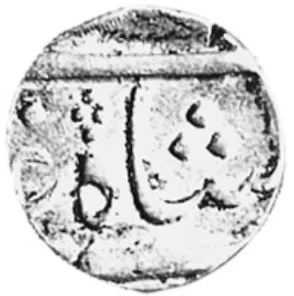
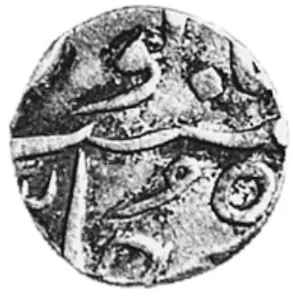
½ rupee – Surat
Add to wishlist
India
Obverse
Description:
Persian couplet by Shah Alam II.
Reverse
Description:
Persian - Julus mint.
Edge
Mintings
| Year | Mint Mark | Mintage | Quality | Collection |
|---|---|---|---|---|
| 1806 | — | — | ||
| 1810 | — | — | ||
| — | — | — |
Historical background
In 1806, Surat, a once-prosperous port city on India's west coast, found its currency situation in a state of complex transition and decline. The city was nominally under the control of the Mughal Empire, but real power was fragmented between the increasingly dominant British East India Company (which held the surat or castle) and the local Mughal governor. This political fragmentation was mirrored in its monetary system, which was a chaotic mix of Mughal, European, and local currencies. The primary silver rupee, the Mughal Sicca, competed with a plethora of older, worn coins, foreign ducats, and rupees minted by other regional powers, leading to constant problems of valuation, forgery, and exchange.
The city's economic decay directly impacted its currency. Surat's importance as a hub for international trade had severely diminished due to silting of the river, the rise of Bombay under British control, and political instability. This decline in commerce reduced the volume of fresh, high-quality coinage entering circulation. Consequently, the market was flooded with underweight and debased coins, causing merchants and the East India Company to apply varying discount rates (batta) depending on the coin's origin, age, and metal content. This created a climate of financial uncertainty that hampered daily transactions and long-distance trade.
Ultimately, the currency situation in 1806 Surat symbolized the broader shift of power in India. The British East India Company, while not yet in full administrative control, was actively working to impose monetary order as part of its wider economic strategy. It sought to standardize currency in its territories to facilitate revenue collection and trade, viewing Surat's monetary chaos as an obstacle. Thus, the year 1806 represents a point where the old, fragmented Mughal system was crumbling, but the new, uniform British system had not yet been established, leaving the city's merchants and citizens to navigate a difficult and unreliable monetary landscape.
The city's economic decay directly impacted its currency. Surat's importance as a hub for international trade had severely diminished due to silting of the river, the rise of Bombay under British control, and political instability. This decline in commerce reduced the volume of fresh, high-quality coinage entering circulation. Consequently, the market was flooded with underweight and debased coins, causing merchants and the East India Company to apply varying discount rates (batta) depending on the coin's origin, age, and metal content. This created a climate of financial uncertainty that hampered daily transactions and long-distance trade.
Ultimately, the currency situation in 1806 Surat symbolized the broader shift of power in India. The British East India Company, while not yet in full administrative control, was actively working to impose monetary order as part of its wider economic strategy. It sought to standardize currency in its territories to facilitate revenue collection and trade, viewing Surat's monetary chaos as an obstacle. Thus, the year 1806 represents a point where the old, fragmented Mughal system was crumbling, but the new, uniform British system had not yet been established, leaving the city's merchants and citizens to navigate a difficult and unreliable monetary landscape.

✨ Legendary