

10 Pence – Gibraltar
United Kingdom
Context
Years: 1988–1991
Country: United Kingdom 
Issuer: Gibraltar 
Ruler: Elizabeth II
Currency:
(since 1971)
Demonetization: 1 June 1993
Material
Diameter: 28.5 mm
Weight: 11.31 g
Thickness: 2.2 mm
Shape: Round
Composition: Copper-nickel
Technique: Milled
Alignment: Medal alignment
flip
References
KM: #Click to copy to clipboard23.1
Numista: #7750
Value
Exchange value: 0.10 GIP
Inflation-adjusted value: 0.36 GIP
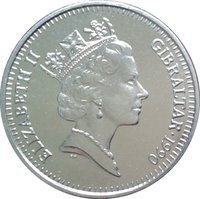
Obverse
Description:
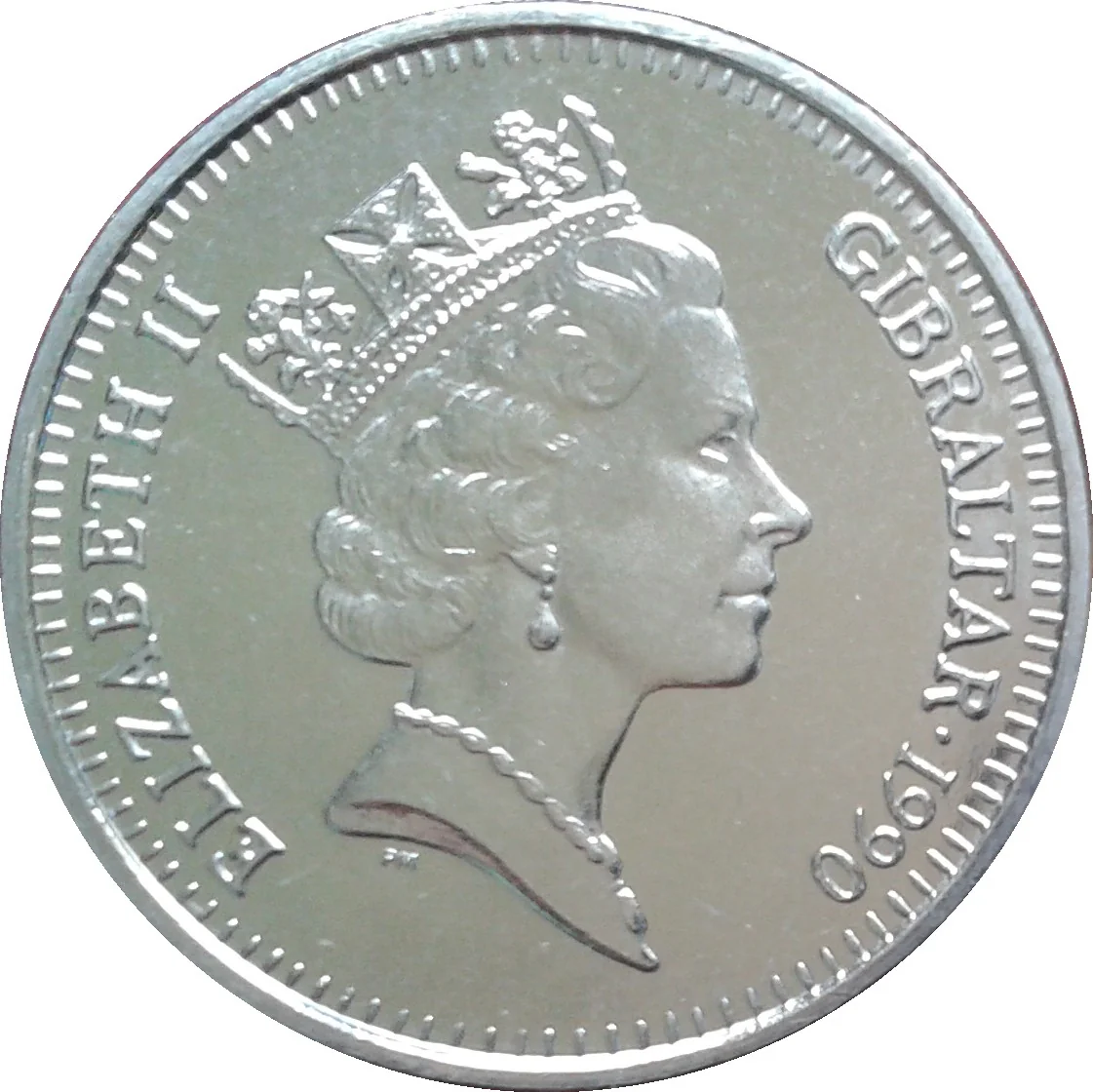
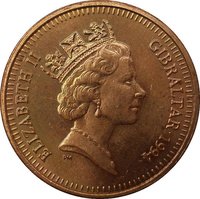
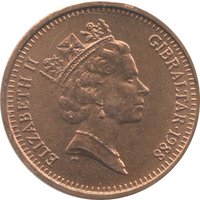
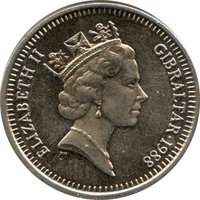
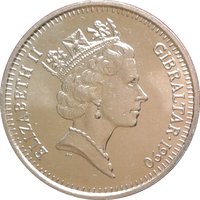
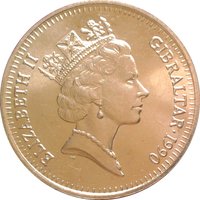
Queen Elizabeth II facing right, wearing the George IV State Diadem.
Inscription:
ELIZABETH II GIBRALTAR · 1990
RDM
PM
RDM
PM
Script: Latin
Designer: Raphael David Maklouf
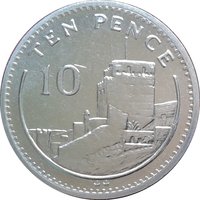
Reverse
Edge
Reeded
Categories
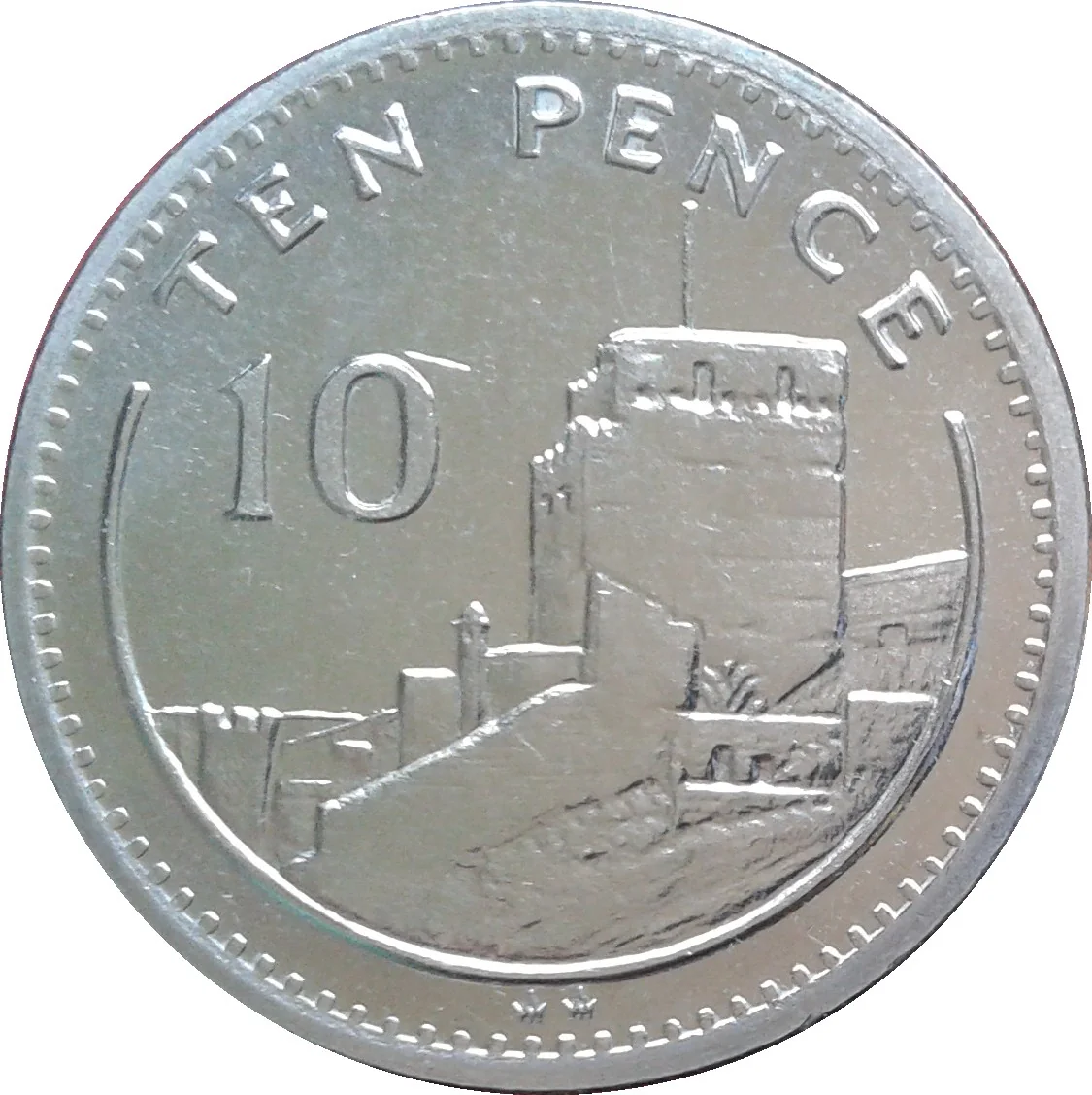
| Building> Castle or fortification |
Mints
| Name | Mark |
|---|---|
| Pobjoy Mint | (PM) |
Mintings
| Year | Mint Mark | Mintage | Quality | Collection |
|---|---|---|---|---|
| 1988 | PM | — | ||
| 1989 | PM | — | ||
| 1990 | PM | — | ||
| 1991 | PM | — |
Historical background
In 1988, Gibraltar's currency situation was characterised by a practical and legally complex dual circulation system, underpinned by its unique political status as a British Overseas Territory. The legal tender was the Gibraltar pound (GIP), issued by the Government of Gibraltar and pegged at par with the British pound sterling (GBP). While Gibraltar issued its own banknotes and coins, sterling circulated freely and interchangeably within the territory, forming the bedrock of the monetary system. This arrangement reflected Gibraltar's deep economic and constitutional ties to the United Kingdom.
However, the Spanish peseta also played a significant, albeit unofficial, role in daily transactions due to Gibraltar's geographical and economic proximity to Spain. Cross-border trade, tourism, and a substantial number of Spanish frontier workers meant the peseta was widely accepted, especially in retail and service sectors. This de facto dual currency environment with the peseta was market-driven and operated without any formal treaty or agreement, highlighting the integrated, yet sometimes tense, economic relationship across the border.
The period was one of relative stability for the Gibraltar pound itself, but it existed within a broader context of political friction. Spain's continued claim to sovereignty and its restrictions at the border influenced economic flows. Furthermore, as a member of the European Economic Community (EEC) alongside the UK and Spain, Gibraltar was part of the EEC's customs union but excluded from the Common Agricultural Policy and value-added tax (VAT) area. This hybrid status meant its currency arrangements, while stable domestically, were a microcosm of its larger political and economic negotiations.
However, the Spanish peseta also played a significant, albeit unofficial, role in daily transactions due to Gibraltar's geographical and economic proximity to Spain. Cross-border trade, tourism, and a substantial number of Spanish frontier workers meant the peseta was widely accepted, especially in retail and service sectors. This de facto dual currency environment with the peseta was market-driven and operated without any formal treaty or agreement, highlighting the integrated, yet sometimes tense, economic relationship across the border.
The period was one of relative stability for the Gibraltar pound itself, but it existed within a broader context of political friction. Spain's continued claim to sovereignty and its restrictions at the border influenced economic flows. Furthermore, as a member of the European Economic Community (EEC) alongside the UK and Spain, Gibraltar was part of the EEC's customs union but excluded from the Common Agricultural Policy and value-added tax (VAT) area. This hybrid status meant its currency arrangements, while stable domestically, were a microcosm of its larger political and economic negotiations.
Series: 1988 Gibraltar circulation coins
🌱 Common