

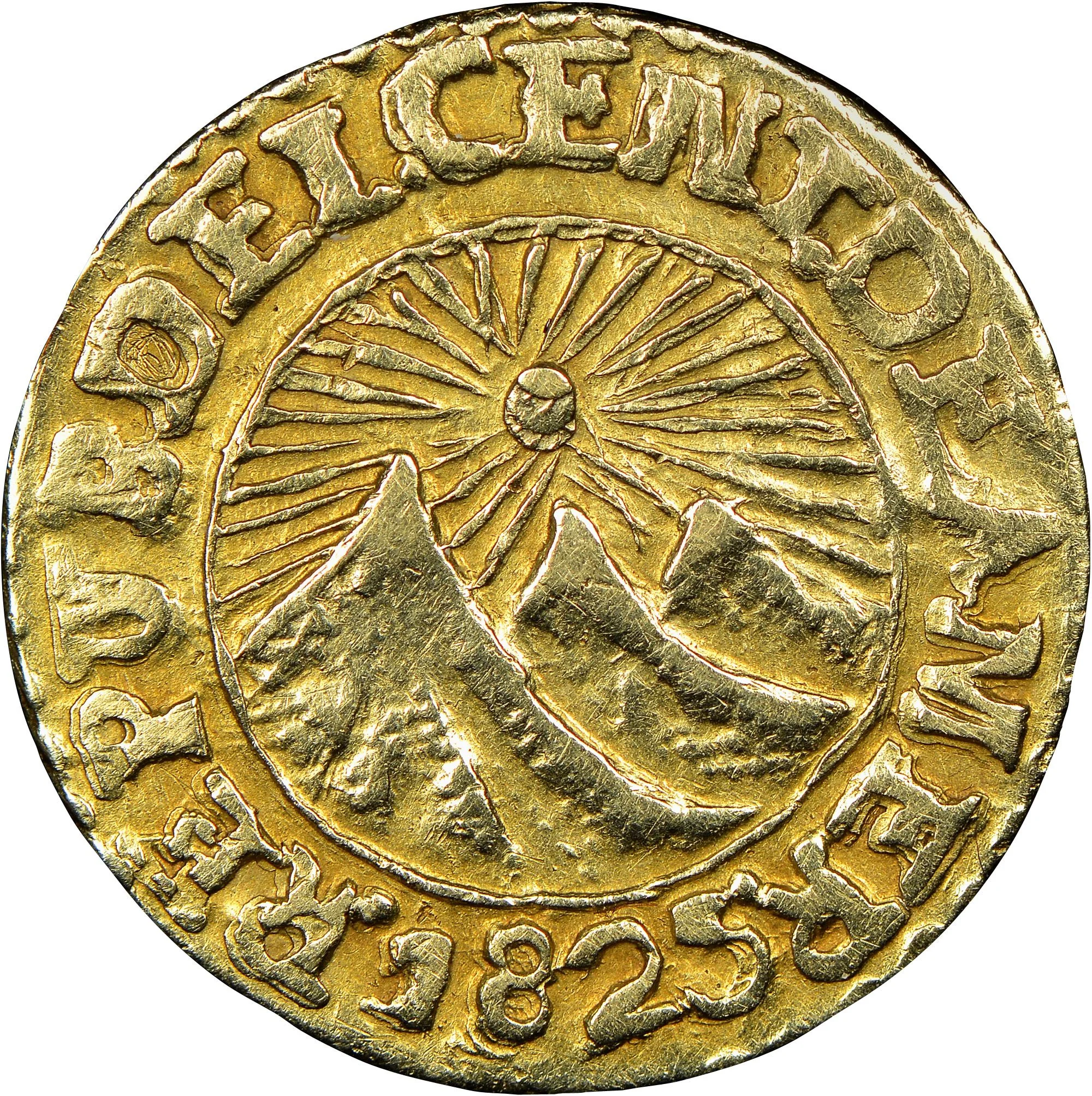
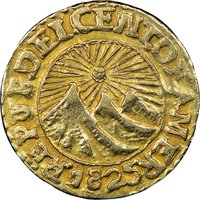
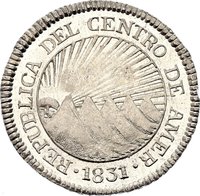
Obverse
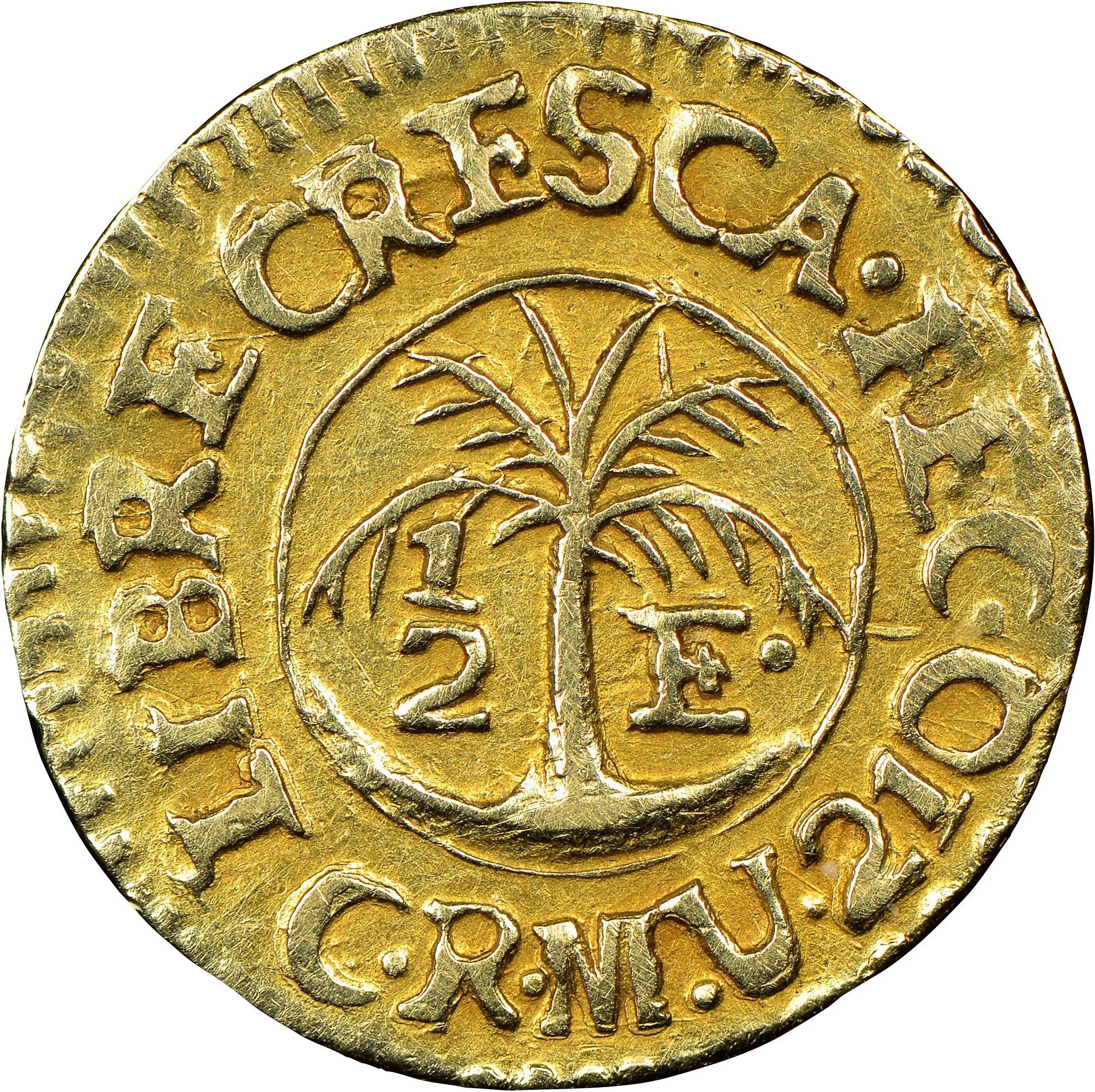
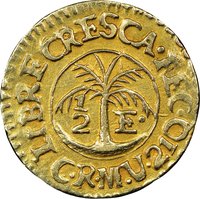
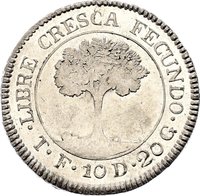
Reverse
Edge
Mints
| Name | Mark |
|---|---|
| Casa Nacional de Moneda de Costa Rica | CR |
Mintings
| Year | Mint Mark | Mintage | Quality | Collection |
|---|---|---|---|---|
| 1825 | CR | — |
Historical background
In 1825, the Federal Republic of Central America, comprising the present-day nations of Guatemala, El Salvador, Honduras, Nicaragua, and Costa Rica, faced a profound and destabilizing currency crisis rooted in its colonial past. Upon independence from Mexico in 1823, the federation inherited a chaotic monetary system characterized by a severe shortage of official coinage. The economy relied on a bewildering mix of Spanish colonial coins (like pesos and reales), coins from other former Spanish colonies, and even cut or counterfeited pieces, leading to widespread confusion in commerce and taxation. The federal government in Guatemala City lacked both the centralized authority and the bullion reserves to impose a uniform national currency, leaving the constituent states to grapple with the problem individually.
The situation was exacerbated by the republic's desperate financial condition. Years of war had drained its treasury, and it struggled to secure foreign loans. To generate immediate revenue, some states, notably Guatemala, resorted to issuing low-value copper token coins known as señoreaje. While intended to facilitate small daily transactions, these tokens were not backed by silver or gold and were not universally accepted outside their region of issue. This further fragmented the monetary zone, as the value and legitimacy of currency differed dramatically from one state to another, hindering internal trade and federal cohesion.
Consequently, by 1825, the federation was caught in a vicious cycle: economic development was stifled by the lack of a reliable medium of exchange, which in turn weakened the central government's ability to mint a credible unified currency. The monetary anarchy reflected the broader political struggles between federalists and centralists, and between the individual states and the national government. This financial disarray became a significant obstacle to the republic's stability and integration, foreshadowing the greater political and economic fractures that would lead to its dissolution by 1841.
The situation was exacerbated by the republic's desperate financial condition. Years of war had drained its treasury, and it struggled to secure foreign loans. To generate immediate revenue, some states, notably Guatemala, resorted to issuing low-value copper token coins known as señoreaje. While intended to facilitate small daily transactions, these tokens were not backed by silver or gold and were not universally accepted outside their region of issue. This further fragmented the monetary zone, as the value and legitimacy of currency differed dramatically from one state to another, hindering internal trade and federal cohesion.
Consequently, by 1825, the federation was caught in a vicious cycle: economic development was stifled by the lack of a reliable medium of exchange, which in turn weakened the central government's ability to mint a credible unified currency. The monetary anarchy reflected the broader political struggles between federalists and centralists, and between the individual states and the national government. This financial disarray became a significant obstacle to the republic's stability and integration, foreshadowing the greater political and economic fractures that would lead to its dissolution by 1841.
✨ Legendary