

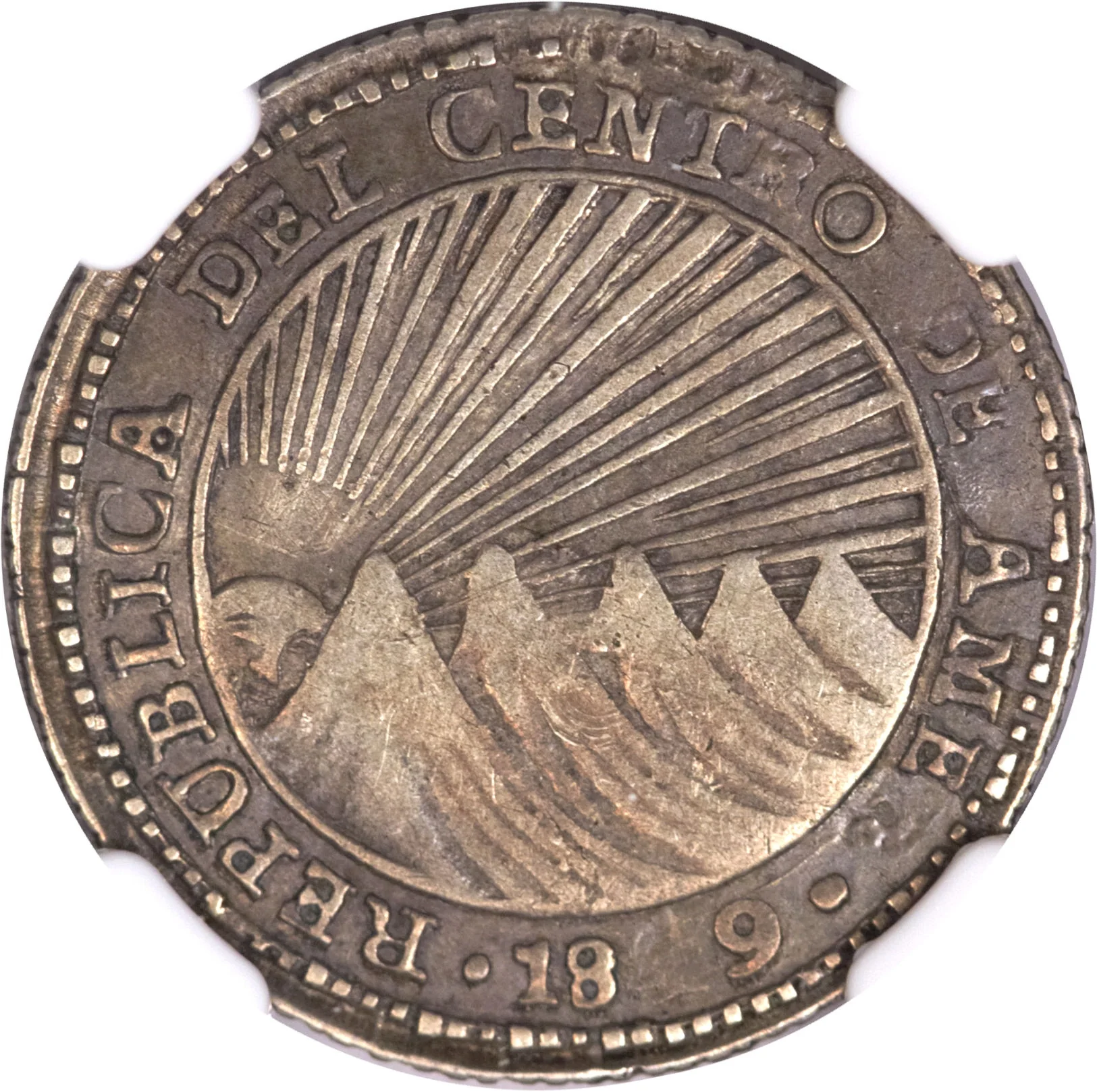
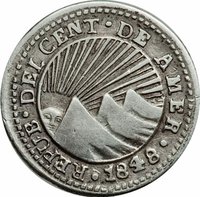
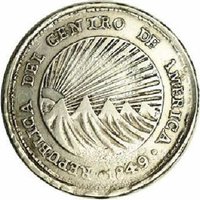
Obverse
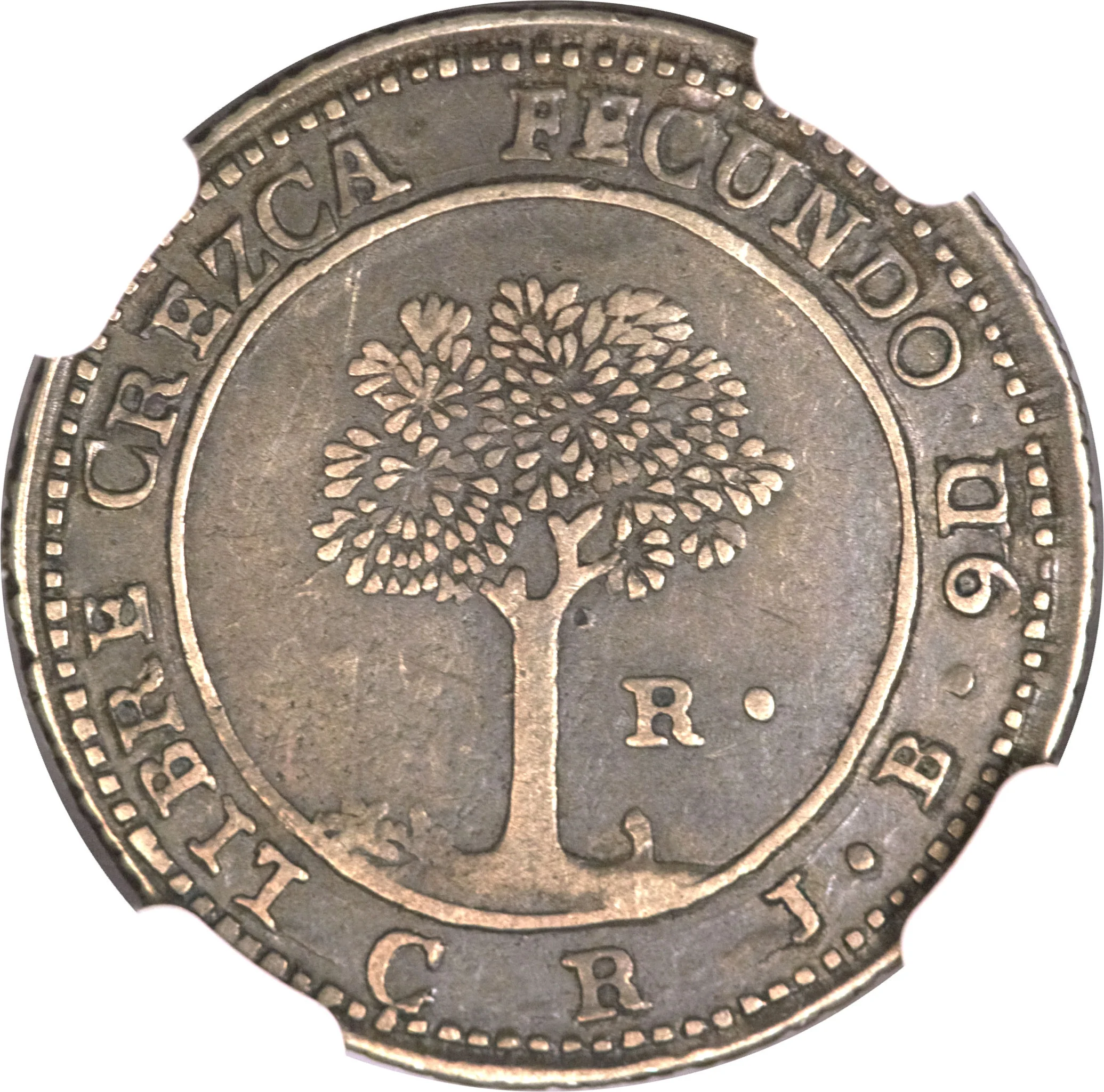
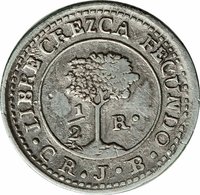
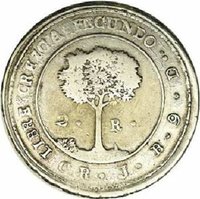
Reverse
Edge
Mints
| Name | Mark |
|---|---|
| Casa Nacional de Moneda de Costa Rica | CR |
Historical background
In 1848, the Federal Republic of Central America existed only as a shattered political ideal, having formally dissolved in 1841. The currency situation was therefore not one of a unified federal system, but of five successor states—Guatemala, El Salvador, Honduras, Nicaragua, and Costa Rica—each grappling with severe monetary chaos in the aftermath of civil war and fragmentation. The region was flooded with a bewildering variety of coins from around the world, primarily Spanish colonial reales, Mexican pesos, and other Latin American and European issues, all circulating simultaneously at varying and unstable rates. This lack of a standardized, trusted medium of exchange severely hampered internal trade and economic recovery.
The fundamental problem was a critical shortage of official, low-denomination coinage for everyday transactions. To fill this void, several state governments and even private entities resorted to issuing their own crude, low-value copper or bronze tokens. These señoreajes or fichas were often not legal tender but were accepted out of necessity in local markets. However, their quality and acceptance were highly inconsistent, leading to counterfeiting and a deep erosion of public trust in any monetary instrument. The situation created a multi-tiered system where foreign silver was hoarded for large transactions or export, while dubious token coinage fueled inflation and uncertainty at the local level.
Amidst this disorder, the year 1848 saw individual states taking tentative steps toward establishing sovereign monetary systems as a symbol of national authority. For instance, Costa Rica had already begun minting its own distinct coins at a temporary mint in 1847. The other states, recognizing the need for economic sovereignty and stability, were in various early stages of planning or contracting for their first national coinages, which would materialize in the early 1850s. Thus, the currency situation of 1848 was a transitional low point, characterized by the debris of the old federal order and the first, fragmented efforts by the nascent republics to build independent monetary foundations.
The fundamental problem was a critical shortage of official, low-denomination coinage for everyday transactions. To fill this void, several state governments and even private entities resorted to issuing their own crude, low-value copper or bronze tokens. These señoreajes or fichas were often not legal tender but were accepted out of necessity in local markets. However, their quality and acceptance were highly inconsistent, leading to counterfeiting and a deep erosion of public trust in any monetary instrument. The situation created a multi-tiered system where foreign silver was hoarded for large transactions or export, while dubious token coinage fueled inflation and uncertainty at the local level.
Amidst this disorder, the year 1848 saw individual states taking tentative steps toward establishing sovereign monetary systems as a symbol of national authority. For instance, Costa Rica had already begun minting its own distinct coins at a temporary mint in 1847. The other states, recognizing the need for economic sovereignty and stability, were in various early stages of planning or contracting for their first national coinages, which would materialize in the early 1850s. Thus, the currency situation of 1848 was a transitional low point, characterized by the debris of the old federal order and the first, fragmented efforts by the nascent republics to build independent monetary foundations.
✨ Legendary