

5 rubles – Russian Federation
Add to wishlist
Russia
Context
Years: 2002–2009
Country: Russia
Issuer: Russian Federation
Period:
(since 1991)
Currency:
(since 1998)
Total mintage: 45,000
Material
References
Y: #
Numista: #7705
Value
Exchange value: 5 RUB
Inflation-adjusted value: 42.54 RUB
Obverse
Description:
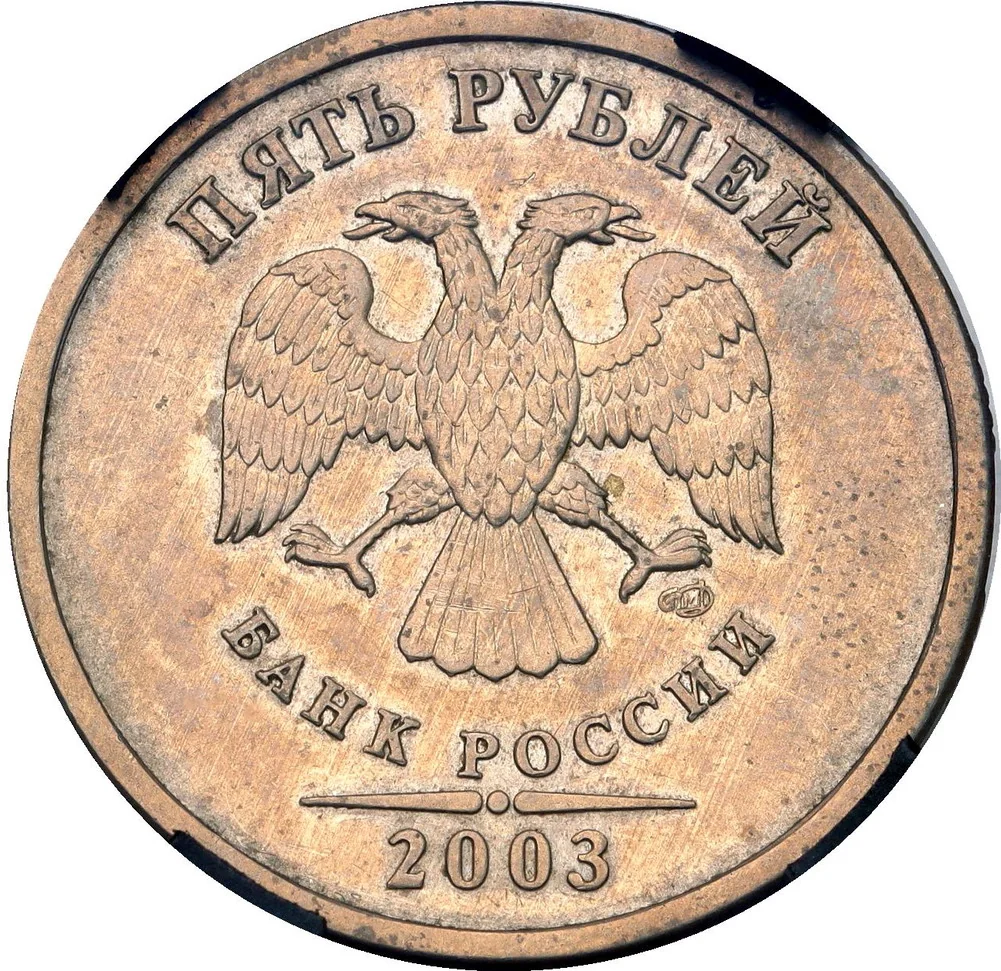
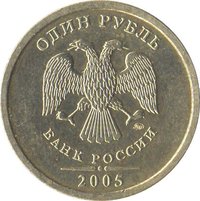
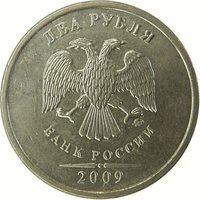
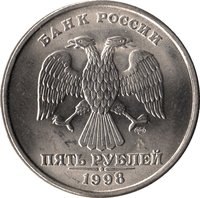
Center: Bank of Russia emblem (two-headed eagle, wings down, with "БАНК РОССИИ" below). To the right, under the eagle's paw: mint mark. Top rim: "ПЯТЬ РУБЛЕЙ" (FIVE ROUBLES). Bottom: two lines divided by a dot, with the year below.
Inscription:
ПЯТЬ РУБЛЕЙ
ММД
БАНК РОССИИ
2008
ММД
БАНК РОССИИ
2008
Translation:
FIVE RUBLES
MMD
BANK OF RUSSIA
2008
MMD
BANK OF RUSSIA
2008
Script: Cyrillic
Language: Russian
Designer and engraver: Alexander Vasilyevich Baklanov
Reverse
Description:
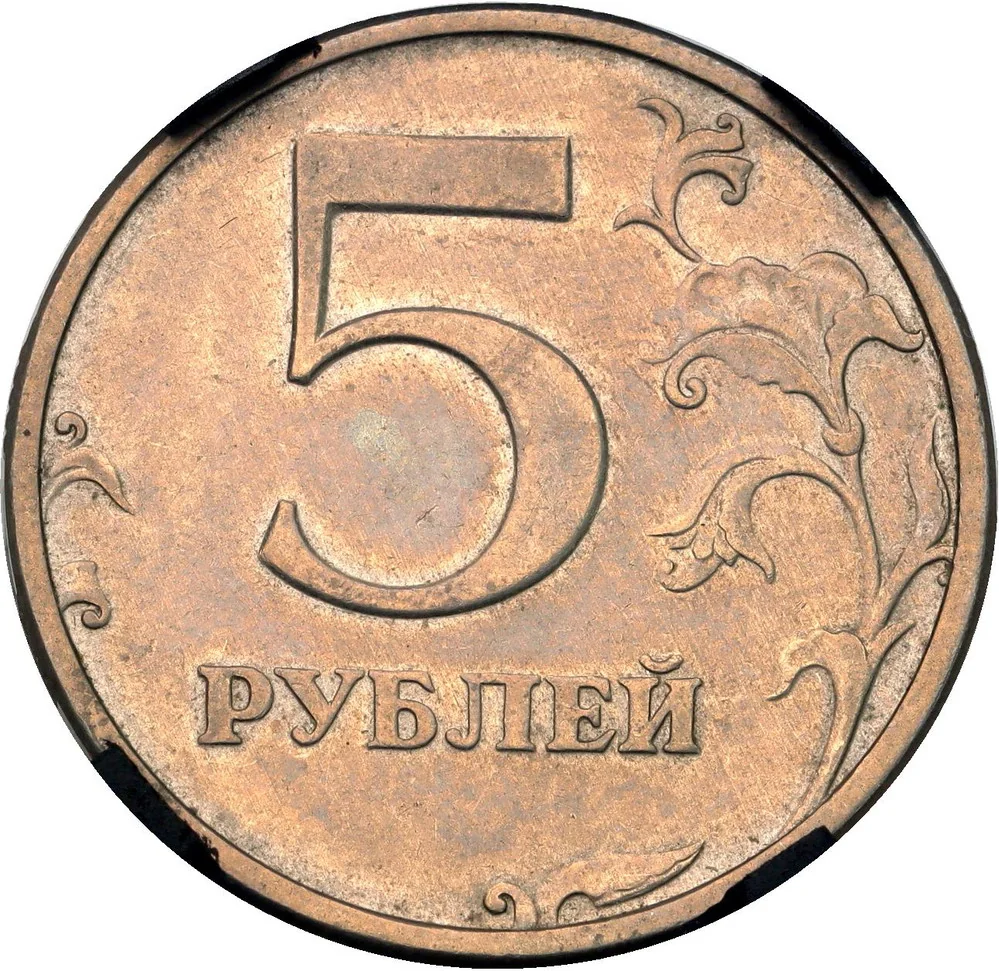
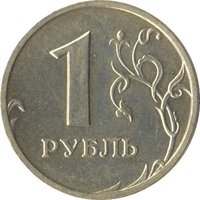
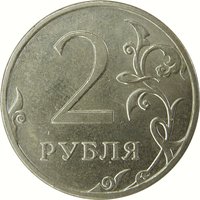
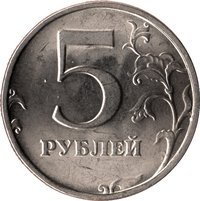
Left of center: the denomination "5 РУБЛЕЙ". Below, along the rim, a stylized vegetal ornament of an intertwining branch.
Inscription:
5
РУБЛЕЙ
РУБЛЕЙ
Translation:
5 RUBLES
Script: Cyrillic
Language: Russian
Designer and engraver: Alexander Vasilyevich Baklanov
Edge
Segmentedly reeded (12 segments with 5 reeds each), copper core partly visible
Mints
| Name | Mark |
|---|---|
| Moscow Mint | (ММД) |
| Saint Petersburg | (СПМД) |
Mintings
| Year | Mint Mark | Mintage | Quality | Collection |
|---|---|---|---|---|
| 2002 | ММД | 15,000 | In sets | |
| 2002 | СПМД | 15,000 | In sets | |
| 2003 | СПМД | 15,000 | BU | |
| 2008 | ММД | — | ||
| 2008 | СПМД | — | ||
| 2009 | СПМД | — | ||
| 2009 | ММД | — |
Historical background
In 2002, the Russian Federation was in a period of relative monetary stability, a stark contrast to the crises that defined the preceding decade. The Russian ruble (RUB) had been successfully redenominated in 1998, removing three zeros, but was immediately challenged by the devastating financial crisis and default of that same year. By 2002, the economy was in a strong recovery phase, buoyed by a significant devaluation that boosted domestic industry and, most importantly, a sustained rise in global oil prices. This influx of hydrocarbon revenues allowed the Central Bank of Russia (CBR) to build foreign exchange reserves and exert greater control over the currency's value.
The monetary policy framework was explicitly focused on maintaining a stable and predictable exchange rate against the US dollar, operating a de facto crawling peg. The CBR's primary goal was to curb inflation and prevent excessive ruble appreciation, which could harm the competitiveness of non-oil exports. To achieve this, the CBR actively intervened in the foreign exchange market, purchasing surplus dollars from exporters and accumulating reserves, which grew steadily throughout the year. This managed float successfully kept the ruble within a narrow trading band, fostering macroeconomic stability and rebuilding public trust in the national currency after the traumas of the 1990s.
However, this stability was underpinned by a dependence on volatile commodity markets, highlighting an unresolved structural vulnerability. The government was running budget surpluses and beginning to discuss the creation of a stabilization fund to insulate the economy from future oil price shocks—a policy that would later materialize. While 2002 was marked by calm, it was a calm engineered by favorable external conditions and administrative control, rather than a deep, institutional transformation of the financial system. The period solidified a model where ruble stability and federal budgets became directly linked to the global price of oil.
The monetary policy framework was explicitly focused on maintaining a stable and predictable exchange rate against the US dollar, operating a de facto crawling peg. The CBR's primary goal was to curb inflation and prevent excessive ruble appreciation, which could harm the competitiveness of non-oil exports. To achieve this, the CBR actively intervened in the foreign exchange market, purchasing surplus dollars from exporters and accumulating reserves, which grew steadily throughout the year. This managed float successfully kept the ruble within a narrow trading band, fostering macroeconomic stability and rebuilding public trust in the national currency after the traumas of the 1990s.
However, this stability was underpinned by a dependence on volatile commodity markets, highlighting an unresolved structural vulnerability. The government was running budget surpluses and beginning to discuss the creation of a stabilization fund to insulate the economy from future oil price shocks—a policy that would later materialize. While 2002 was marked by calm, it was a calm engineered by favorable external conditions and administrative control, rather than a deep, institutional transformation of the financial system. The period solidified a model where ruble stability and federal budgets became directly linked to the global price of oil.
🌱 Very Common