

20 Cents – Jamaica
Non-circulating coins
Series: 1971 series
Jamaica
Context
Years: 1971–1976
Issuer: Jamaica 
Ruler: Elizabeth II
Currency:
(since 1969)
Demonetization: 1995
Total mintage: 168,251
Material
Diameter: 28.5 mm
Weight: 11.3 g
Shape: Round
Composition: Copper-nickel
Technique: Milled
Alignment: Medal alignment
flip
References
KM: #Click to copy to clipboard55
Numista: #10377
Value
Exchange value: 0.20 JMD
Obverse
Description:
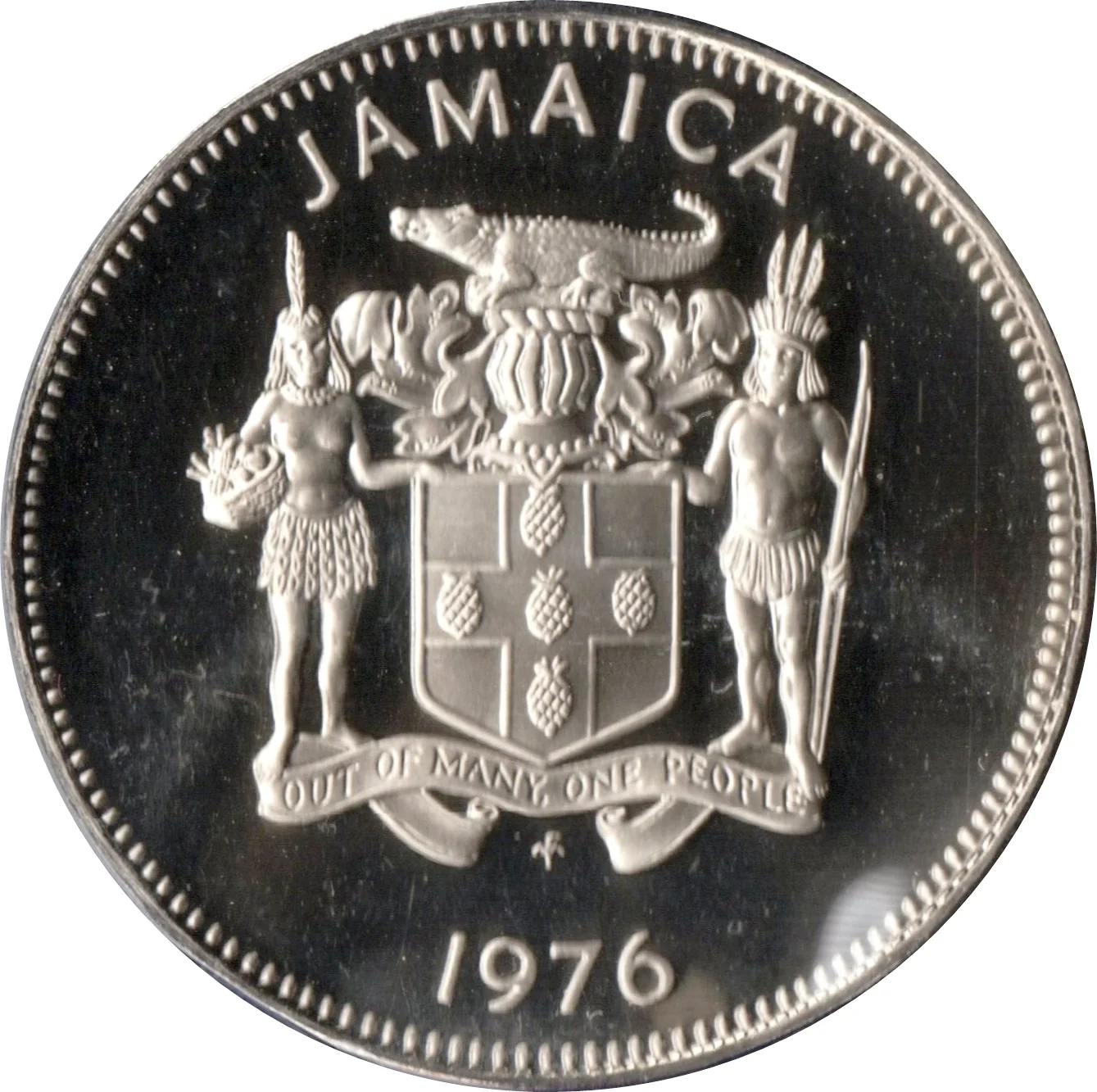
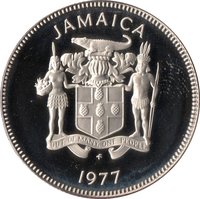
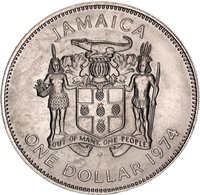
Jamaican coat of arms.
Inscription:
JAMAICA
1976
OUT OF MANY ONE PEOPLE
FM
1976
OUT OF MANY ONE PEOPLE
FM
Translation:
JAMAICA
1976
OUT OF MANY ONE PEOPLE
FM
1976
OUT OF MANY ONE PEOPLE
FM
Script: Latin
Language: English
Engraver: Philip Nathan
Reverse
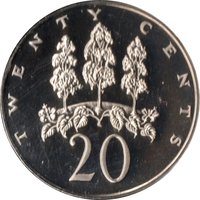
Description:
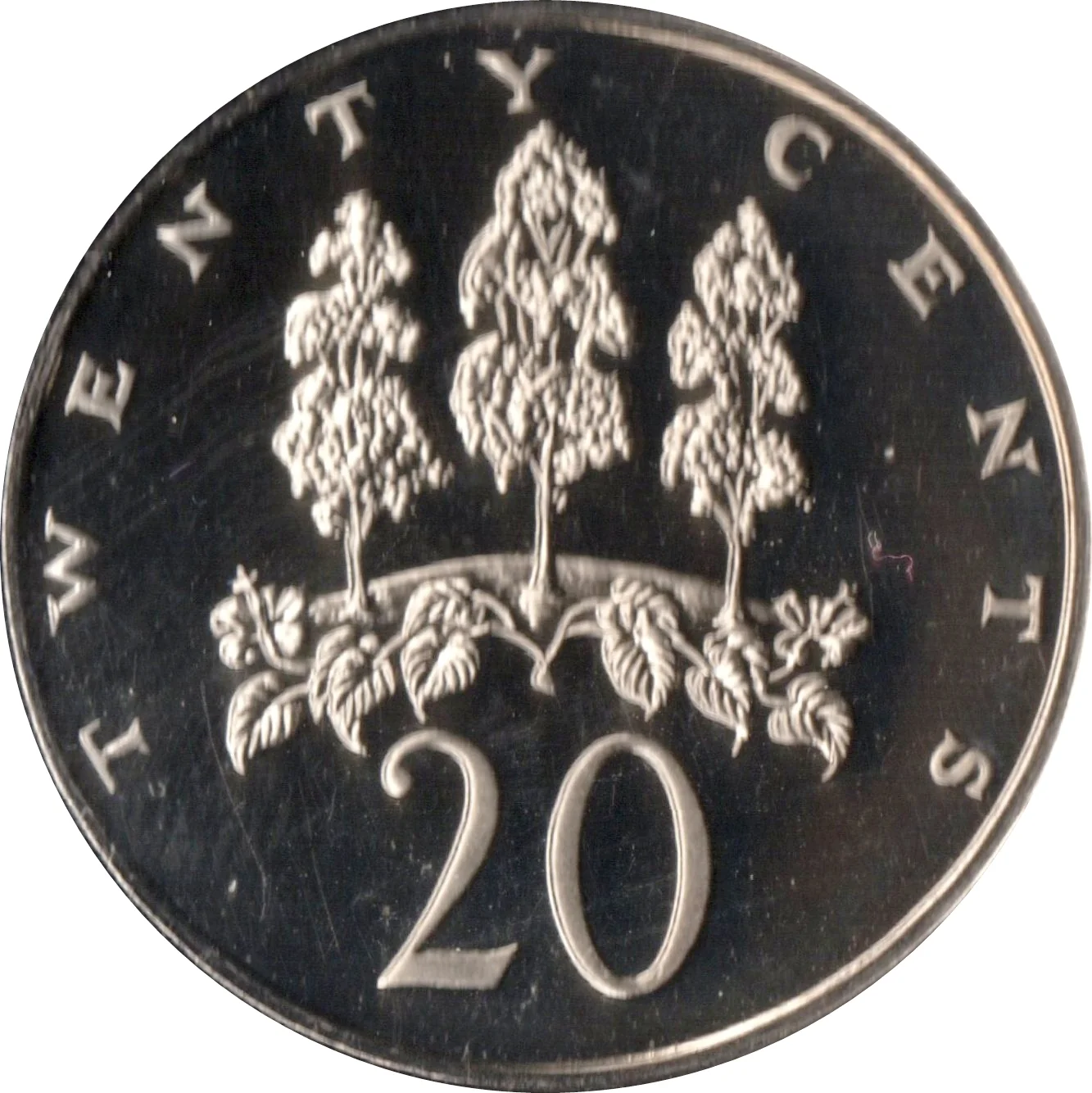
Mahoe tree leaves and uses.
Inscription:
TWENTY CENTS
20
20
Script: Latin
Engraver: Christopher Ironside
Edge
Milled
Categories
| Symbols> Coat of Arms |
| Plant> Tree |
Mints
| Name | Mark |
|---|---|
| Franklin Mint | (FM) |
Mintings
| Year | Mint Mark | Mintage | Quality | Collection |
|---|---|---|---|---|
| 1971 | FM | 4,834 | Matte | |
| 1971 | FM | 14,000 | Proof | |
| 1972 | FM | 7,982 | Matte | |
| 1972 | FM | 17,000 | Proof | |
| 1973 | FM | 13,000 | Matte | |
| 1973 | FM | 28,000 | Proof | |
| 1974 | FM | 22,000 | Proof | |
| 1974 | FM | 12,000 | Matte | |
| 1975 | FM | 1,560 | Matte | |
| 1975 | FM | 16,000 | Proof | |
| 1975 | FM | 4,683 | Special Uncirculated | |
| 1976 | FM | 1,390 | Matte | |
| 1976 | FM | 24,000 | Proof | |
| 1976 | FM | 1,802 | Special Uncirculated |
Historical background
In 1971, Jamaica's currency situation was defined by its recent transition to a decimalized system and its ongoing peg to the British pound sterling, reflecting the nation's colonial economic ties. Just two years prior, in 1969, the country had introduced the Jamaican dollar (JMD), replacing the Jamaican pound and shifting from a system of pounds, shillings, and pence. This move was a significant step in asserting national identity post-independence in 1962, but the new currency remained firmly fixed to sterling, meaning its value was directly determined by the Bank of England's policies and the strength of the UK economy.
This sterling peg, however, was becoming increasingly strained. The global monetary landscape was in turmoil, with the Bretton Woods system of fixed exchange rates beginning to unravel, culminating in the Nixon Shock in August 1971 when the US suspended the dollar's convertibility to gold. This international crisis placed indirect pressure on Jamaica's sterling link. Furthermore, the UK's own economic struggles and the gradual decline of sterling as a reserve currency raised concerns among Jamaican policymakers about the wisdom of tethering the nation's economic fortunes so closely to a weakening anchor.
Consequently, 1971 was a year of pivotal deliberation, setting the stage for a major shift. The government, led by Prime Minister Hugh Shearer, and the Bank of Jamaica began serious preparations to sever the sterling link. This culminated in the landmark decision in 1972 to peg the Jamaican dollar to the US dollar instead, a move that realigned Jamaica's primary financial and trade relationships with its dominant hemispheric partner and represented a decisive step toward a more independent monetary policy in a turbulent global era.
This sterling peg, however, was becoming increasingly strained. The global monetary landscape was in turmoil, with the Bretton Woods system of fixed exchange rates beginning to unravel, culminating in the Nixon Shock in August 1971 when the US suspended the dollar's convertibility to gold. This international crisis placed indirect pressure on Jamaica's sterling link. Furthermore, the UK's own economic struggles and the gradual decline of sterling as a reserve currency raised concerns among Jamaican policymakers about the wisdom of tethering the nation's economic fortunes so closely to a weakening anchor.
Consequently, 1971 was a year of pivotal deliberation, setting the stage for a major shift. The government, led by Prime Minister Hugh Shearer, and the Bank of Jamaica began serious preparations to sever the sterling link. This culminated in the landmark decision in 1972 to peg the Jamaican dollar to the US dollar instead, a move that realigned Jamaica's primary financial and trade relationships with its dominant hemispheric partner and represented a decisive step toward a more independent monetary policy in a turbulent global era.
Series: 1971 series
🌱 Common