

Obverse
Description:
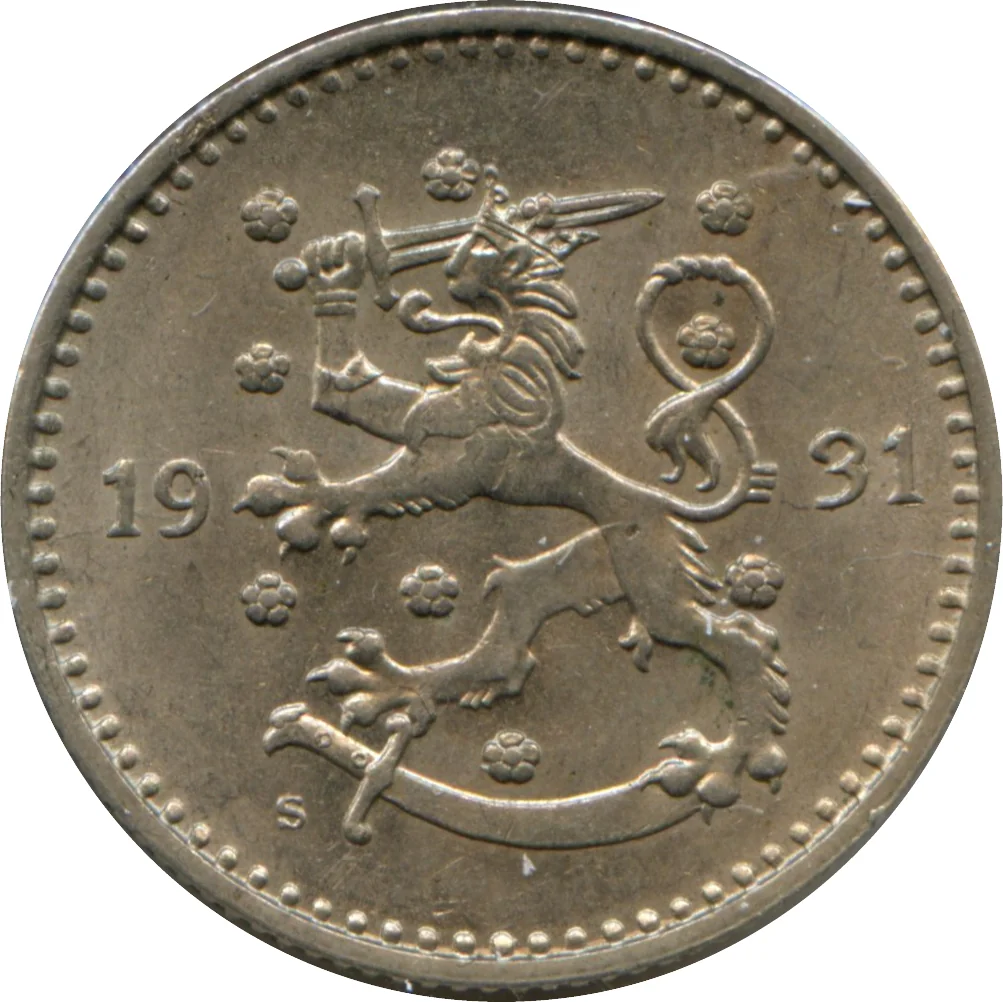
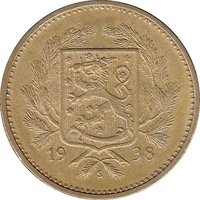
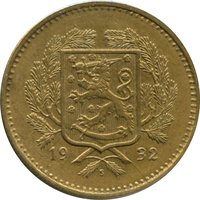
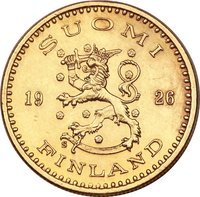
Finland's arms (a rampant lion with an armoured hand wielding a sword, trampling a sabre) flank the date.
Inscription:
19 31
S
S
Script: Latin
Engraver: Isak Gustaf Sundell
Reverse
Description:
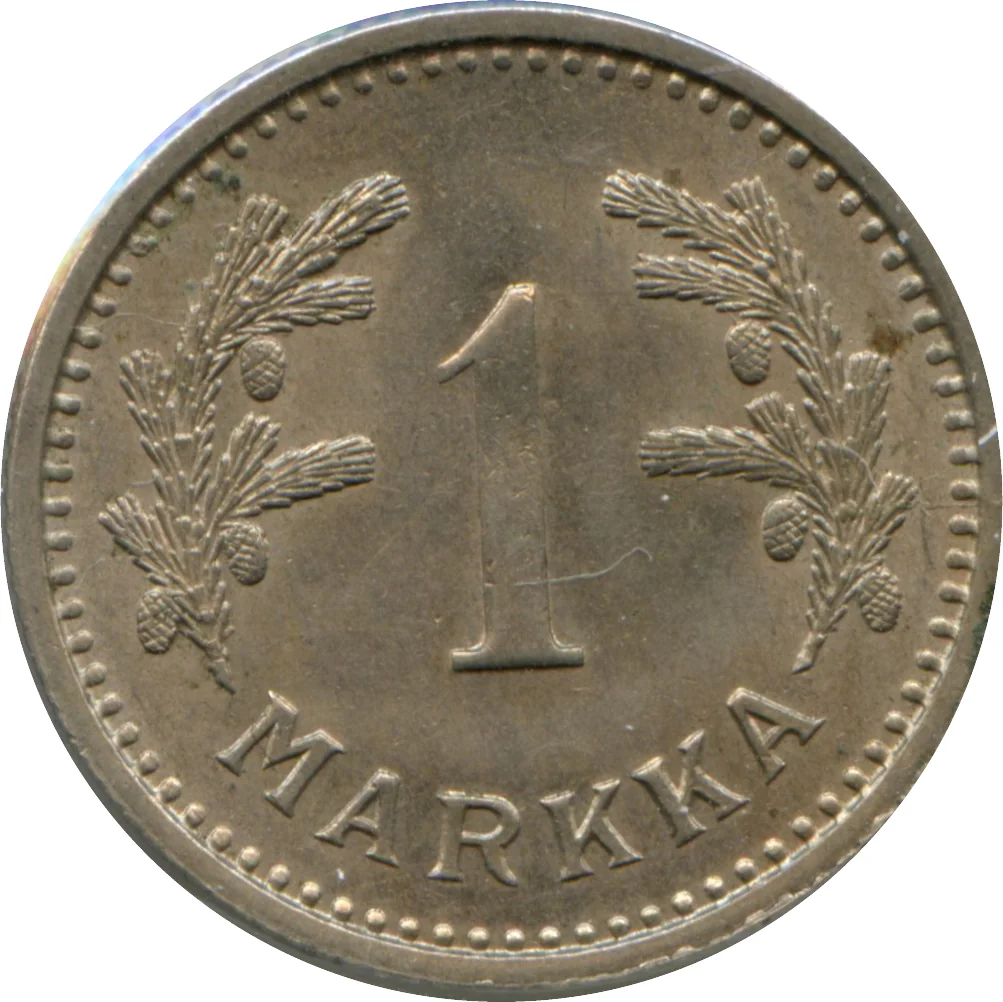
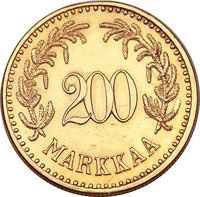
Spruce-framed denomination
Inscription:
1
MARKKA
MARKKA
Script: Latin
Engraver: Isak Gustaf Sundell
Edge
Reeded
Categories
| Plants> Flower |
| Animal> Feline |
| Symbols> Coat of Arms |
| Object> Cold weapons |
Mints
| Name | Mark |
|---|---|
| Mint of Finland | — |
Mintings
| Year | Mint Mark | Mintage | Quality | Collection |
|---|---|---|---|---|
| 1928 | — | 3,000,000 | ||
| 1929 | — | 3,862,000 | ||
| 1930 | — | 10,284,000 | ||
| 1931 | — | 2,830,000 | ||
| 1932 | — | 4,140,000 | ||
| 1933 | — | 4,032,000 | ||
| 1936 | — | 562,000 | ||
| 1937 | — | 4,930,000 | ||
| 1938 | — | 4,410,000 | ||
| 1939 | — | 3,070,000 | ||
| 1940 | — | 3,372,000 |
Historical background
In 1928, Finland's currency situation was defined by stability and the successful establishment of the modern Finnish markka (markka, or FIM). This followed a period of significant turmoil after the nation's independence in 1917, which had been marked by post-war inflation and monetary uncertainty. The cornerstone of this stability was the Currency Act of 1925, which came into effect in 1926, officially tying the Finnish markka to the gold standard. By 1928, the currency was firmly pegged at 0.00121116 grams of pure gold, a rate that aligned it de facto with the pre-war gold standard value of the Swedish krona, Finland's most important trading partner.
This gold peg provided crucial confidence in the currency, both domestically and internationally. It effectively ended the inflationary pressures of the early 1920s and created a predictable environment for trade and investment. The Bank of Finland, as the sole issuer of banknotes, was legally obligated to exchange notes for gold on demand, which disciplined monetary policy and limited the scope for deficit financing. Consequently, the late 1920s are often viewed as a period of monetary orthodoxy and economic growth for Finland, with the markka considered a strong and reliable currency.
However, this stability existed within a fragile global context. Finland's system was part of a wider, interconnected international gold standard, which was already showing strains. The Finnish economy, heavily dependent on exports like timber and pulp, remained vulnerable to external shocks and shifts in global demand. While 1928 itself represented a high point of interwar monetary stability, the foundations would soon be tested by the Great Depression, which ultimately forced Finland, like most countries, to abandon the gold standard in 1931.
This gold peg provided crucial confidence in the currency, both domestically and internationally. It effectively ended the inflationary pressures of the early 1920s and created a predictable environment for trade and investment. The Bank of Finland, as the sole issuer of banknotes, was legally obligated to exchange notes for gold on demand, which disciplined monetary policy and limited the scope for deficit financing. Consequently, the late 1920s are often viewed as a period of monetary orthodoxy and economic growth for Finland, with the markka considered a strong and reliable currency.
However, this stability existed within a fragile global context. Finland's system was part of a wider, interconnected international gold standard, which was already showing strains. The Finnish economy, heavily dependent on exports like timber and pulp, remained vulnerable to external shocks and shifts in global demand. While 1928 itself represented a high point of interwar monetary stability, the foundations would soon be tested by the Great Depression, which ultimately forced Finland, like most countries, to abandon the gold standard in 1931.
🌱 Very Common