

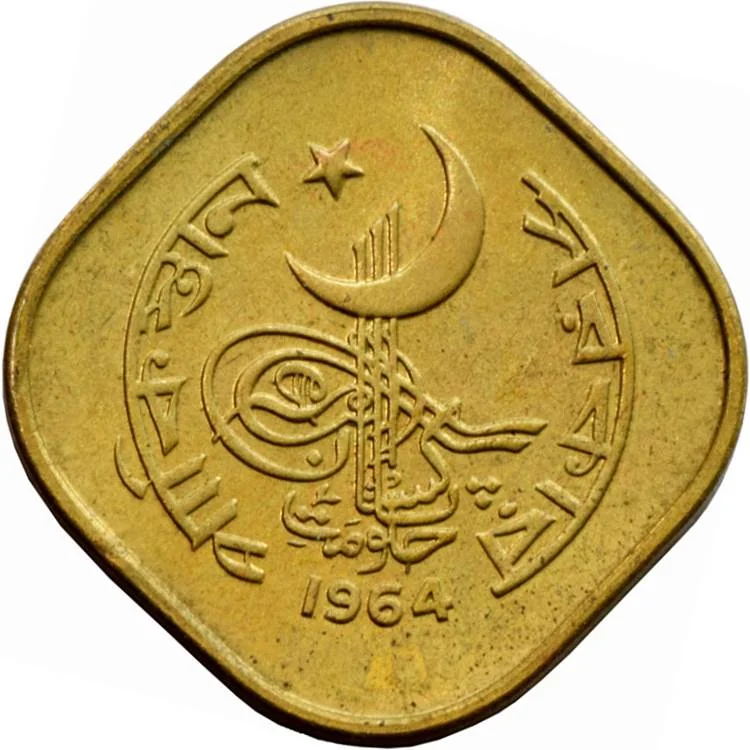
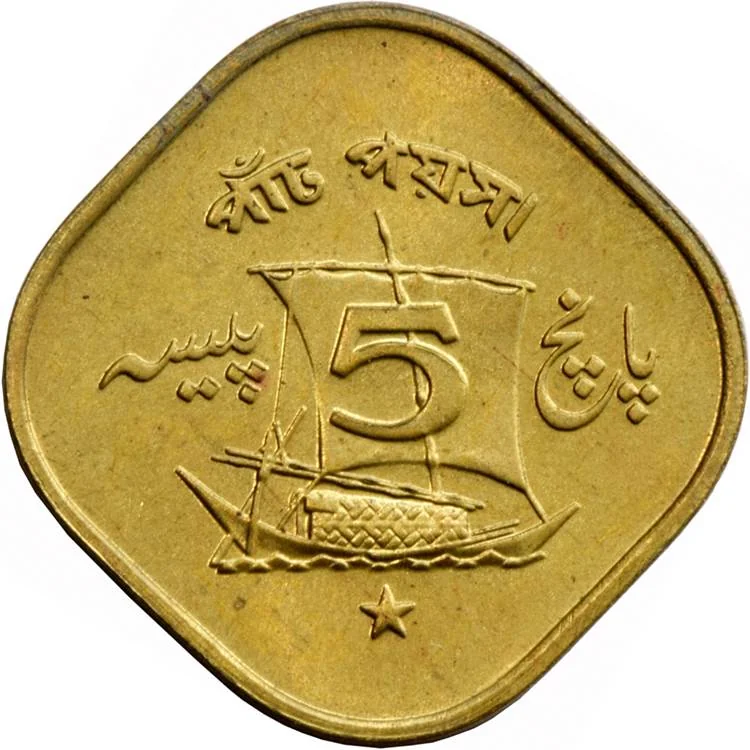
5 paisas – Pakistan
Add to wishlist
Pakistan
Context
Years: 1964–1974
Issuer: Pakistan
Period:
(since 1956)
Currency:
(since 1961)
Demonetization: 30 September 2014
Total mintage: 278,115,000
Material
Weight: 3 g
Thickness: 1.5 mm
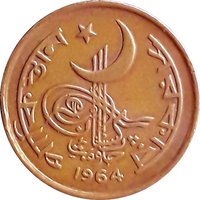
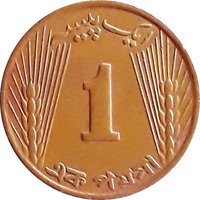
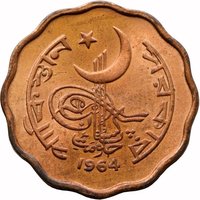
Shape: Square with rounded corners
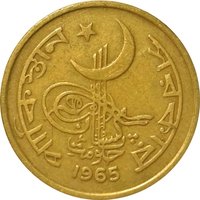
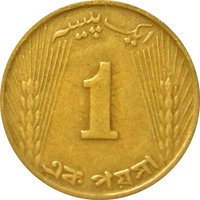
Composition: Nickel brass
Magnetic: No
Technique: Milled
Alignment: Medal alignment
flip
References
KM: #
Numista: #7645
Value
Exchange value: 0.05 PKR
Obverse
Reverse
Edge
Plain
Categories
| Transportation> Watercraft |
Mints
| Name | Mark |
|---|---|
| Lahore | — |
Mintings
| Year | Mint Mark | Mintage | Quality | Collection |
|---|---|---|---|---|
| 1964 | — | — | ||
| 1965 | — | 72,570,000 | ||
| 1966 | — | 32,900,000 | ||
| 1967 | — | 24,470,000 | ||
| 1968 | — | 34,650,000 | ||
| 1969 | — | 5,690,000 | ||
| 1970 | — | 24,655,000 | ||
| 1971 | — | 23,860,000 | ||
| 1972 | — | 40,345,000 | ||
| 1973 | — | 11,280,000 | ||
| 1974 | — | 7,695,000 |
Historical background
In 1964, Pakistan's currency situation was characterized by relative stability and optimism, underpinned by a period of significant industrial growth and economic planning. The country was operating under a fixed exchange rate system, with the Pakistani rupee pegged to the British pound sterling at a rate of Rs. 4.76 to £1, a parity established in 1949. This peg provided predictability for international trade, which was crucial as Pakistan was a major exporter of jute, cotton, and tea. The State Bank of Pakistan managed the currency and foreign exchange reserves, which were under less pressure than in preceding or subsequent decades, partly due to consistent foreign aid inflows and the success of the early years of Ayub Khan's "Decade of Development."
Economically, this period followed the introduction of Pakistan's second five-year plan (1960-1965), which focused on industrialization and saw the manufacturing sector expand rapidly. The currency's stability facilitated imports of capital goods needed for this industrial push. Furthermore, the rupee was seen as a strong currency within the region, and there was no serious black-market premium for foreign exchange, indicating controlled inflation and manageable balance of payments. This environment fostered confidence among both domestic industrialists and foreign investors.
However, this apparent stability in 1964 masked underlying structural vulnerabilities. The economy remained heavily dependent on primary commodity exports, making it susceptible to terms-of-trade shocks. While reserves were adequate, the fixed exchange rate required careful management, and the cost of the ambitious development agenda began to strain public finances. Within a few years, these pressures would culminate in the devaluation of the rupee in 1972, but in 1964, the currency regime was largely perceived as a pillar of the country's ongoing economic modernization.
Economically, this period followed the introduction of Pakistan's second five-year plan (1960-1965), which focused on industrialization and saw the manufacturing sector expand rapidly. The currency's stability facilitated imports of capital goods needed for this industrial push. Furthermore, the rupee was seen as a strong currency within the region, and there was no serious black-market premium for foreign exchange, indicating controlled inflation and manageable balance of payments. This environment fostered confidence among both domestic industrialists and foreign investors.
However, this apparent stability in 1964 masked underlying structural vulnerabilities. The economy remained heavily dependent on primary commodity exports, making it susceptible to terms-of-trade shocks. While reserves were adequate, the fixed exchange rate required careful management, and the cost of the ambitious development agenda began to strain public finances. Within a few years, these pressures would culminate in the devaluation of the rupee in 1972, but in 1964, the currency regime was largely perceived as a pillar of the country's ongoing economic modernization.
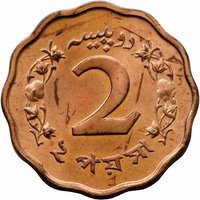
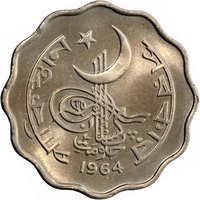
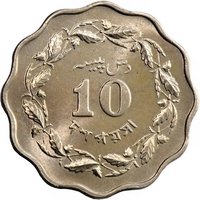
Series: 1964 Pakistan circulation coins
🌱 Very Common