

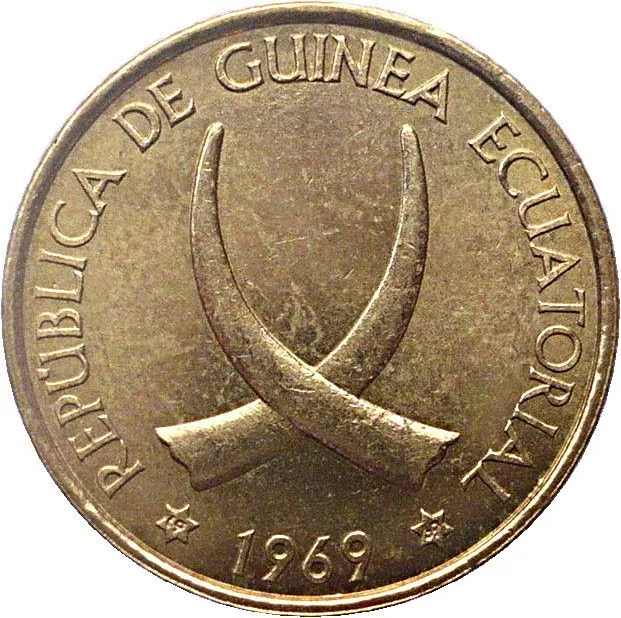
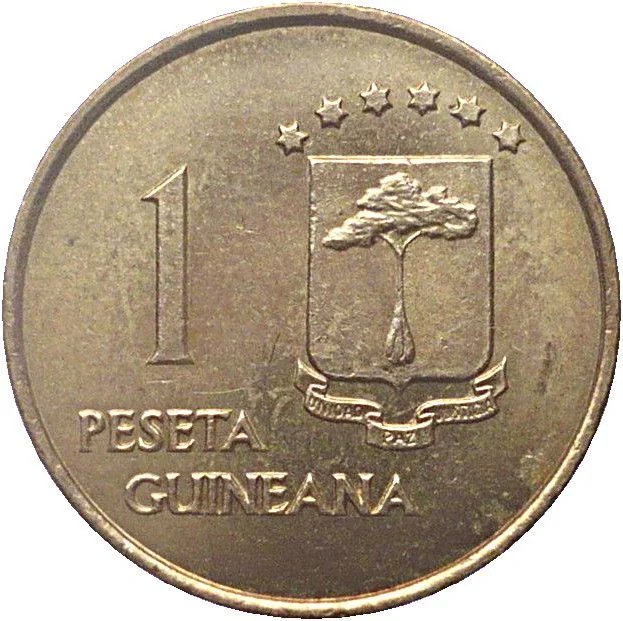
1 peseta – Equatorial Guinea
Add to wishlist
Equatorial Guinea
Context
Material
Diameter: 19.5 mm
Weight: 3.42 g
Thickness: 1.66 mm
Shape: Round
Composition: Aluminium bronze
Magnetic: No
Technique: Milled
Alignment: Coin alignment
flip
References
KM: #
Numista: #7635
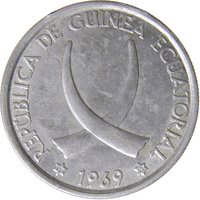
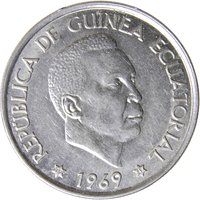
Obverse
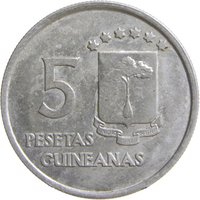
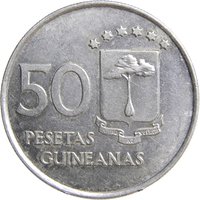
Reverse
Edge
Reeded
Categories
| Symbols> Coat of Arms |
Mints
| Name | Mark |
|---|---|
| Royal Mint of Madrid | — |
Mintings
| Year | Mint Mark | Mintage | Quality | Collection |
|---|---|---|---|---|
| 1969 | — | — |
Historical background
In 1969, Equatorial Guinea was navigating the turbulent first year of independence from Spain, achieved in October 1968. The currency situation was a direct legacy of colonial rule, as the country remained within the monetary zone of its former colonizer. The official currency was the Spanish peseta, and the Banco Exterior de España continued to operate as the central financial institution. This arrangement provided initial stability but also symbolized lingering economic dependence, as monetary policy was effectively set in Madrid, not Malabo.
This dependency became a significant point of contention under the nascent and increasingly authoritarian regime of President Francisco Macías Nguema. In March 1969, a failed coup attempt, allegedly supported by Spain, triggered a severe political crisis. Macías used this event to consolidate power, accusing Spain of aggression and beginning a campaign of repression against perceived opponents, including the Spanish community. The political rupture had immediate monetary consequences, shaking commercial confidence and disrupting the economic ties that underpinned the currency's viability.
Consequently, 1969 marked the beginning of the end for the peseta in Equatorial Guinea. The political breakdown with Spain made the continuation of a shared currency untenable. While the formal change would not occur until 1975, the events of 1969 set an irreversible course. Macías's regime began laying the groundwork to replace the peseta with a national currency, the ekwele, as part of a broader move toward economic isolation and autarky that would define the country's disastrous economic trajectory in the years to follow.
This dependency became a significant point of contention under the nascent and increasingly authoritarian regime of President Francisco Macías Nguema. In March 1969, a failed coup attempt, allegedly supported by Spain, triggered a severe political crisis. Macías used this event to consolidate power, accusing Spain of aggression and beginning a campaign of repression against perceived opponents, including the Spanish community. The political rupture had immediate monetary consequences, shaking commercial confidence and disrupting the economic ties that underpinned the currency's viability.
Consequently, 1969 marked the beginning of the end for the peseta in Equatorial Guinea. The political breakdown with Spain made the continuation of a shared currency untenable. While the formal change would not occur until 1975, the events of 1969 set an irreversible course. Macías's regime began laying the groundwork to replace the peseta with a national currency, the ekwele, as part of a broader move toward economic isolation and autarky that would define the country's disastrous economic trajectory in the years to follow.
🌱 Common