

20 centavos – Cape Verde
Add to wishlist
Cape Verde
Context
Year: 1930
Issuer: Cape Verde
Period:
(1910—1951)
Currency:
(since 1914)
Demonetized: Yes
Total mintage: 1,500,000
Material
References
KM: #
Numista: #7614
Value
Exchange value: 0.20 CVE
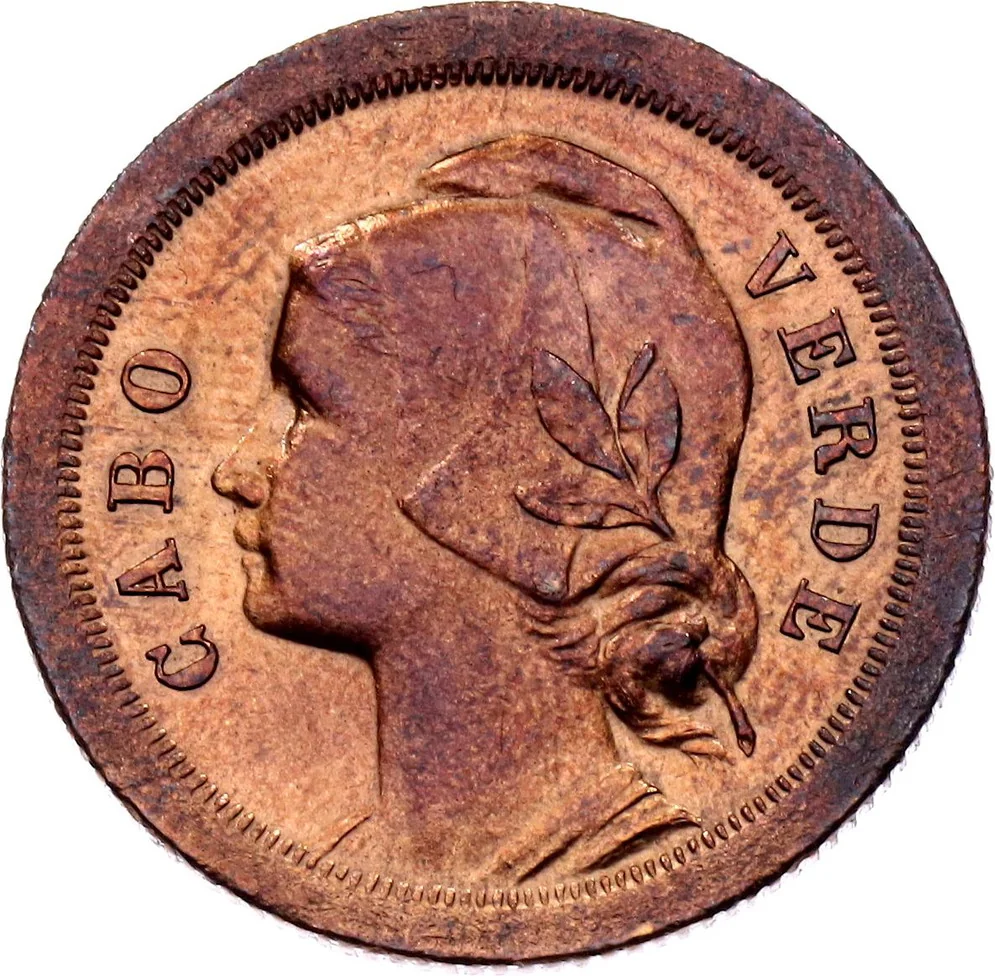
Obverse
Description:
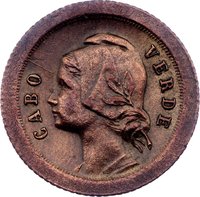
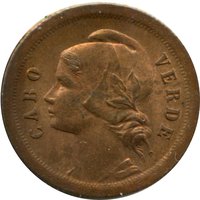
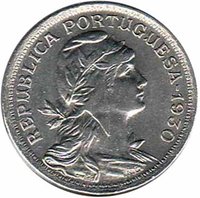
Liberty left profile.
Inscription:
CABO VERDE
Translation:
Cape Verde
Script: Latin
Language: Portuguese
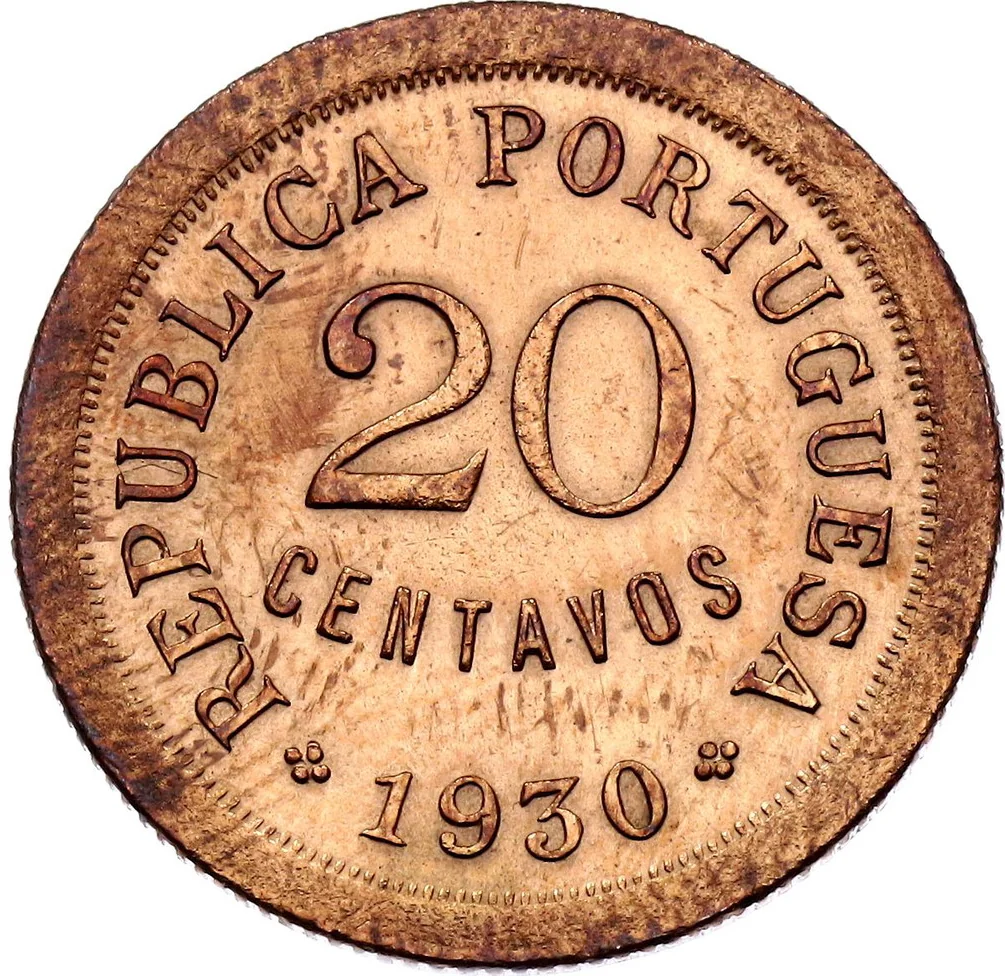
Reverse
Description:
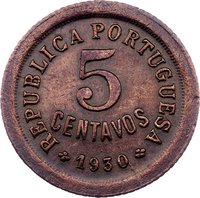
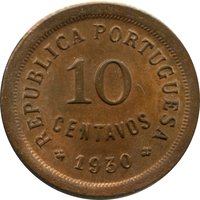
Face value, date beneath.
Inscription:
REPUBLICA PORTUGUESA
20
CENTAVOS
1930
20
CENTAVOS
1930
Translation:
Portuguese Republic
20
Cents
1930
20
Cents
1930
Script: Latin
Language: Portuguese
Edge
Reeded
Categories
| Symbol> Phrygian cap |
Mintings
| Year | Mint Mark | Mintage | Quality | Collection |
|---|---|---|---|---|
| 1930 | — | 1,500,000 |
Historical background
In 1930, the currency situation in Cape Verde was intrinsically tied to its status as a Portuguese colony. The official currency was the Cape Verdean real (plural: réis), which operated on a system directly pegged to and subordinate to Portugal's own currency. There was no independent central bank or monetary policy; the colony's financial system was an extension of Lisbon's, with the Portuguese real circulating alongside the local issue. This arrangement meant that Cape Verde's economy was entirely vulnerable to the monetary decisions made for the metropole, with no mechanism to adjust for local economic conditions.
This period fell within a time of significant economic difficulty for Portugal, which directly impacted its colonies. The Portuguese real itself was unstable, having undergone devaluations and suffered from the impacts of World War I and the early pressures of the global Great Depression. Consequently, the Cape Verdean real, by proxy, experienced this instability. The colony's economy, heavily reliant on remittances from emigrants and the export of agricultural products like coffee and castor oil, was poorly served by a weakening currency that could hinder trade and reduce the value of incoming funds.
Furthermore, the currency system reflected the broader colonial economic model of extraction and dependency. Cape Verde served as a coaling station and maritime transit point, with its currency facilitating Portuguese commercial interests rather than fostering robust local development. The lack of financial autonomy in 1930 underscored Cape Verde's position within the Portuguese empire, a situation that would persist until the move towards the escudo system later in the decade and, ultimately, until independence in 1975.
This period fell within a time of significant economic difficulty for Portugal, which directly impacted its colonies. The Portuguese real itself was unstable, having undergone devaluations and suffered from the impacts of World War I and the early pressures of the global Great Depression. Consequently, the Cape Verdean real, by proxy, experienced this instability. The colony's economy, heavily reliant on remittances from emigrants and the export of agricultural products like coffee and castor oil, was poorly served by a weakening currency that could hinder trade and reduce the value of incoming funds.
Furthermore, the currency system reflected the broader colonial economic model of extraction and dependency. Cape Verde served as a coaling station and maritime transit point, with its currency facilitating Portuguese commercial interests rather than fostering robust local development. The lack of financial autonomy in 1930 underscored Cape Verde's position within the Portuguese empire, a situation that would persist until the move towards the escudo system later in the decade and, ultimately, until independence in 1975.
🌱 Common