

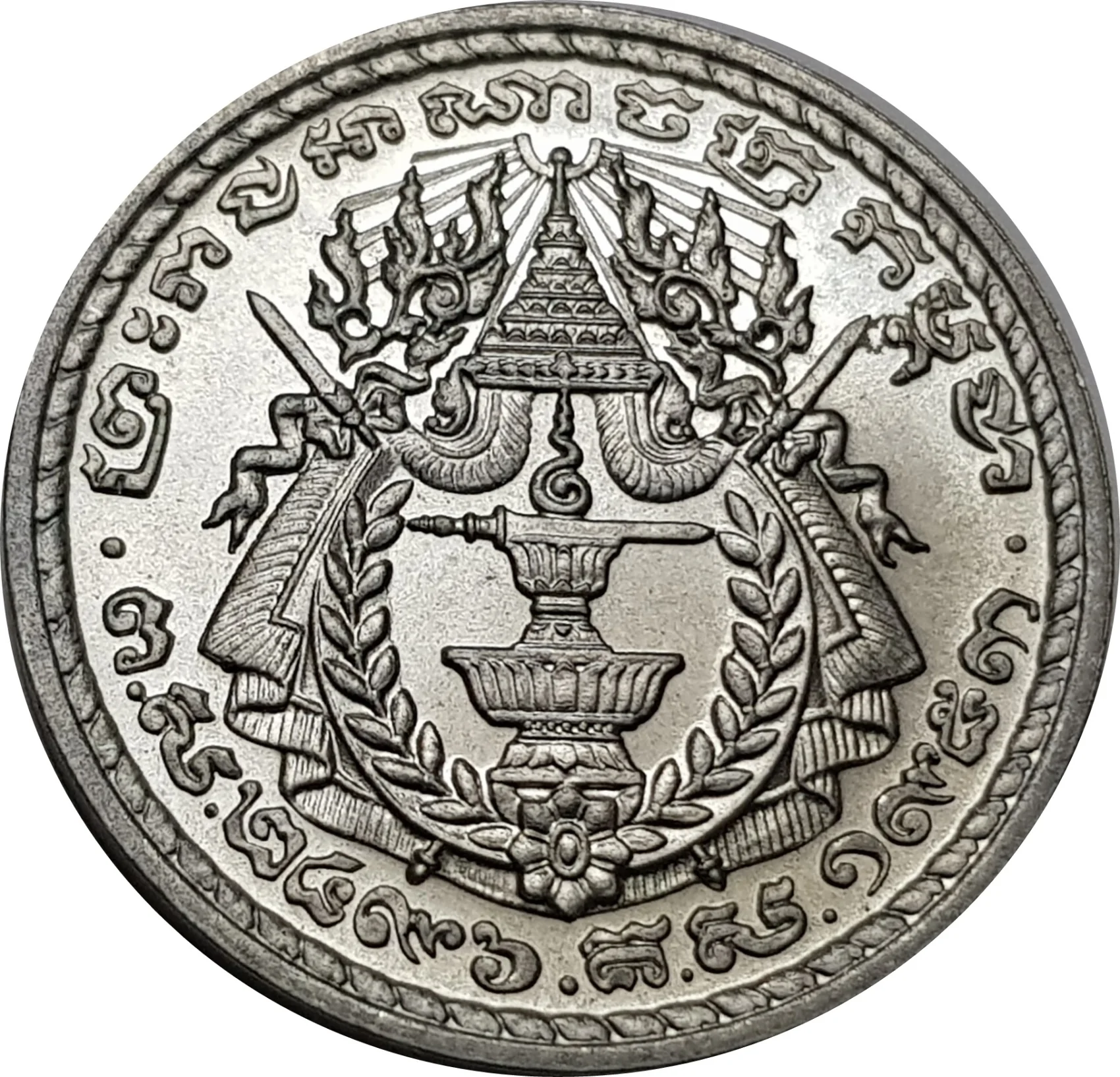
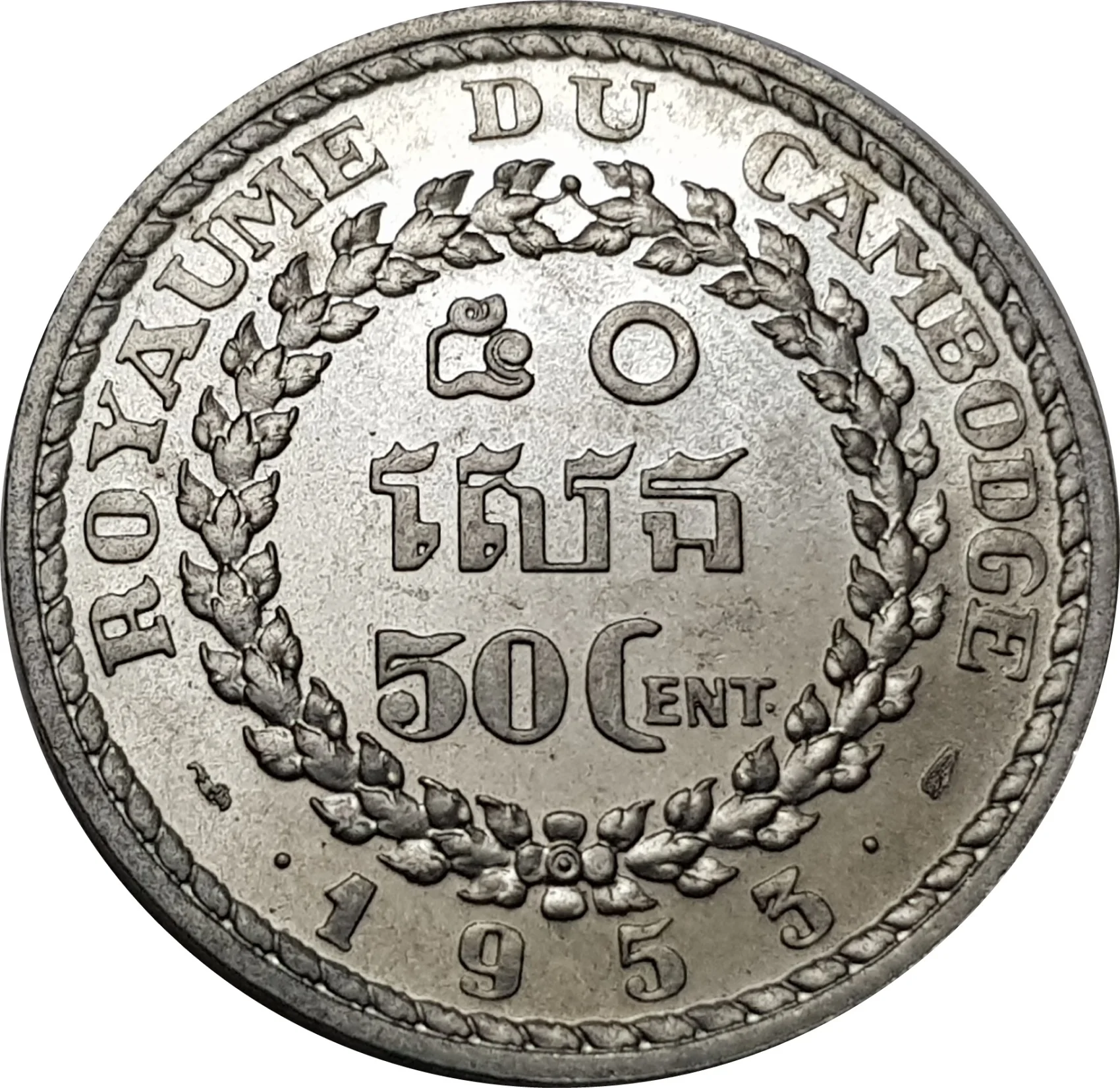
50 centimes – Cambodia
Add to wishlist
Cambodia
Context
Year: 1953
Issuer: Cambodia
Ruler: Norodom Sihanouk
Currency:
(1953—1975)
Demonetized: Yes
Total mintage: 1,200
Material
References
KM: #
Numista: #11322
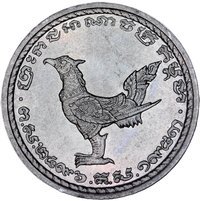
Obverse
Description:
Royal crest
Engravers: Georges Lay, André Léon Galtié
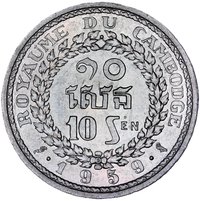
Reverse
Description:
Name, date
Inscription:
ROYAUME DU CAMBODGE
50 Cent.
·1953·
50 Cent.
·1953·
Translation:
Kingdom of Cambodia
50 Cent.
·1953·
50 Cent.
·1953·
Language: French
Engravers: Georges Lay, André Léon Galtié
Edge
Plain
Mints
| Name | Mark |
|---|---|
| Monnaie de Paris | — |
Mintings
| Year | Mint Mark | Mintage | Quality | Collection |
|---|---|---|---|---|
| 1953 | — | 1,200 |
Historical background
Following Cambodia's independence from France in November 1953, the nation inherited a complex and fragile currency system. The economy remained deeply integrated with the French colonial monetary zone, the Union Monétaire de l’Indochine. The circulating currency was the Indochinese Piastre, which was issued by the Institut d’Emission des Etats du Cambodge, du Laos et du Vietnam and backed by the French franc within a fixed exchange system. This meant Cambodia did not yet have a sovereign national currency, and its monetary policy was effectively determined by a regional institution influenced by French interests.
The situation was economically precarious. The First Indochina War was raging in neighboring Vietnam, causing instability and inflationary pressures across the region. Furthermore, the value of the Indochinese Piastre was widely considered to be artificially high, which hampered Cambodia's nascent export potential. King Norodom Sihanouk's new government faced the urgent task of establishing economic sovereignty, which required dismantling the colonial monetary union and creating a distinct currency as a symbol and tool of independent statehood.
Consequently, 1953 was a year of monetary transition and planning rather than immediate change. The immediate post-independence period focused on political consolidation, but groundwork began for a fundamental reform. This set the stage for the decisive break in 1955, when Cambodia would introduce its own national currency, the Riel, and establish the National Bank of Cambodia, finally severing the direct colonial monetary tie and assuming full control over its monetary affairs.
The situation was economically precarious. The First Indochina War was raging in neighboring Vietnam, causing instability and inflationary pressures across the region. Furthermore, the value of the Indochinese Piastre was widely considered to be artificially high, which hampered Cambodia's nascent export potential. King Norodom Sihanouk's new government faced the urgent task of establishing economic sovereignty, which required dismantling the colonial monetary union and creating a distinct currency as a symbol and tool of independent statehood.
Consequently, 1953 was a year of monetary transition and planning rather than immediate change. The immediate post-independence period focused on political consolidation, but groundwork began for a fundamental reform. This set the stage for the decisive break in 1955, when Cambodia would introduce its own national currency, the Riel, and establish the National Bank of Cambodia, finally severing the direct colonial monetary tie and assuming full control over its monetary affairs.
🌟 Uncommon