

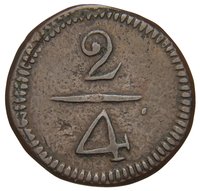
2 reales – Maracaibo
Add to wishlist
Venezuela
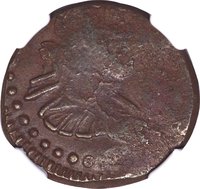
Obverse
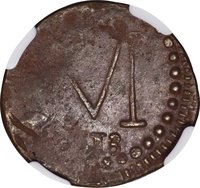
Reverse
Description:
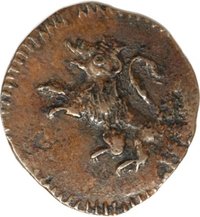
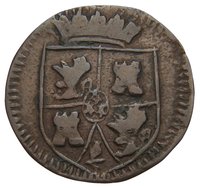
Cross divides castles from lions.
Edge
Mintings
| Year | Mint Mark | Mintage | Quality | Collection |
|---|---|---|---|---|
| — | 181 | — | ||
| — | 38 | — | ||
| — | 813 | — |
Historical background
In 1813, Maracaibo was a city caught in the crosscurrents of the Venezuelan War of Independence, and its currency situation reflected this profound instability. While nominally under royalist control, the region was economically isolated by patriot blockades and internal conflict. The Spanish colonial silver peso, or "real de a ocho," remained the official and most trusted medium, but its physical scarcity was acute. Years of war had disrupted mining in Mexico and Peru, the traditional sources of silver, and safe shipment to a besieged port city was nearly impossible. This scarcity crippled large-scale commerce and government payrolls, creating a tangible economic crisis.
The vacuum was filled by a chaotic mix of substitute currencies. Cut and clipped Spanish coins circulated alongside a limited influx of foreign coins from illicit trade, particularly Spanish-American silver brought by neutral traders. More significantly, the city saw a proliferation of low-denomination copper and billon (debased silver) coins, often crudely minted locally or imported from other Caribbean islands. These "moneda menuda" or "señas" were essential for daily market transactions but were prone to severe inflation and counterfeiting. Public trust in this patchwork system was low, with prices often negotiated based on the specific type and perceived purity of the coins offered.
This monetary disorder was more than an economic inconvenience; it was a symptom of collapsing imperial authority and a tool of war. Both royalist and patriot forces, including the advancing forces of Simón Bolívar who would briefly take the city later in the year, would issue their own promissory notes or attempt to recoin captured bullion to fund their campaigns. For the residents of Maracaibo, the simple act of buying food became an exercise in numismatic expertise and risk, as the value of currency fluctuated not with market forces, but with the latest rumor of a battle won or a ship arriving through the blockade.
The vacuum was filled by a chaotic mix of substitute currencies. Cut and clipped Spanish coins circulated alongside a limited influx of foreign coins from illicit trade, particularly Spanish-American silver brought by neutral traders. More significantly, the city saw a proliferation of low-denomination copper and billon (debased silver) coins, often crudely minted locally or imported from other Caribbean islands. These "moneda menuda" or "señas" were essential for daily market transactions but were prone to severe inflation and counterfeiting. Public trust in this patchwork system was low, with prices often negotiated based on the specific type and perceived purity of the coins offered.
This monetary disorder was more than an economic inconvenience; it was a symptom of collapsing imperial authority and a tool of war. Both royalist and patriot forces, including the advancing forces of Simón Bolívar who would briefly take the city later in the year, would issue their own promissory notes or attempt to recoin captured bullion to fund their campaigns. For the residents of Maracaibo, the simple act of buying food became an exercise in numismatic expertise and risk, as the value of currency fluctuated not with market forces, but with the latest rumor of a battle won or a ship arriving through the blockade.
Series: 1813 Maracaibo circulation coins

✨ Legendary