

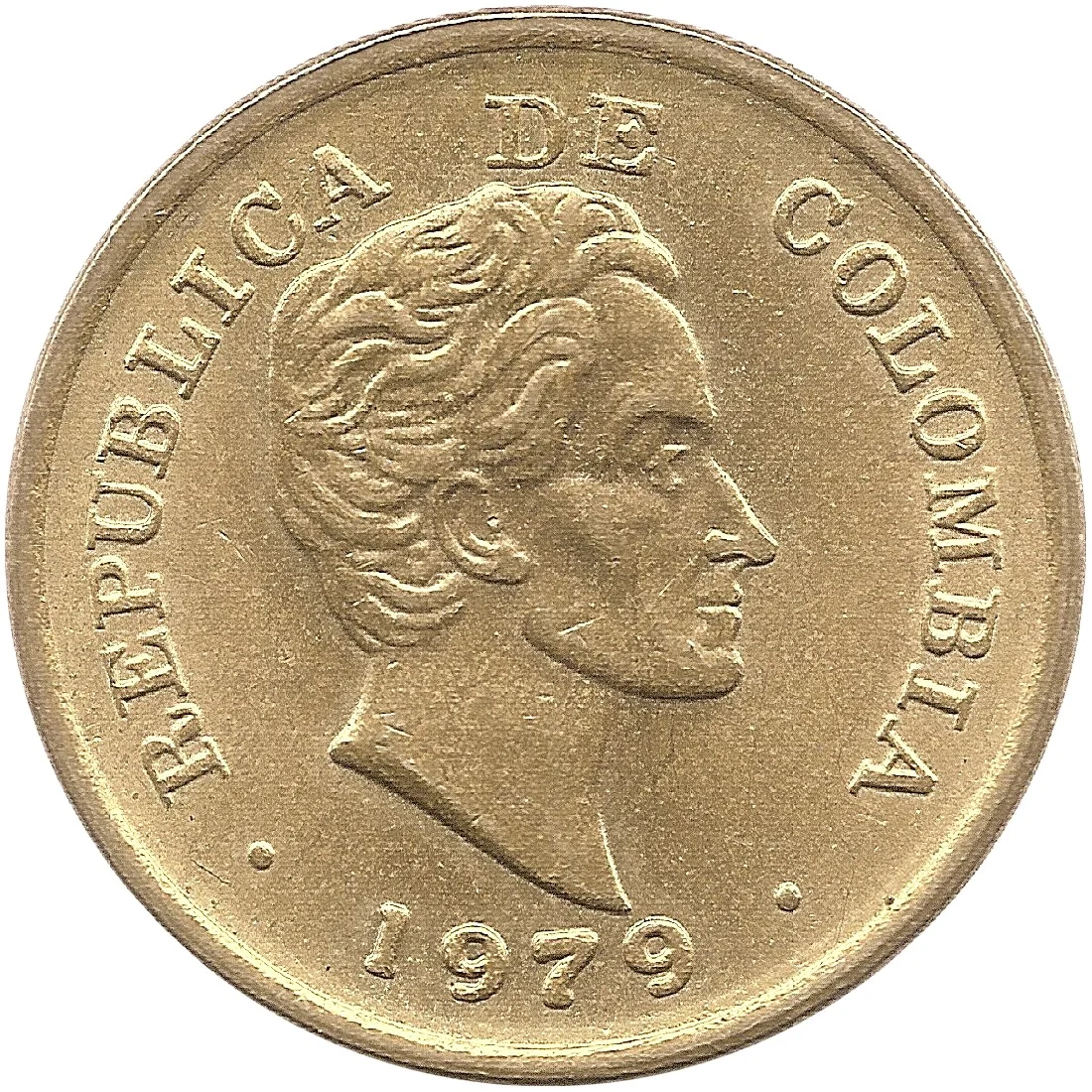
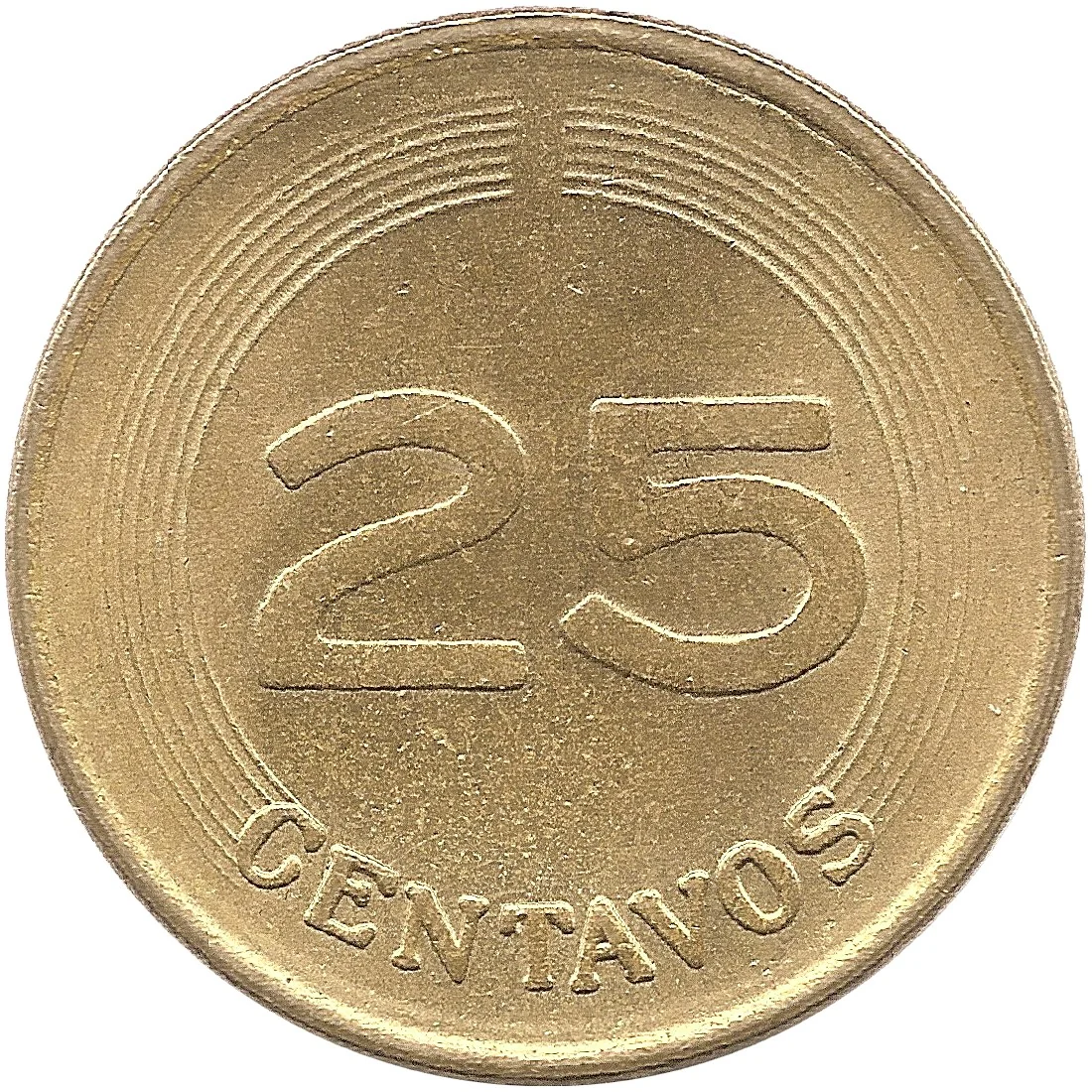
25 centavos – Colombia
Add to wishlist
Colombia
Obverse
Reverse
Edge
Plain
Categories
| Person> Military leader |
| Person> Politician |
Mints
| Name | Mark |
|---|---|
| Bogota Mint | — |
Mintings
| Year | Mint Mark | Mintage | Quality | Collection |
|---|---|---|---|---|
| 1979 | — | 88,874,000 |
Historical background
In 1979, Colombia's currency situation was characterized by a managed exchange rate regime under the control of the Banco de la República. The country operated a crawling peg system, where the Colombian peso was periodically devalued against the US dollar by small, pre-announced amounts. This policy, established in the late 1960s, aimed to maintain export competitiveness by offsetting higher domestic inflation relative to trading partners, primarily the United States. The system provided a degree of predictability for businesses and helped avoid the sudden shocks associated with large, one-off devaluations.
The economic backdrop was one of relative stability compared to other Latin American nations, yet it faced underlying pressures. Colombia was experiencing a coffee boom, with high international prices following the 1975 Brazilian frost, which generated significant foreign exchange reserves and helped support the peso. However, this reliance on a single commodity created vulnerability. Furthermore, the economy was grappling with persistent, though moderate, inflation (around 25% annually), which necessitated the ongoing mini-devaluations. The external debt was rising but was not yet at the crisis levels that would engulf the region in the 1980s.
Overall, the currency regime in 1979 was in a period of cautious calibration. Authorities were balancing the benefits of a stable, predictable exchange rate for planning against the need to manage inflation and protect the booming coffee sector's earnings. This careful management allowed Colombia to avoid the severe balance-of-payments crises affecting its neighbors, but it was operating within a framework that would soon be tested by the impending Latin American debt crisis, the collapse of the coffee pact, and the shifting global economic landscape of the early 1980s.
The economic backdrop was one of relative stability compared to other Latin American nations, yet it faced underlying pressures. Colombia was experiencing a coffee boom, with high international prices following the 1975 Brazilian frost, which generated significant foreign exchange reserves and helped support the peso. However, this reliance on a single commodity created vulnerability. Furthermore, the economy was grappling with persistent, though moderate, inflation (around 25% annually), which necessitated the ongoing mini-devaluations. The external debt was rising but was not yet at the crisis levels that would engulf the region in the 1980s.
Overall, the currency regime in 1979 was in a period of cautious calibration. Authorities were balancing the benefits of a stable, predictable exchange rate for planning against the need to manage inflation and protect the booming coffee sector's earnings. This careful management allowed Colombia to avoid the severe balance-of-payments crises affecting its neighbors, but it was operating within a framework that would soon be tested by the impending Latin American debt crisis, the collapse of the coffee pact, and the shifting global economic landscape of the early 1980s.
🌱 Very Common