

10 pence – Guernsey
Add to wishlist
Context
Years: 1992–1997
Country: British Crown dependencies
Issuer: Guernsey
Ruler: Elizabeth II
Currency:
(since 1971)
Total mintage: 3,500,000
Material
Diameter: 24.5 mm
Weight: 6.5 g
Thickness: 1.85 mm
Shape: Round
Composition: Copper-nickel
Technique: Milled
Alignment: Medal alignment
flip
References
KM: #
Numista: #7596
Value
Exchange value: 0.10 GGP
Obverse
Description:
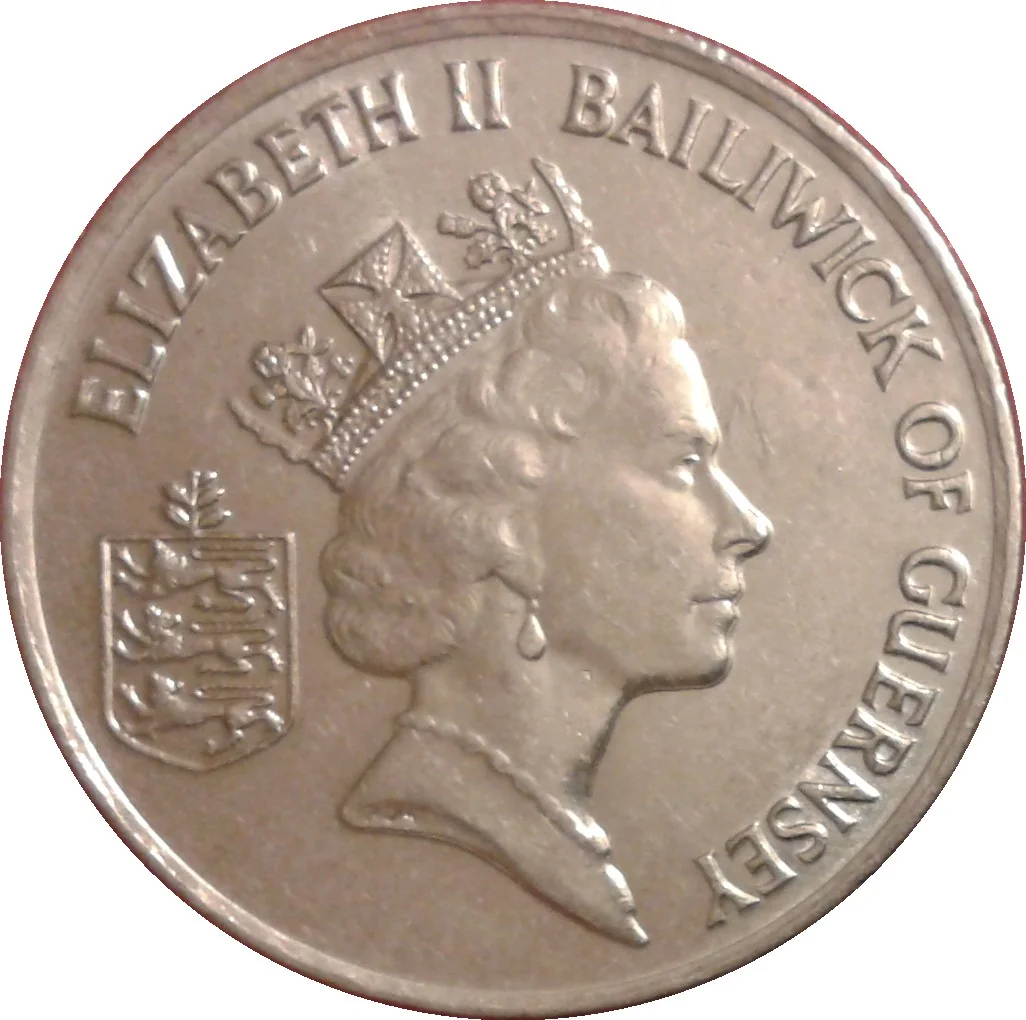
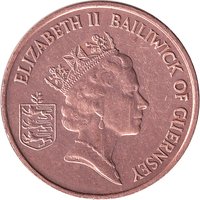
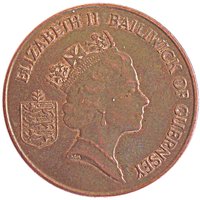
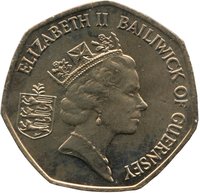
Queen Elizabeth II bust right, Guernsey arms left.
Inscription:
ELIZABETH II BAILIWICK OF GUERNSEY
Script: Latin
Engraver: Raphael David Maklouf
Reverse
Description:
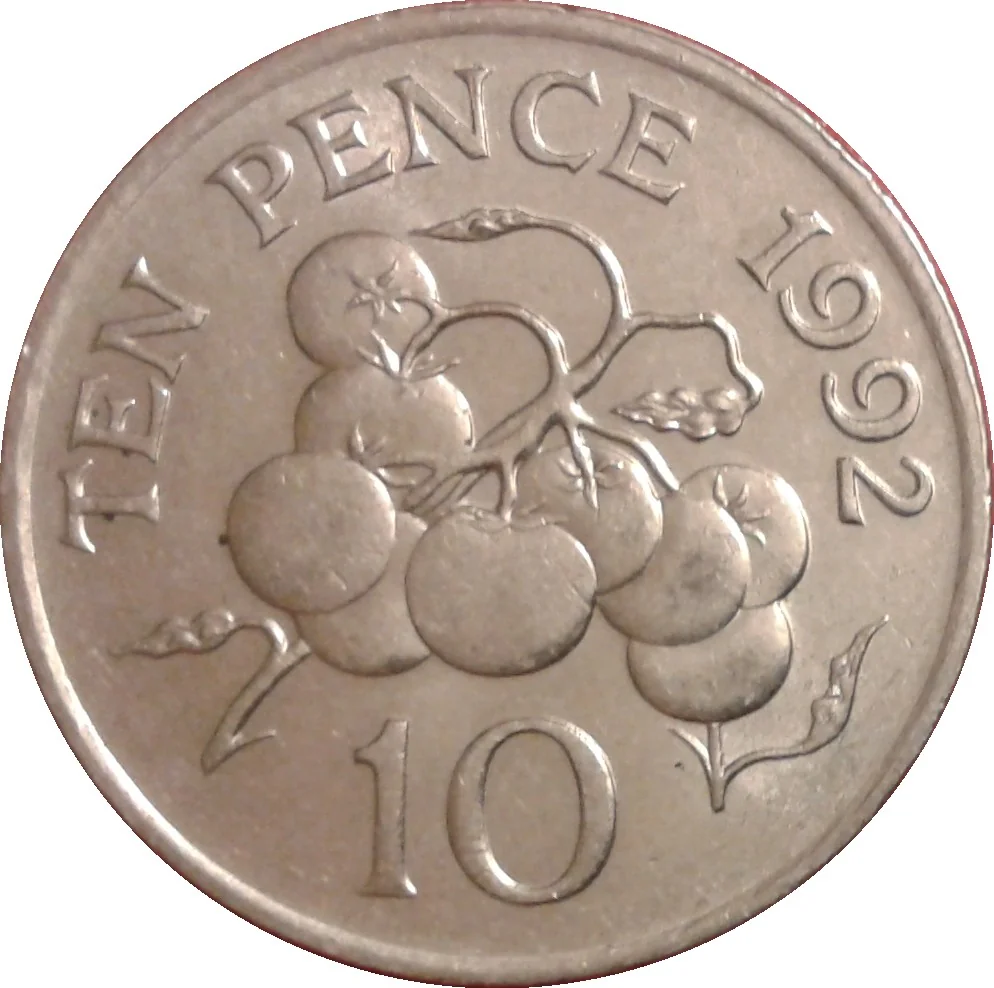
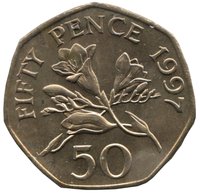
Tomato (Solanum lycopersicum) plant
Inscription:
TEN PENCE 1992
10
10
Script: Latin
Engraver: Robert Elderton
Edge
Milled
Mints
| Name | Mark |
|---|---|
| Royal Mint | — |
Mintings
| Year | Mint Mark | Mintage | Quality | Collection |
|---|---|---|---|---|
| 1992 | — | 3,500,000 | ||
| 1992 | — | — | Proof | |
| 1997 | — | — | In sets | |
| 1997 | — | — | Proof |
Historical background
In 1992, Guernsey's currency situation was characterised by its long-standing and stable dual-currency system, underpinned by a strong fiscal position. The States of Guernsey issued its own sterling-denominated banknotes and coins (Guernsey pounds, £GG), which circulated on the island alongside Bank of England notes. Crucially, these local issues were not legal tender in the United Kingdom but were fully backed one-for-one by sterling reserves held in London, ensuring parity with the UK pound. This arrangement provided Guernsey with a visible symbol of its constitutional autonomy while maintaining the economic security and simplicity of a direct peg to the sterling zone.
The year fell within a period of significant international currency turbulence, most notably the UK's exit from the European Exchange Rate Mechanism (ERM) on Black Wednesday, 16 September 1992. While this event caused a sharp devaluation of sterling and a crisis for the British government, its direct impact on Guernsey was moderated by the island's unique status. Guernsey was not a member of the ERM, and its currency policy was solely linked to sterling itself, not to the UK's European monetary commitments. Consequently, the Guernsey pound simply tracked sterling's sudden fall against major currencies like the Deutsche Mark, with no separate monetary policy response required from the States.
Therefore, the background for Guernsey in 1992 is one of insulated stability amidst external storm. The island's conservative financial governance, its substantial sterling reserves, and its simple peg meant it weathered the sterling crisis as a passive observer rather than an active participant. The primary focus for the States' Treasury remained the prudent management of the currency fund and maintaining public confidence in the local issue, a task unchallenged by the events of Black Wednesday, which instead reaffirmed the benefits of Guernsey's orthodox and reserved monetary link.
The year fell within a period of significant international currency turbulence, most notably the UK's exit from the European Exchange Rate Mechanism (ERM) on Black Wednesday, 16 September 1992. While this event caused a sharp devaluation of sterling and a crisis for the British government, its direct impact on Guernsey was moderated by the island's unique status. Guernsey was not a member of the ERM, and its currency policy was solely linked to sterling itself, not to the UK's European monetary commitments. Consequently, the Guernsey pound simply tracked sterling's sudden fall against major currencies like the Deutsche Mark, with no separate monetary policy response required from the States.
Therefore, the background for Guernsey in 1992 is one of insulated stability amidst external storm. The island's conservative financial governance, its substantial sterling reserves, and its simple peg meant it weathered the sterling crisis as a passive observer rather than an active participant. The primary focus for the States' Treasury remained the prudent management of the currency fund and maintaining public confidence in the local issue, a task unchallenged by the events of Black Wednesday, which instead reaffirmed the benefits of Guernsey's orthodox and reserved monetary link.
🌱 Very Common