

1 pound – Egypt
Add to wishlist
Circulating commemorative coins
Commemoration: New branch of Suez Canal
Egypt
Context
Year: 2015
Islamic (Hijri) Year:: 1436
Issuer: Egypt
Period:
(since 1971)
Currency:
(since 1916)
Total mintage: 40,000,000
Material
References
KM: #
Numista: #75818
Value
Exchange value: 1 EGP
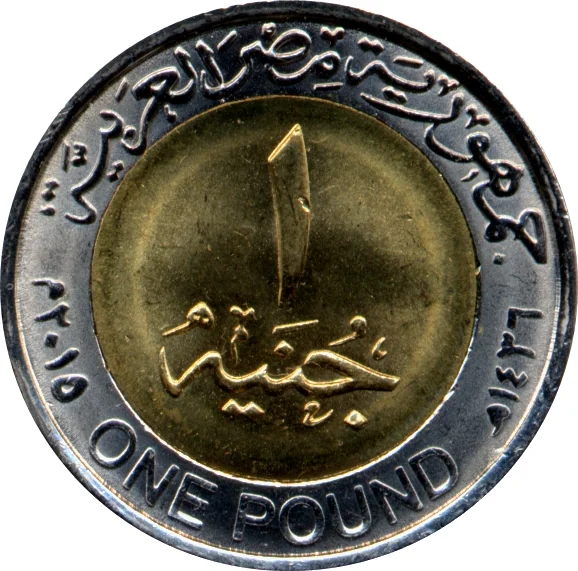
Obverse
Description:
Arabic state name, denomination (Arabic/English), and issue year (Gregorian/Hijri, both in Arabic).
Inscription:
جمهورية مصر العربية
1
جنيه
٢٠١٥م ONE POUND ١٤٣٦هـ
1
جنيه
٢٠١٥م ONE POUND ١٤٣٦هـ
Translation:
Arab Republic of Egypt
1
Pound
2015 AD ONE POUND 1436 AH
1
Pound
2015 AD ONE POUND 1436 AH
Language: Arabic
Reverse
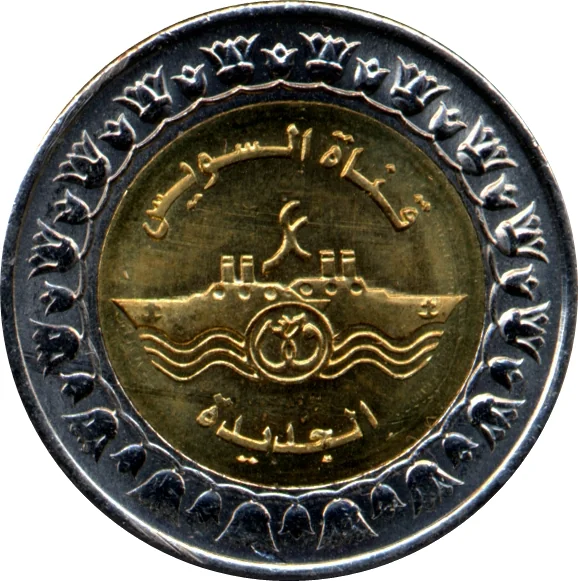
Description:
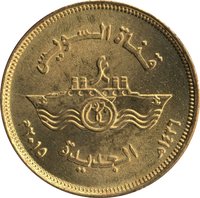
Suez Canal Authority logo with ships, "SC," and قس in a circle.
Inscription:
قناة السويس
SC
ق س
الجديدة
SC
ق س
الجديدة
Translation:
Suez Canal
SC
New
SC
New
Language: Arabic
Edge
Reeded
Mintings
| Year | Mint Mark | Mintage | Quality | Collection |
|---|---|---|---|---|
| 2015 | — | 40,000,000 |
Historical background
In 2015, Egypt faced a severe and multifaceted currency crisis centered on a significant overvaluation of the Egyptian pound (EGP). The official exchange rate was artificially pegged at around 8.8 EGP to the US dollar, but a thriving black market saw the rate soar to over 12 EGP, reflecting a gap of nearly 40%. This disparity was fueled by a critical shortage of foreign currency, stemming from years of political instability following the 2011 revolution, which had devastated tourism and foreign investment—key sources of hard currency. Simultaneously, the Central Bank of Egypt (CBE) was burning through its foreign reserves to defend the unsustainable peg, depleting them to precarious levels.
The government, led by President Abdel Fattah el-Sisi, was caught in a difficult policy bind. Maintaining the peg was draining reserves and creating a severe dollar liquidity crunch for importers, harming business confidence and leading to shortages of essential goods. However, a sudden devaluation risked stoking already high inflation and public discontent. As a stopgap measure, the CBE implemented strict capital controls and limited access to dollars for imports, prioritizing essentials like food and fuel. This created a complex and restrictive system that further hampered economic activity and encouraged the growth of the parallel market.
By the end of 2015, pressure for a major correction was overwhelming. The situation laid bare the structural weaknesses of Egypt's economy and set the stage for a more dramatic economic decision the following year. In 2016, Egypt would secure a $12 billion loan from the International Monetary Fund (IMF), the cornerstone of which was a commitment to freely float the pound—a move that would lead to its sharp devaluation but was deemed necessary to stabilize the economy, restore currency reserves, and attract foreign investment. Thus, 2015 was the culmination of mounting pressures that made a fundamental shift in exchange rate policy inevitable.
The government, led by President Abdel Fattah el-Sisi, was caught in a difficult policy bind. Maintaining the peg was draining reserves and creating a severe dollar liquidity crunch for importers, harming business confidence and leading to shortages of essential goods. However, a sudden devaluation risked stoking already high inflation and public discontent. As a stopgap measure, the CBE implemented strict capital controls and limited access to dollars for imports, prioritizing essentials like food and fuel. This created a complex and restrictive system that further hampered economic activity and encouraged the growth of the parallel market.
By the end of 2015, pressure for a major correction was overwhelming. The situation laid bare the structural weaknesses of Egypt's economy and set the stage for a more dramatic economic decision the following year. In 2016, Egypt would secure a $12 billion loan from the International Monetary Fund (IMF), the cornerstone of which was a commitment to freely float the pound—a move that would lead to its sharp devaluation but was deemed necessary to stabilize the economy, restore currency reserves, and attract foreign investment. Thus, 2015 was the culmination of mounting pressures that made a fundamental shift in exchange rate policy inevitable.
🌱 Common