

5 Pence – Falkland Islands
United Kingdom
Context
Year: 2011
Country: United Kingdom 
Issuer: Falkland Islands 
Ruler: Elizabeth II
Currency:
(since 1971)
Material
References
Numista: #113082
Value
Exchange value: 0.05 FKP
Inflation-adjusted value: 0.08 FKP
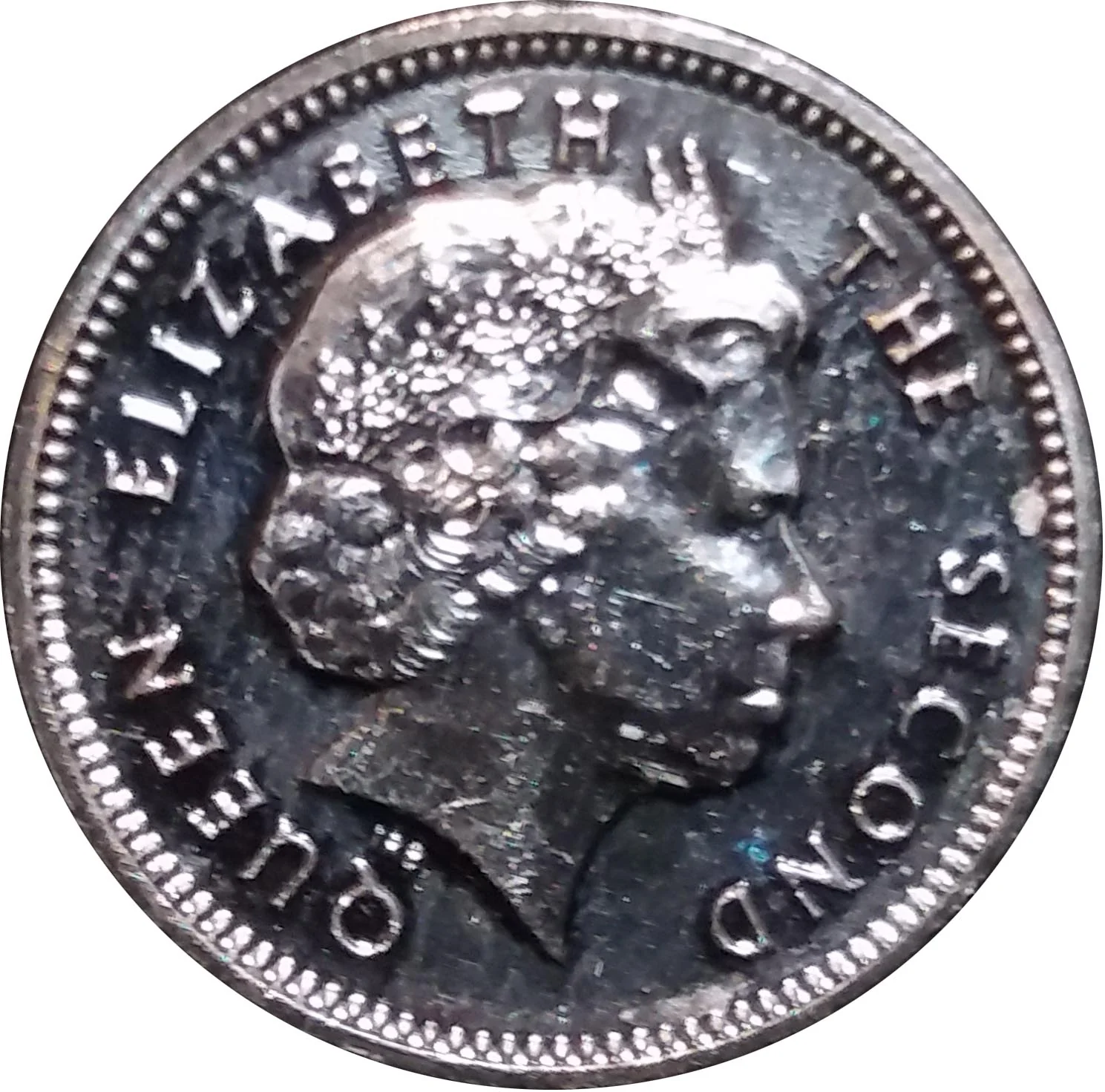
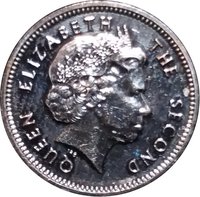
Obverse
Description:
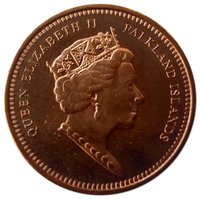
Crowned right-facing portrait, encircled by inscription.
Inscription:
QUEEN ELIZABETH THE SECOND
Script: Latin
Engraver: Ian Rank-Broadley
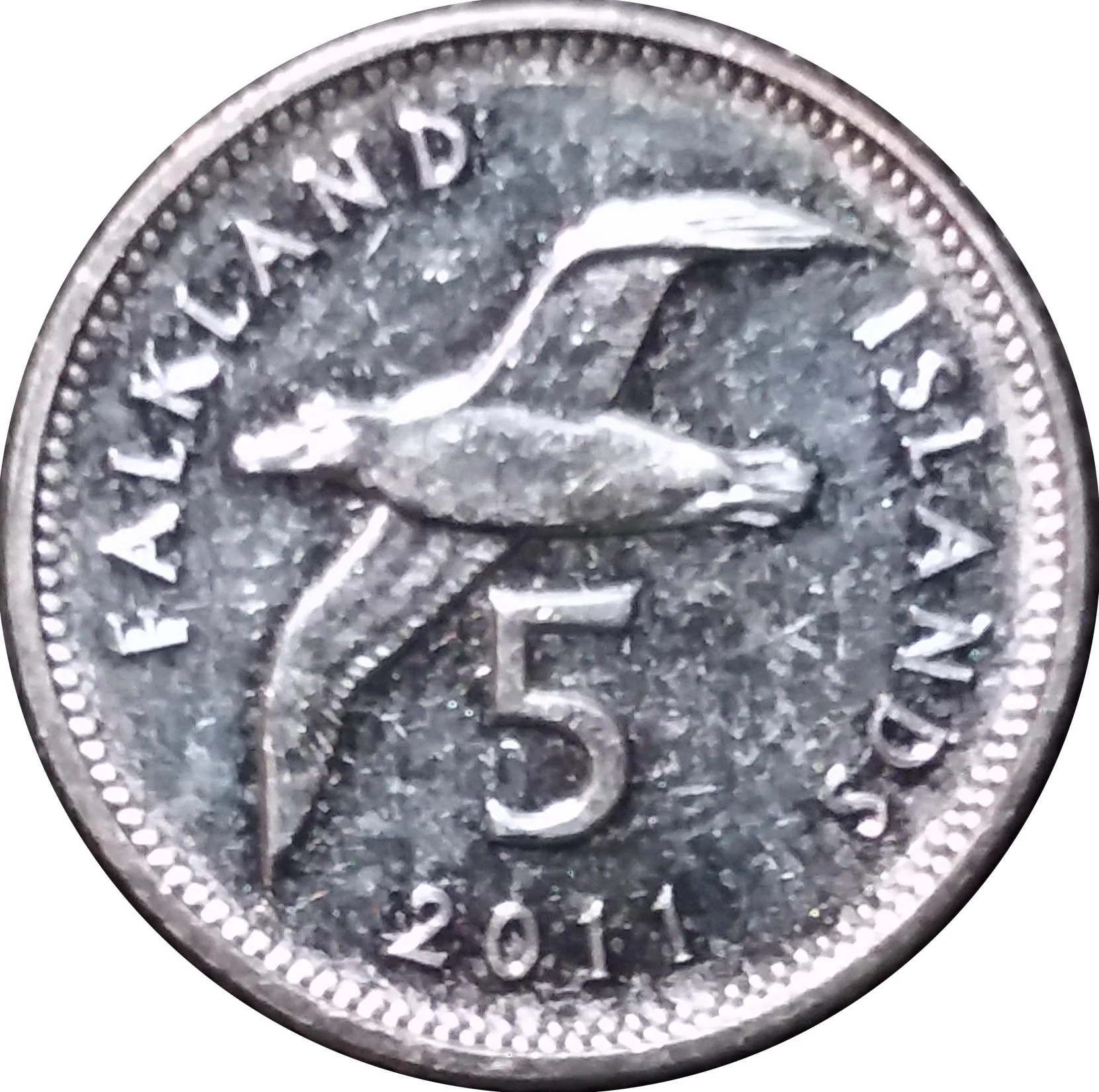
Reverse
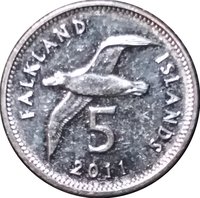
Description:
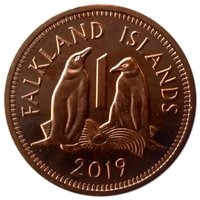
Blackbrowed albatross in flight. This medium-sized, circumpolar seabird (Thalassarche melanophrys).
Inscription:
FALKLAND ISLANDS
5
2011
5
2011
Script: Latin
Engraver: William Maving Gardner
Edge
Reeded
Mintings
| Year | Mint Mark | Mintage | Quality | Collection |
|---|---|---|---|---|
| 2011 | — | — |
Historical background
In 2011, the currency situation in the Falkland Islands remained unique and stable, defined by its dual-currency system. The official currency was (and remains) the Falkland Islands pound (FKP), which is pegged at par with the British pound sterling (GBP). Both banknotes and coins were issued locally by the Falkland Islands Government, featuring distinct designs, but the peg meant one FKP always equaled one GBP. This parity provided crucial economic stability and was a clear symbol of the Islands' constitutional link to the United Kingdom.
Sterling itself circulated freely alongside the local currency, and both were accepted interchangeably for all transactions. This practical arrangement facilitated trade, tourism, and financial operations, especially with the UK, which is the Islands' primary economic partner. The economy was heavily supported by fishing licences (primarily for Illex squid) and the beginnings of a growing tourism industry, with all major financial dealings conducted in this sterling-linked system. There was no independent monetary policy; the currency's value was entirely dependent on the Bank of England's management of sterling.
The year 2011 passed without any significant currency crisis or change in this long-standing arrangement. However, the broader economic context was one of anticipation regarding potential offshore oil exploration, which promised future revenue but also raised questions about long-term economic management. Furthermore, the fixed peg to sterling meant the Islands indirectly experienced the effects of the Bank of England's policies following the 2008-09 global financial crisis, such as low interest rates and quantitative easing. Thus, while the currency situation itself was settled, the foundations for future economic shifts were being laid.
Sterling itself circulated freely alongside the local currency, and both were accepted interchangeably for all transactions. This practical arrangement facilitated trade, tourism, and financial operations, especially with the UK, which is the Islands' primary economic partner. The economy was heavily supported by fishing licences (primarily for Illex squid) and the beginnings of a growing tourism industry, with all major financial dealings conducted in this sterling-linked system. There was no independent monetary policy; the currency's value was entirely dependent on the Bank of England's management of sterling.
The year 2011 passed without any significant currency crisis or change in this long-standing arrangement. However, the broader economic context was one of anticipation regarding potential offshore oil exploration, which promised future revenue but also raised questions about long-term economic management. Furthermore, the fixed peg to sterling meant the Islands indirectly experienced the effects of the Bank of England's policies following the 2008-09 global financial crisis, such as low interest rates and quantitative easing. Thus, while the currency situation itself was settled, the foundations for future economic shifts were being laid.
🌟 Uncommon