
Logo Title
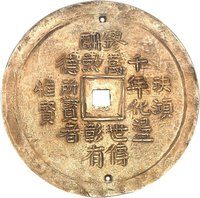
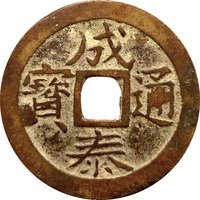
obverse
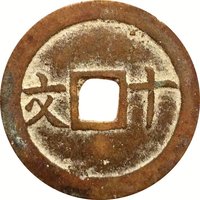
reverse
KennyG

6 Văn – Empire of Vietnam

Vietnam
Context
Year: 1889
Country: Vietnam Country flag
Currency:
(1868—1945)
Demonetized: Yes
Total mintage: 7,930,800
Material
Diameter: 23.4 mm
Weight: 2.8 g
Composition: Brass
Magnetic: No
Technique: Cast
Alignment: Medal alignment
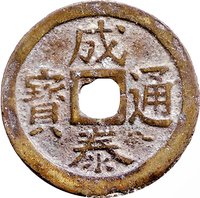
Obverse
OBVERSE ↑
flip
Reverse
REVERSE ↑
References
KM: #Click to copy to clipboard626
Numista: #11307

Obverse

Description:
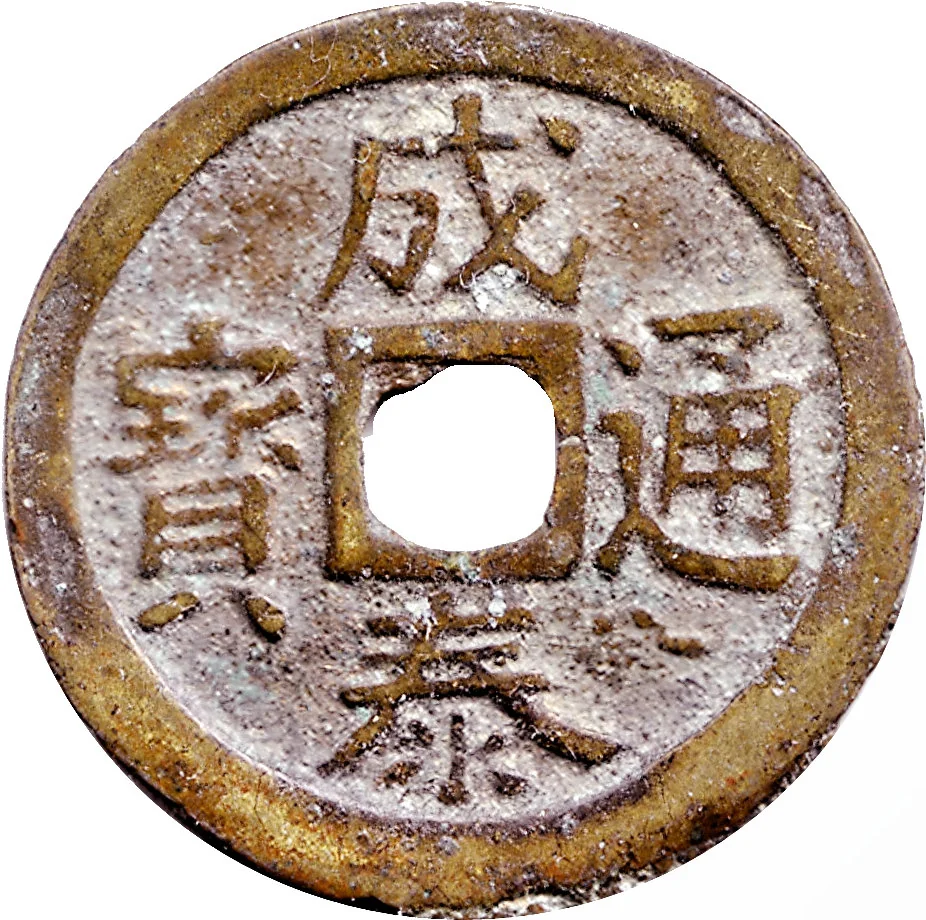
Four Chinese characters read vertically, right to left.
Inscription:


寶 通

 泰
Translation:
Made during the Cheng-T'ung period.
Language: Chinese

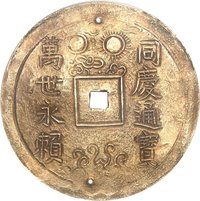
Reverse

Description:
Blank (uniface).

Edge

Plain
Mints

NameMark
Thông Bảo Nha

Mintings

YearMint MarkMintageQualityCollection
18897,930,800

Historical background

In 1889, the currency situation within the Empire of Vietnam was one of profound transition and colonial imposition. Nominally ruled by Emperor Thành Thái, the empire was under the de facto control of the French colonial administration, which had consolidated its power over Cochinchina and established protectorates over Annam and Tonkin. The monetary system reflected this fractured sovereignty, with a chaotic mix of currencies in circulation. These included Chinese cash coins, Mexican and Spanish silver dollars (piastres), French-issued Indochinese piastres, and various local zinc and copper coins, leading to complex exchange rates and commercial inefficiency.

This year was particularly significant as it fell within the period of the French preparing to introduce a unified, colonial currency. The French Piastre de Commerce, first minted for Indochina in 1885, was gaining prominence as the official currency for all transactions with the colonial government and in major trade. However, its circulation was still limited primarily to French enterprises, urban centers, and the colonial apparatus. In the countryside and for daily subsistence, the traditional Vietnamese cash coins, strung together in strings of 600 coins (quan), remained the essential medium of exchange for the vast majority of the population.

Thus, the monetary landscape of 1889 was a tangible representation of the dual society created by colonialism: a modernizing, foreign-controlled economic layer superimposed upon a traditional agrarian system. The French push for a single, stable currency aimed to facilitate tax collection, resource extraction, and the integration of Vietnam into the French imperial economy. This move systematically undermined the monetary authority of the Huế court, further eroding the economic foundations of the already-feeble Empire of Vietnam and tightening French fiscal control over its territories.
Rare