

5 Fils – Jordan
Jordan
Context
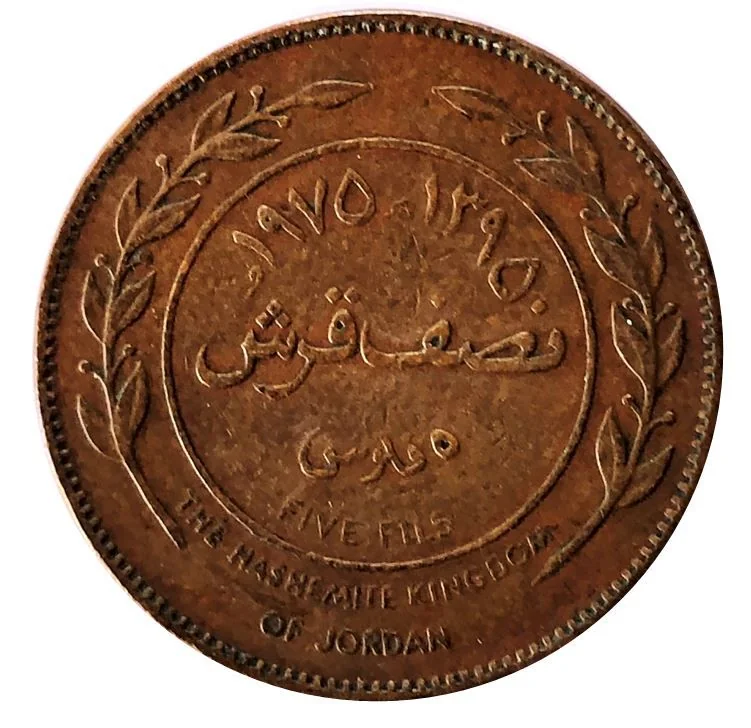
Years: 1968–1975
Issuer: Jordan 
Ruler: Hussein bin Talal
Currency:
(since 1949)
Demonetized: Yes
Total mintage: 13,599,950
Material
References
KM: #Click to copy to clipboard15
Numista: #7563
Value
Exchange value: 0.005 JOD
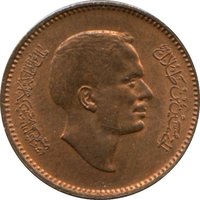
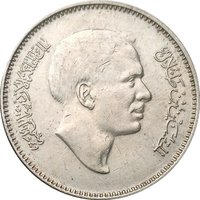
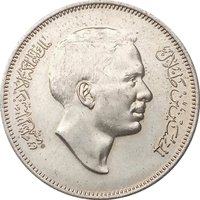
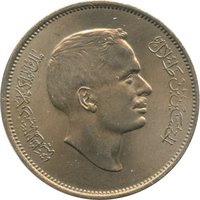
Obverse
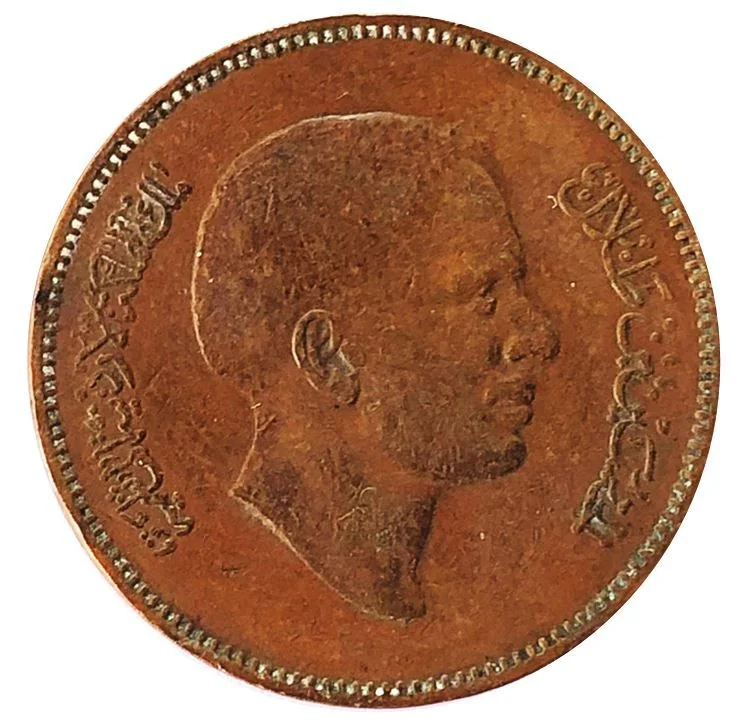
Description:
King Hussein I of Jordan
Inscription:
الحسين بن طلال
ملك المملكة الاردنية الهاشمية
ملك المملكة الاردنية الهاشمية
Translation:
Hussein bin Talal
King of the Hashemite Kingdom of Jordan
King of the Hashemite Kingdom of Jordan
Language: Arabic
Engraver: Philip Nathan
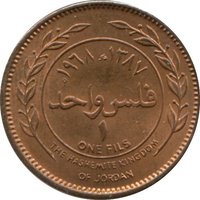
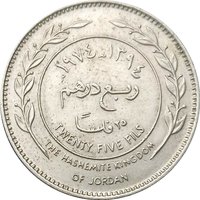
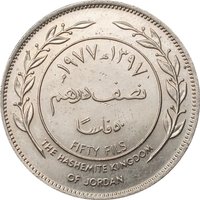
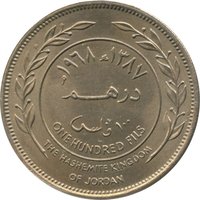
Reverse
Edge
Plain
Categories
| Person> Monarch |
| Mustache/Beard |
Mints
| Name | Mark |
|---|---|
| Royal Mint | — |
Mintings
| Year | Mint Mark | Mintage | Quality | Collection |
|---|---|---|---|---|
| 1968 | — | 799,950 | ||
| 1970 | — | 1,400,000 | ||
| 1972 | — | 400,000 | ||
| 1974 | — | 2,000,000 | ||
| 1975 | — | 9,000,000 |
Historical background
In 1968, Jordan's currency situation was defined by its reliance on the Jordanian dinar (JOD), which was pegged to and fully backed by the British pound sterling. This arrangement, established under the 1950 Currency Law, provided significant stability and confidence in the dinar, which was subdivided into 1,000 fils. The currency's strength was underpinned by substantial foreign exchange reserves, primarily held in sterling assets, and the country maintained a currency board system that ensured a high degree of convertibility. This monetary stability was a notable achievement for a developing nation, fostering both domestic economic activity and foreign investment.
However, this stability existed against a backdrop of profound political and economic strain. The 1967 Arab-Israeli War and the subsequent loss of the West Bank had delivered a severe shock to the Jordanian economy, resulting in a refugee crisis, the disruption of key agricultural and tourist sectors, and increased military expenditure. While the currency peg itself held firm, these pressures strained the kingdom's finances and foreign reserves. The economic burden was partially alleviated by substantial financial aid from other Arab states, agreed upon at the 1967 Khartoum Summit, which helped to offset the fiscal deficit and support the currency's backing.
Consequently, the year 1968 represented a period of resilient monetary orthodoxy amidst broader crisis. The Central Bank of Jordan, which had assumed monetary authority from the Jordan Currency Board just a few years earlier in 1964, managed to maintain the sterling peg and the dinar's value without devaluation. This provided a crucial anchor of stability while the kingdom navigated the immense challenges of post-war recovery and geopolitical realignment. The system's endurance during this turbulent period underscored the authorities' commitment to a strong currency as a cornerstone of national policy.
However, this stability existed against a backdrop of profound political and economic strain. The 1967 Arab-Israeli War and the subsequent loss of the West Bank had delivered a severe shock to the Jordanian economy, resulting in a refugee crisis, the disruption of key agricultural and tourist sectors, and increased military expenditure. While the currency peg itself held firm, these pressures strained the kingdom's finances and foreign reserves. The economic burden was partially alleviated by substantial financial aid from other Arab states, agreed upon at the 1967 Khartoum Summit, which helped to offset the fiscal deficit and support the currency's backing.
Consequently, the year 1968 represented a period of resilient monetary orthodoxy amidst broader crisis. The Central Bank of Jordan, which had assumed monetary authority from the Jordan Currency Board just a few years earlier in 1964, managed to maintain the sterling peg and the dinar's value without devaluation. This provided a crucial anchor of stability while the kingdom navigated the immense challenges of post-war recovery and geopolitical realignment. The system's endurance during this turbulent period underscored the authorities' commitment to a strong currency as a cornerstone of national policy.
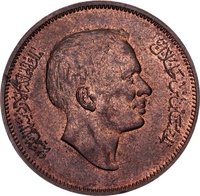
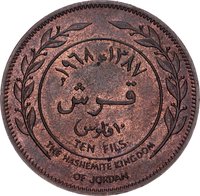
Series: 1968 Jordan circulation coins
🌱 Very Common