

½ Crown – Turks and Caicos Islands
United Kingdom
Context
Year: 1981
Country: United Kingdom 
Issuer: Turks and Caicos Islands
Ruler: Elizabeth II
Currency:
(since 1969)
Demonetization: 1982
Material
Diameter: 30.63 mm
Weight: 11.45 g
Thickness: 2.05 mm
Shape: Round
Composition: Copper-nickel
Technique: Milled
Alignment: Medal alignment
flip
References
KM: #Click to copy to clipboard52
Numista: #7560
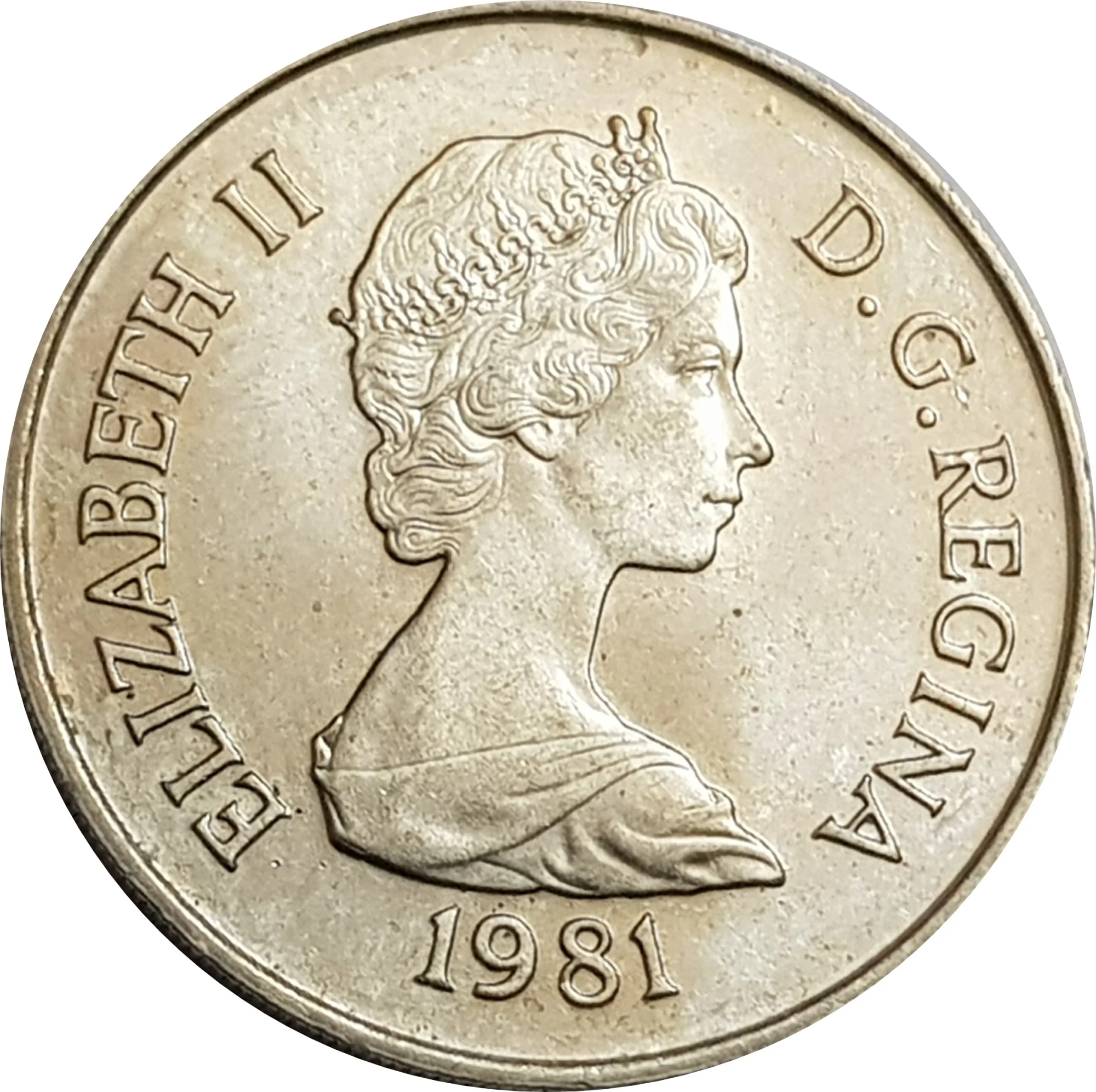
Obverse
Description:
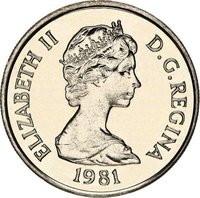
Queen Elizabeth II right-facing bust, date beneath.
Inscription:
ELIZABETH II D.G.REGINA
1981
1981
Translation:
Elizabeth II by the Grace of God Queen
1981
1981
Script: Latin
Engraver: Arnold Machin
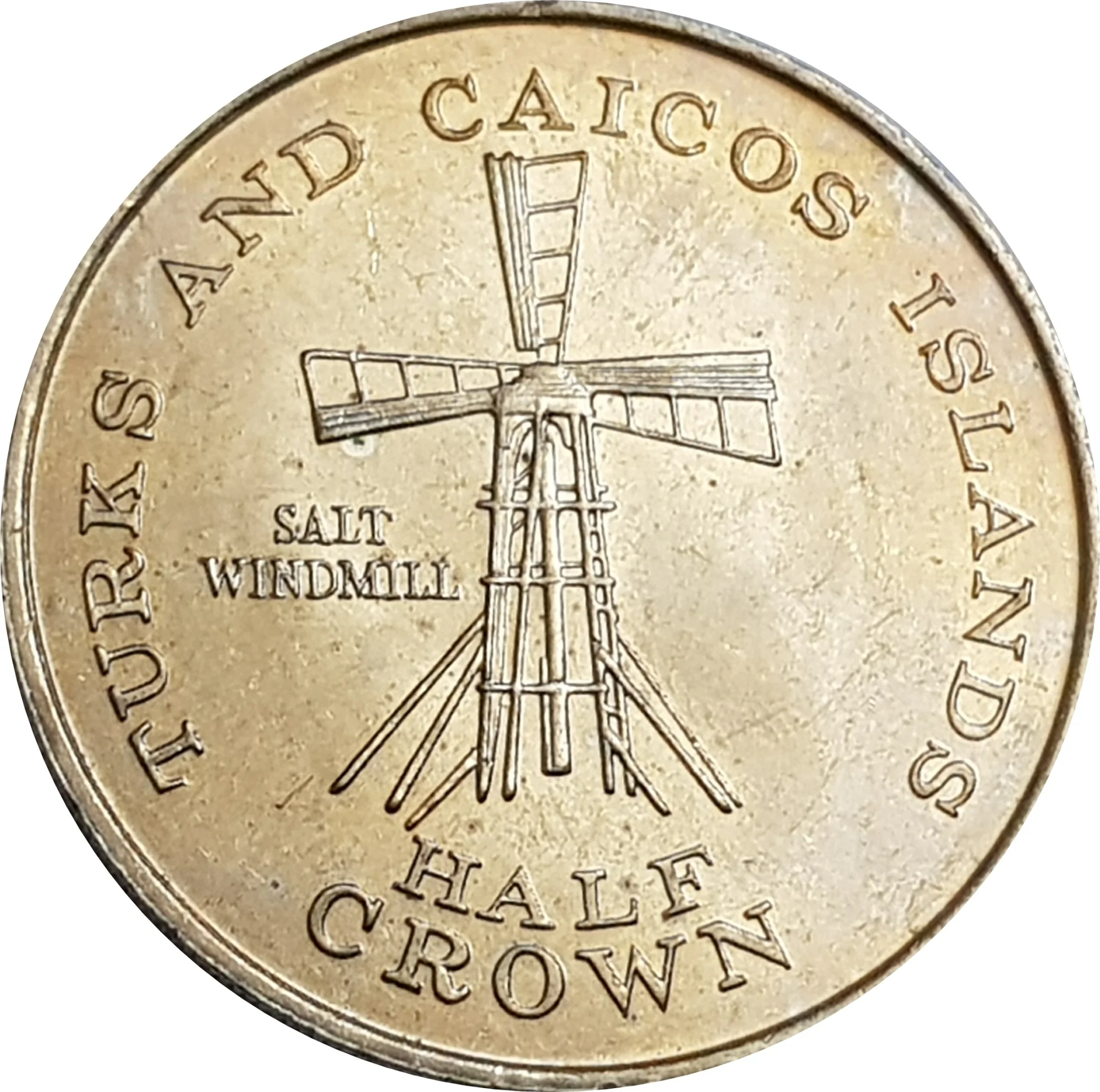
Reverse
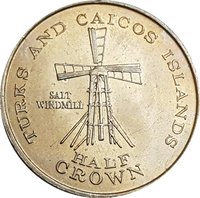
Description:
Windmill. Denomination below.
Inscription:
TURKS AND CAICOS ISLANDS
SALT
WINDMILL
HALF
CROWN
SALT
WINDMILL
HALF
CROWN
Script: Latin
Engraver: Arnold Machin
Edge
Reeded
Mintings
| Year | Mint Mark | Mintage | Quality | Collection |
|---|---|---|---|---|
| 1981 | — | — |
Historical background
In 1981, the Turks and Caicos Islands, a British Overseas Territory, operated under a distinctive currency arrangement that reflected its colonial ties and economic realities. The official currency was the US dollar, a system adopted in 1973 to replace the British pound sterling. This decision was driven by the territory's geographical proximity and strong economic links to the United States and The Bahamas, particularly in the burgeoning tourism and offshore finance sectors. Using the US dollar provided stability, simplified trade and investment, and aligned the islands with the economic sphere of its most important visitors and business partners.
Despite the official adoption of the US dollar, the everyday currency landscape in 1981 was somewhat mixed. British coins, specifically the old pre-decimal sterling coins like shillings and florins, remained in limited local circulation as subsidiary coinage. This was due to a practical shortage of US small change, leading to these British coins being used at a fixed exchange rate relative to the dollar. For example, a shilling was valued at 20 US cents. This created a unique and somewhat cumbersome dual-coinage system for daily transactions.
The year 1981 fell within a period of economic transition for the islands, which were still developing a modern financial infrastructure. The currency situation underscored a broader context of dependency and adaptation. While the US dollar provided a stable foundation for external trade and investment, the lingering use of British coinage was a tangible reminder of the colonial past and the practical challenges of implementing a full currency transition in a small, isolated archipelago. This hybrid system would persist until the late 1980s and early 1990s, when the government finally phased out the British coins in favor of a full dollarization with US-minted coinage.
Despite the official adoption of the US dollar, the everyday currency landscape in 1981 was somewhat mixed. British coins, specifically the old pre-decimal sterling coins like shillings and florins, remained in limited local circulation as subsidiary coinage. This was due to a practical shortage of US small change, leading to these British coins being used at a fixed exchange rate relative to the dollar. For example, a shilling was valued at 20 US cents. This created a unique and somewhat cumbersome dual-coinage system for daily transactions.
The year 1981 fell within a period of economic transition for the islands, which were still developing a modern financial infrastructure. The currency situation underscored a broader context of dependency and adaptation. While the US dollar provided a stable foundation for external trade and investment, the lingering use of British coinage was a tangible reminder of the colonial past and the practical challenges of implementing a full currency transition in a small, isolated archipelago. This hybrid system would persist until the late 1980s and early 1990s, when the government finally phased out the British coins in favor of a full dollarization with US-minted coinage.
🌱 Fairly Common