

1 stüber – East Frisia
Add to wishlist
Germany
Context
Year: 1804
Country: Germany
Issuer: East Frisia
Ruler: Frederick William III
Currency:
Demonetized: Yes
Total mintage: 378,000
Material
References
KM: #
Numista: #75536
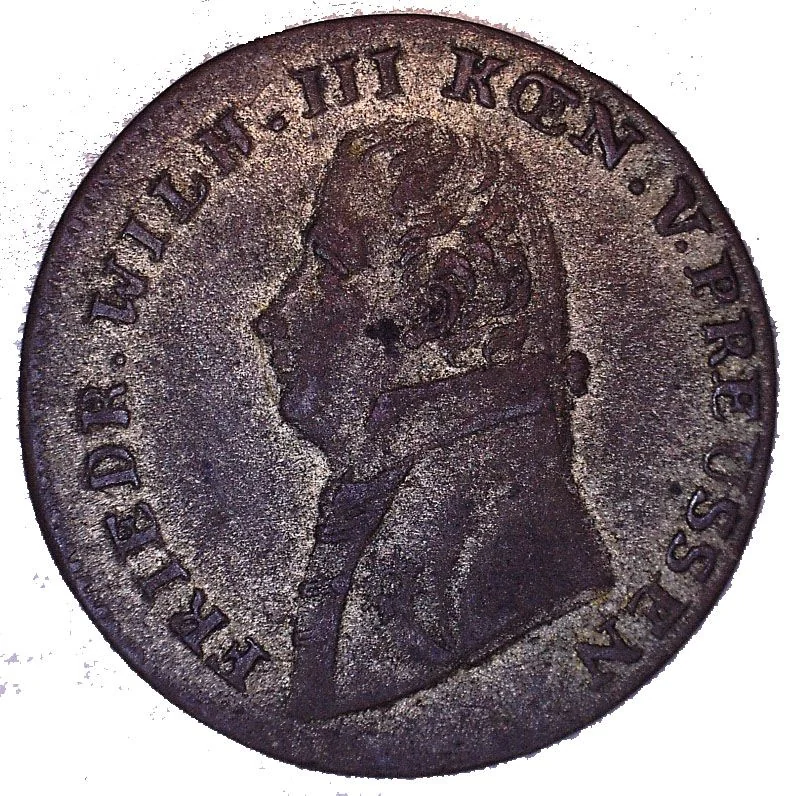
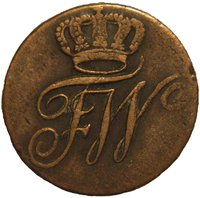
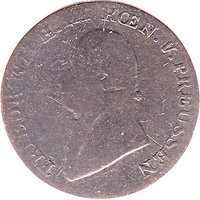
Obverse
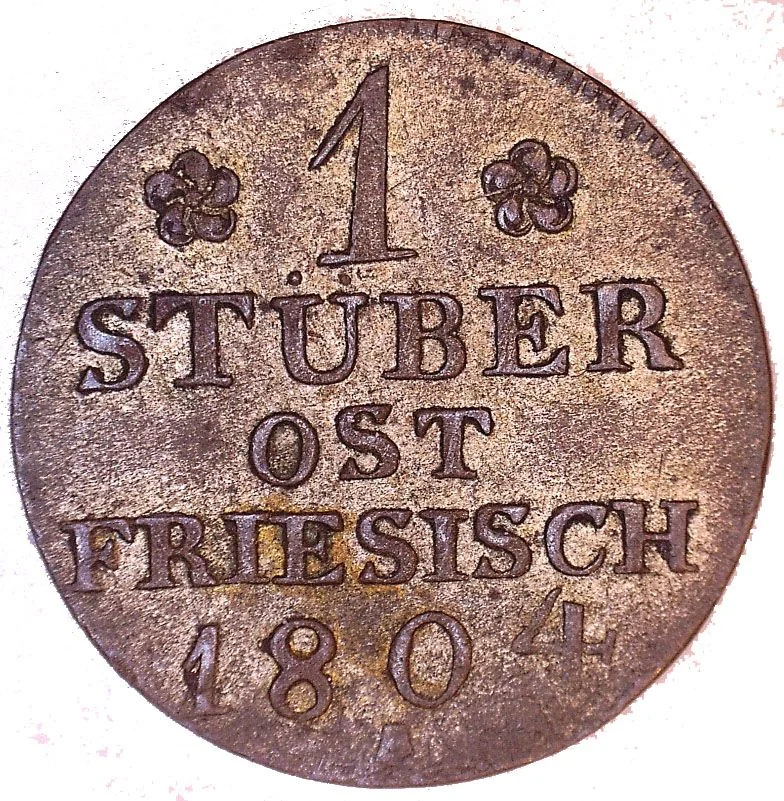
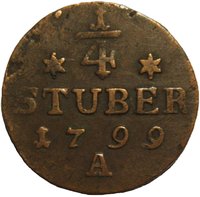
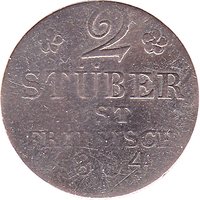
Reverse
Description:
Denomination and date in five lines.
Inscription:
1
STUBER
OST
FRIESISCH
1804
A
STUBER
OST
FRIESISCH
1804
A
Script: Latin
Edge
Mintings
| Year | Mint Mark | Mintage | Quality | Collection |
|---|---|---|---|---|
| 1804 | A | 378,000 |
Historical background
In 1804, the currency situation in East Frisia was a complex and fragmented system, a direct legacy of its recent political history. The region was not a unified monetary zone but a patchwork of circulating coins from various authorities. The primary standard was based on the Reichsthaler (Imperial Thaler), divided into 72 Grote, each of 5 Schwaren. However, the physical coins in daily use were a confusing mix of older Dutch Rijksdaalders and Ducats, Prussian Thalers, and local issues from the former Cirksena princes, all circulating simultaneously with varying acceptance rates.
This monetary confusion was exacerbated by East Frisia's political status. Since 1744, the region had been a possession of the Kingdom of Prussia, but Prussian authority was still consolidating and had not yet fully standardized the currency. Furthermore, the strong economic and cultural ties to the neighboring Netherlands meant Dutch money remained deeply embedded in trade, especially in the port cities like Emden. This created a dual system where official accounts might be kept in Prussian Thalers, but many transactions, particularly in coastal commerce, were conducted in Dutch guilders.
Consequently, merchants and the general public faced constant challenges with exchange rates, valuations, and the reliability of coinage. The lack of a uniform, trusted currency hindered efficient trade and required money changers to play a central role in the local economy. This unstable situation would soon be disrupted; within two years, in 1806, East Frisia would be annexed by the Kingdom of Holland and then, from 1810, directly into Napoleon's French Empire, which would impose the French Franc system, sweeping away the old monetary order entirely.
This monetary confusion was exacerbated by East Frisia's political status. Since 1744, the region had been a possession of the Kingdom of Prussia, but Prussian authority was still consolidating and had not yet fully standardized the currency. Furthermore, the strong economic and cultural ties to the neighboring Netherlands meant Dutch money remained deeply embedded in trade, especially in the port cities like Emden. This created a dual system where official accounts might be kept in Prussian Thalers, but many transactions, particularly in coastal commerce, were conducted in Dutch guilders.
Consequently, merchants and the general public faced constant challenges with exchange rates, valuations, and the reliability of coinage. The lack of a uniform, trusted currency hindered efficient trade and required money changers to play a central role in the local economy. This unstable situation would soon be disrupted; within two years, in 1806, East Frisia would be annexed by the Kingdom of Holland and then, from 1810, directly into Napoleon's French Empire, which would impose the French Franc system, sweeping away the old monetary order entirely.
💎 Extremely Rare