

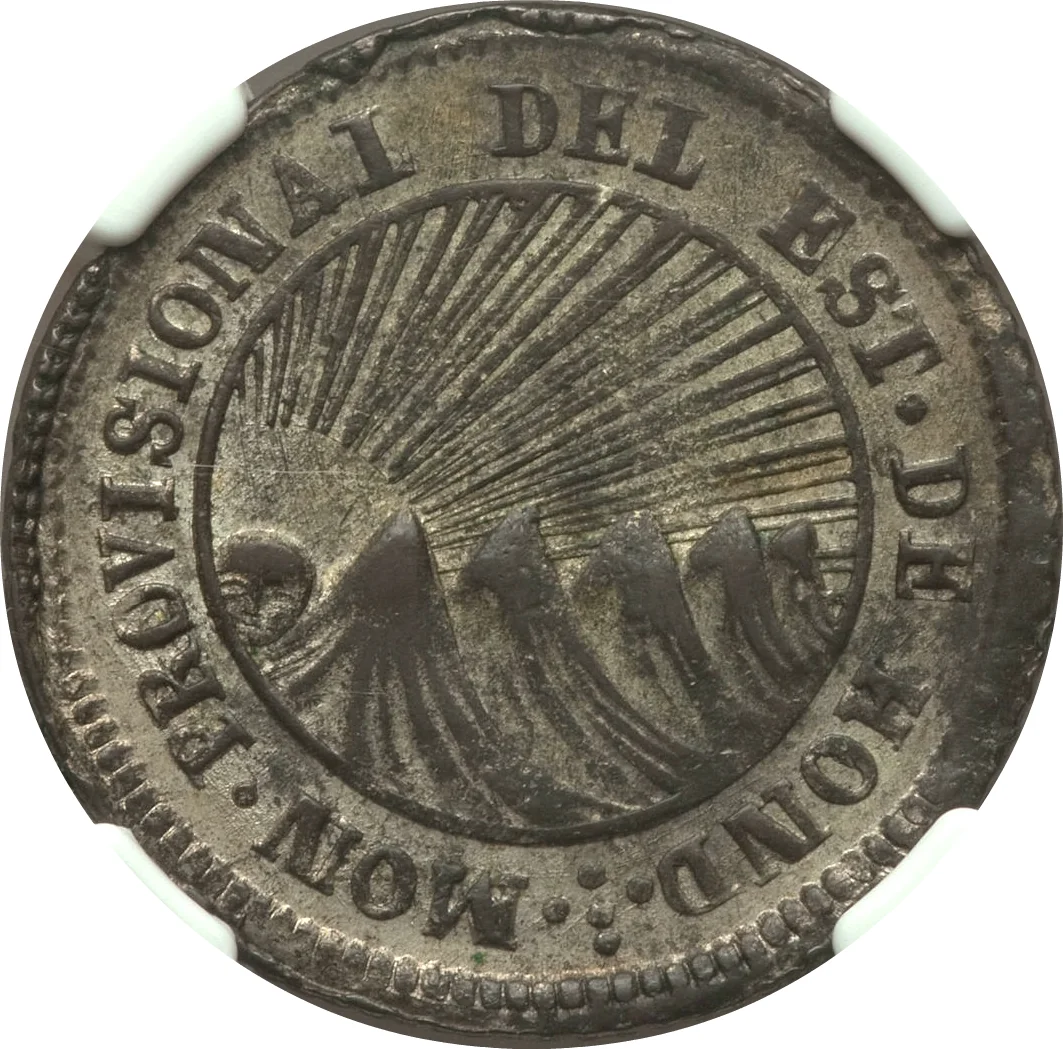
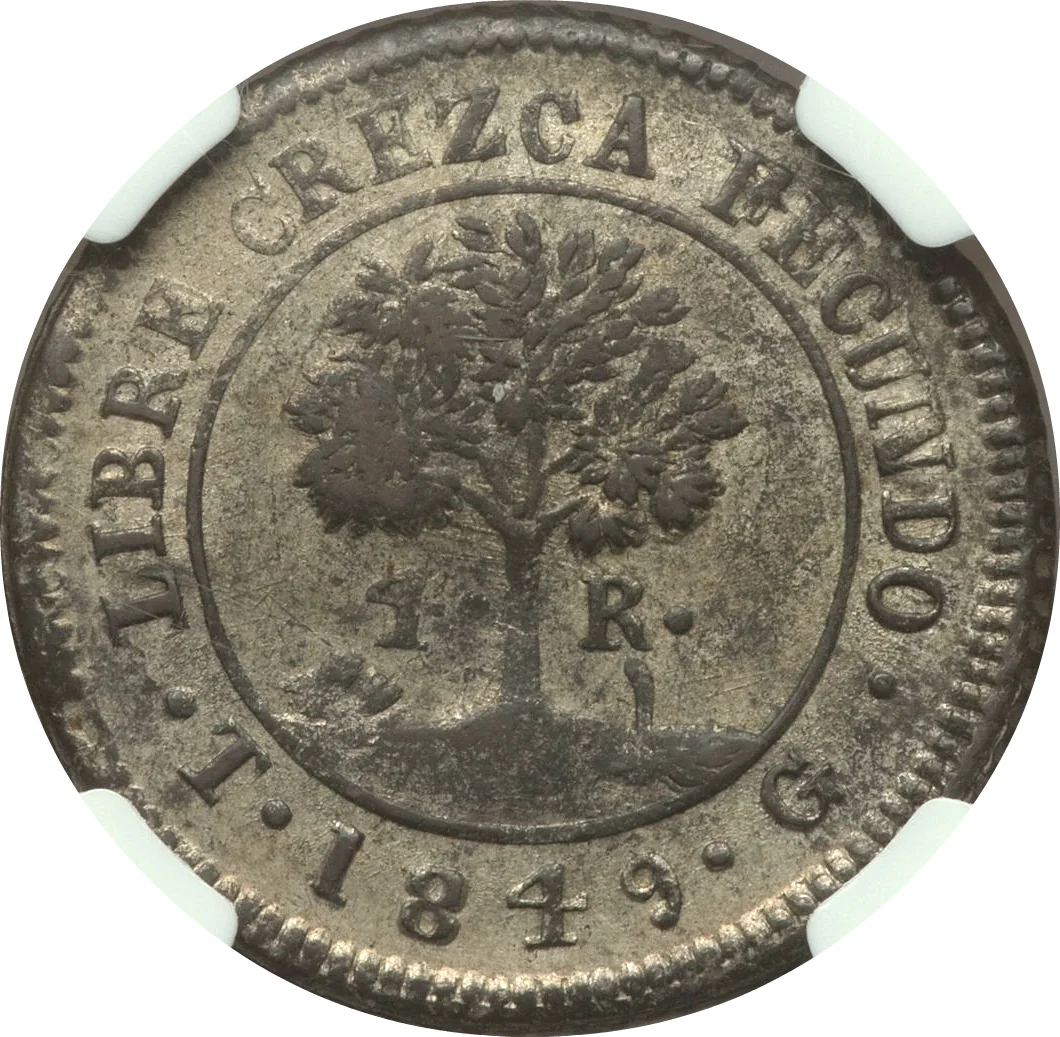
4 reales – Honduras
Add to wishlist
Honduras
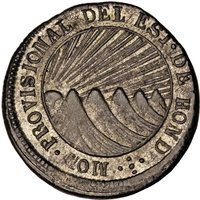
Obverse
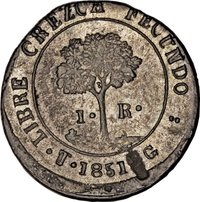
Reverse
Edge
Mints
| Name | Mark |
|---|---|
| Casa Nacional de la Moneda | T |
Historical background
In 1849, Honduras, like its Central American neighbors, was navigating a complex monetary landscape shaped by its post-colonial history and economic fragility. Following the dissolution of the Federal Republic of Central America in 1838, the newly independent nation inherited a chaotic mix of foreign coins that circulated as the primary medium of exchange. These included Spanish colonial reales, Peruvian and Mexican pesos, and coins from other Latin American nations, leading to a system without a standardized national currency. This reliance on foreign specie reflected Honduras's limited minting capacity and its economy's deep integration into broader regional and Atlantic trade networks, particularly with British merchants.
The period was marked by severe economic strain, which exacerbated monetary instability. Honduras's economy was overwhelmingly dependent on the volatile export of precious metals, especially silver from mines like those in Tegucigalpa. However, government revenues were chronically insufficient, leading to persistent budget deficits. To finance operations, successive governments resorted to debasing existing coinage or authorizing the issuance of low-value copper or ficha tokens by local merchants and mining companies. These tokens, while filling a gap for small transactions, further complicated the monetary system and often depreciated rapidly, causing confusion and loss of public trust.
Consequently, the currency situation in 1849 was one of ad-hoc confusion and inflationary pressure, hindering domestic commerce and state-building efforts. The lack of a uniform, trusted national currency symbolized the broader challenges of political instability and underdeveloped institutions. This environment would eventually spur later 19th-century governments to formally adopt the silver peso as the national standard and seek to centralize monetary authority, but in 1849, Honduras remained in a transitional and disordered phase, its currency a physical manifestation of its struggle to establish economic sovereignty.
The period was marked by severe economic strain, which exacerbated monetary instability. Honduras's economy was overwhelmingly dependent on the volatile export of precious metals, especially silver from mines like those in Tegucigalpa. However, government revenues were chronically insufficient, leading to persistent budget deficits. To finance operations, successive governments resorted to debasing existing coinage or authorizing the issuance of low-value copper or ficha tokens by local merchants and mining companies. These tokens, while filling a gap for small transactions, further complicated the monetary system and often depreciated rapidly, causing confusion and loss of public trust.
Consequently, the currency situation in 1849 was one of ad-hoc confusion and inflationary pressure, hindering domestic commerce and state-building efforts. The lack of a uniform, trusted national currency symbolized the broader challenges of political instability and underdeveloped institutions. This environment would eventually spur later 19th-century governments to formally adopt the silver peso as the national standard and seek to centralize monetary authority, but in 1849, Honduras remained in a transitional and disordered phase, its currency a physical manifestation of its struggle to establish economic sovereignty.
✨ Legendary