

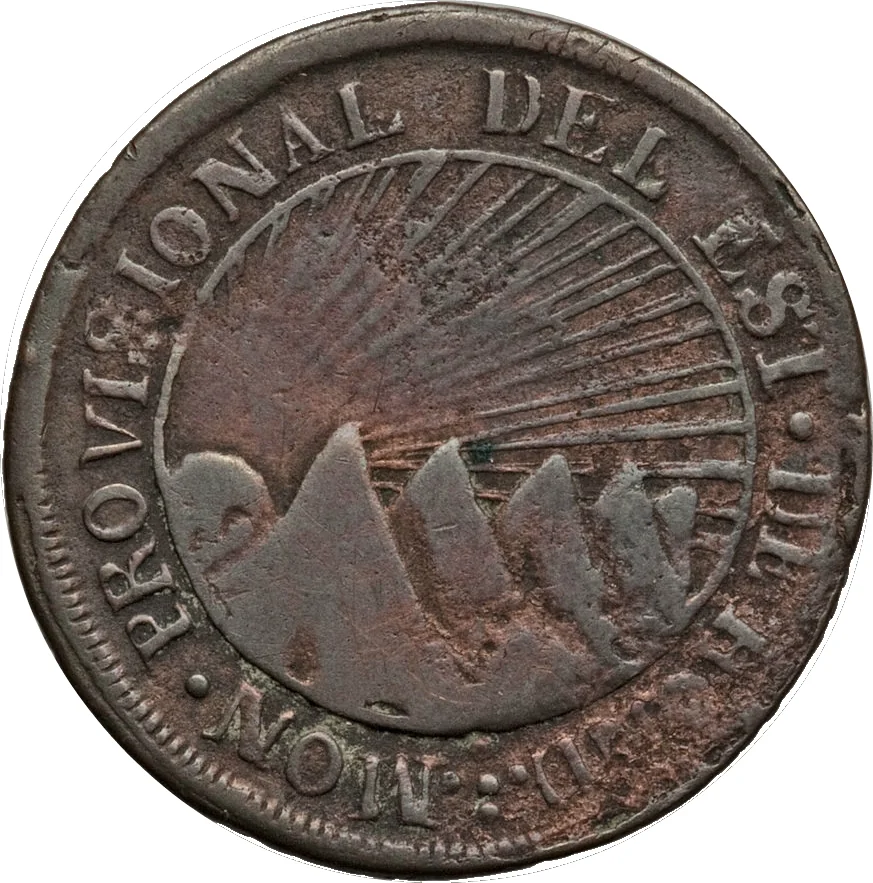
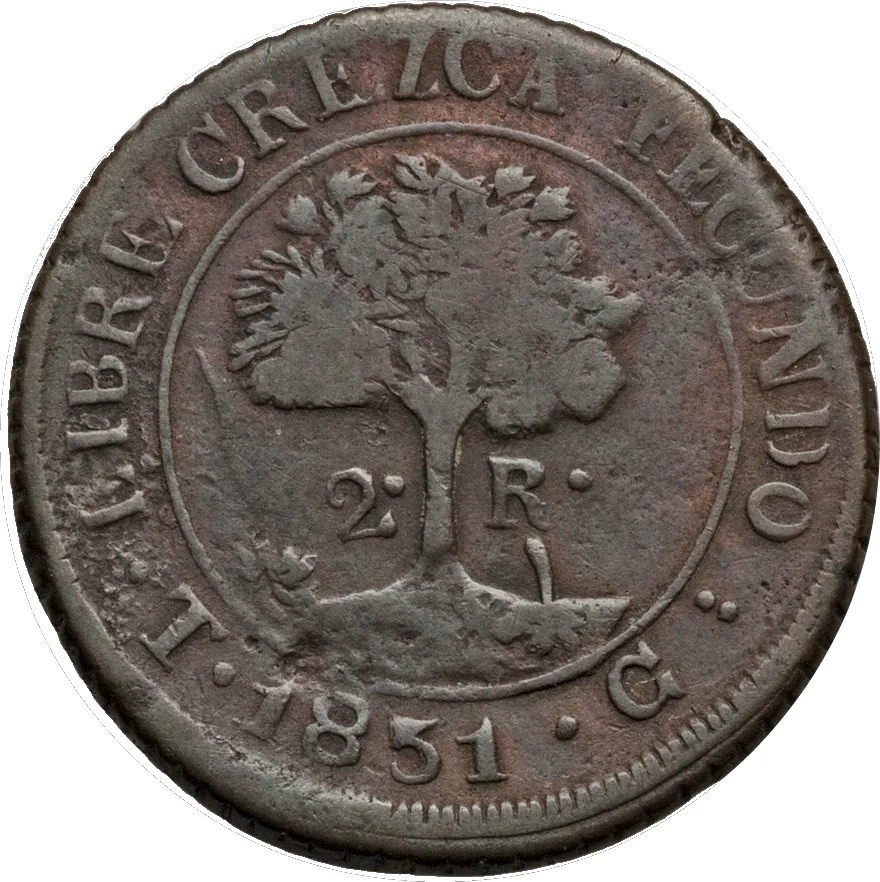
2 reales – Honduras
Add to wishlist
Honduras
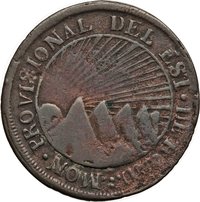
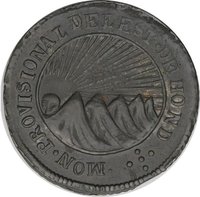
Obverse
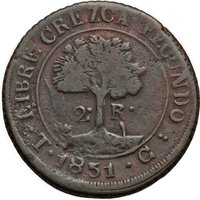
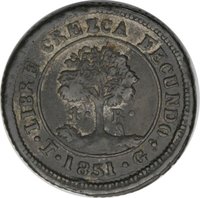
Reverse
Edge
Mints
| Name | Mark |
|---|---|
| Casa Nacional de la Moneda | T |
Mintings
| Year | Mint Mark | Mintage | Quality | Collection |
|---|---|---|---|---|
| 1851 | T | — |
Historical background
In 1851, Honduras, like its Central American neighbors, was grappling with the complex monetary legacy of the Spanish colonial era and the instability following the dissolution of the Federal Republic of Central America in 1838. The primary currency in circulation was the silver real, with eight reales equaling one peso. However, the money supply was chaotic and insufficient. A patchwork of worn Spanish colonial coins, coins from neighboring republics, and even counterfeits circulated alongside a limited number of coins minted by the short-lived Federation. This scarcity of official coinage severely hampered both daily commerce and government revenue, stifling economic development and state-building efforts.
The situation was exacerbated by the government's chronic fiscal deficits, which led to the issuance of debased coinage and paper money. In an attempt to create a national currency and generate seigniorage revenue, the Honduran government under President Juan Lindo had earlier authorized the minting of low-value copper coins. These cuartillos (quarter-real coins), first issued in the late 1840s, were produced in substantial quantities and with a face value far exceeding their intrinsic metal worth. By 1851, this over-issue had led to their severe depreciation and widespread public distrust, as they were not widely accepted at their official rate, especially for foreign trade.
Consequently, the Honduran economy in 1851 operated on a dysfunctional dual system. Internally, transactions were often conducted with devalued copper cuartillos or through barter, while foreign trade and large transactions demanded scarce silver pesos or relied on the more stable currencies of other nations, particularly the British pound sterling and the United States dollar. This monetary fragmentation reflected the broader challenges of the young republic: weak central authority, reliance on a vulnerable agricultural export economy, and integration into a global financial system that demanded sound, silver-based currency—a standard Honduras struggled to meet.
The situation was exacerbated by the government's chronic fiscal deficits, which led to the issuance of debased coinage and paper money. In an attempt to create a national currency and generate seigniorage revenue, the Honduran government under President Juan Lindo had earlier authorized the minting of low-value copper coins. These cuartillos (quarter-real coins), first issued in the late 1840s, were produced in substantial quantities and with a face value far exceeding their intrinsic metal worth. By 1851, this over-issue had led to their severe depreciation and widespread public distrust, as they were not widely accepted at their official rate, especially for foreign trade.
Consequently, the Honduran economy in 1851 operated on a dysfunctional dual system. Internally, transactions were often conducted with devalued copper cuartillos or through barter, while foreign trade and large transactions demanded scarce silver pesos or relied on the more stable currencies of other nations, particularly the British pound sterling and the United States dollar. This monetary fragmentation reflected the broader challenges of the young republic: weak central authority, reliance on a vulnerable agricultural export economy, and integration into a global financial system that demanded sound, silver-based currency—a standard Honduras struggled to meet.
✨ Legendary