

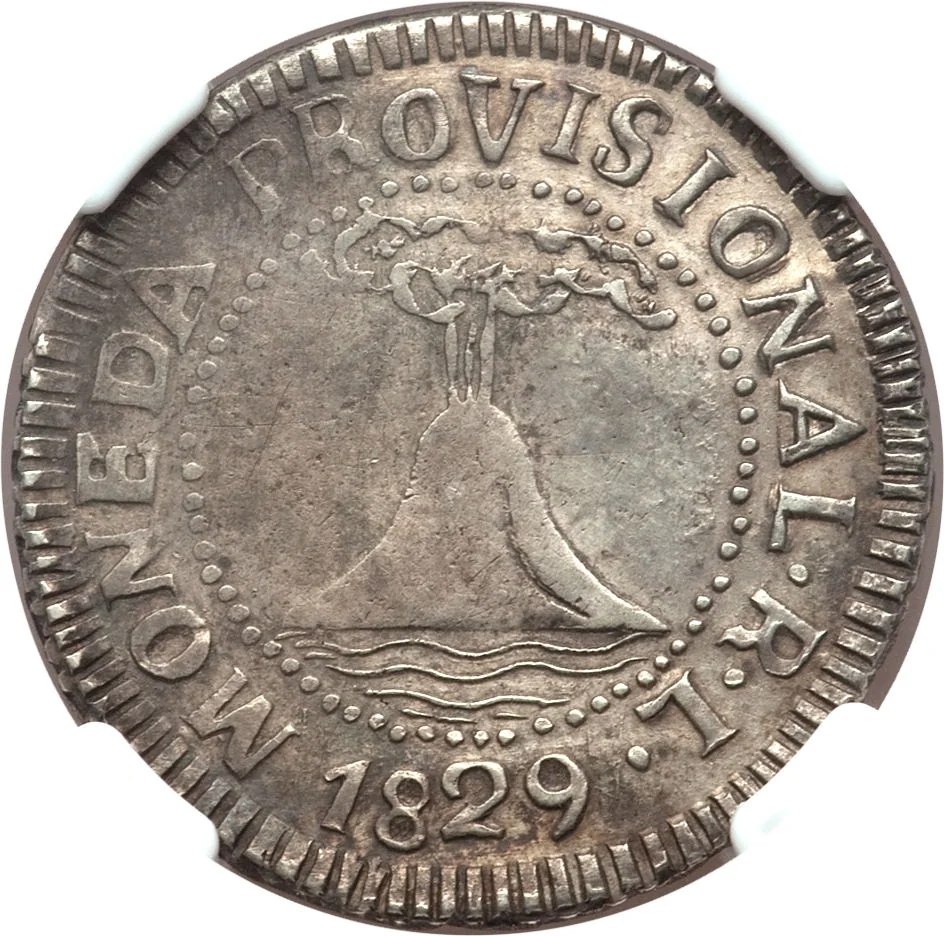
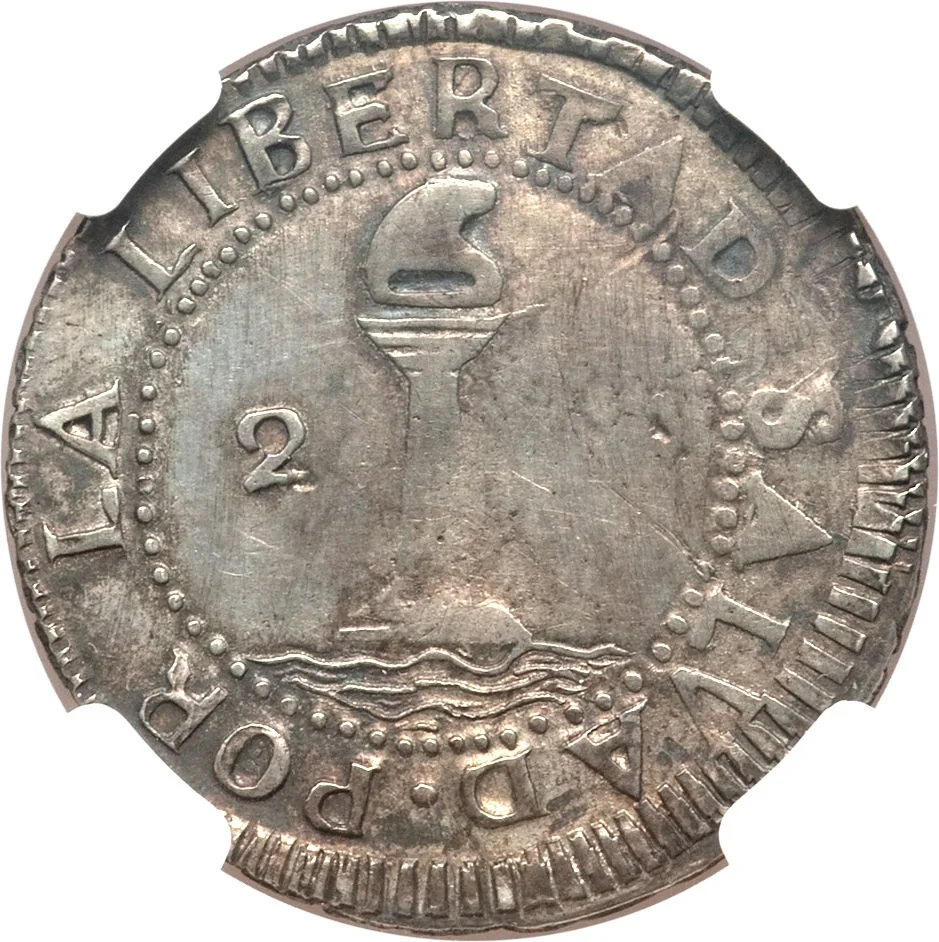
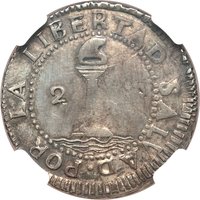
2 Reales – El Salvador
El Salvador
Context
Year: 1829
Issuer: El Salvador 
Period:
(1823—1841)
Currency:
(1828—1889)
Demonetization: November 1835
Material
References
KM: #Click to copy to clipboard6
Numista: #75405
Value
Bullion value: $12.27
Obverse
Reverse
Edge
Mintings
| Year | Mint Mark | Mintage | Quality | Collection |
|---|---|---|---|---|
| 1829 | — | — | ||
| 1829 | RL | — |
Historical background
In 1829, El Salvador found itself in a complex and challenging monetary situation, a direct legacy of its recent independence and the fragmented economic structures of the former Spanish Empire. As a state within the Federal Republic of Central America, it lacked a unified national currency. The economy operated on a chaotic mix of physical commodities (like cacao and indigo), worn and clipped Spanish colonial coins (reales and pesos), and a growing influx of foreign coins, primarily from Mexico, Peru, and even the United States and Britain. This proliferation of different mediums of exchange, all with varying weights, purities, and values, created a climate of confusion, hindered domestic trade, and facilitated rampant fraud.
The situation was exacerbated by a critical shortage of physical specie (coinage), a problem plaguing the entire Central American federation. Years of post-independence instability, including civil conflicts within the federation and the costly 1829 war against federal forces led by Manuel José Arce, had drained government coffers and disrupted commerce. To address the acute lack of circulating money, the Salvadoran state, like others in the region, had resorted to issuing paper money. However, these early billetes or vales were not backed by sufficient precious metal reserves and were often met with deep public distrust, leading to severe depreciation and a preference for any tangible coin, no matter its origin or condition.
Consequently, the primary monetary issues in 1829 were a severe lack of standardized, trustworthy currency and the economic instability this caused. The Salvadoran government, under President José María Cornejo, was grappling with the immediate pressures of war finance while also confronting the foundational need to establish monetary sovereignty. The chaotic currency environment stifled economic recovery and state-building efforts, setting the stage for future attempts—both within the federation and later as an independent nation—to create a stable and unified monetary system to foster national development.
The situation was exacerbated by a critical shortage of physical specie (coinage), a problem plaguing the entire Central American federation. Years of post-independence instability, including civil conflicts within the federation and the costly 1829 war against federal forces led by Manuel José Arce, had drained government coffers and disrupted commerce. To address the acute lack of circulating money, the Salvadoran state, like others in the region, had resorted to issuing paper money. However, these early billetes or vales were not backed by sufficient precious metal reserves and were often met with deep public distrust, leading to severe depreciation and a preference for any tangible coin, no matter its origin or condition.
Consequently, the primary monetary issues in 1829 were a severe lack of standardized, trustworthy currency and the economic instability this caused. The Salvadoran government, under President José María Cornejo, was grappling with the immediate pressures of war finance while also confronting the foundational need to establish monetary sovereignty. The chaotic currency environment stifled economic recovery and state-building efforts, setting the stage for future attempts—both within the federation and later as an independent nation—to create a stable and unified monetary system to foster national development.
✨ Legendary