

2 Reales – El Salvador
El Salvador
Context
Years: 1832–1834
Issuer: El Salvador 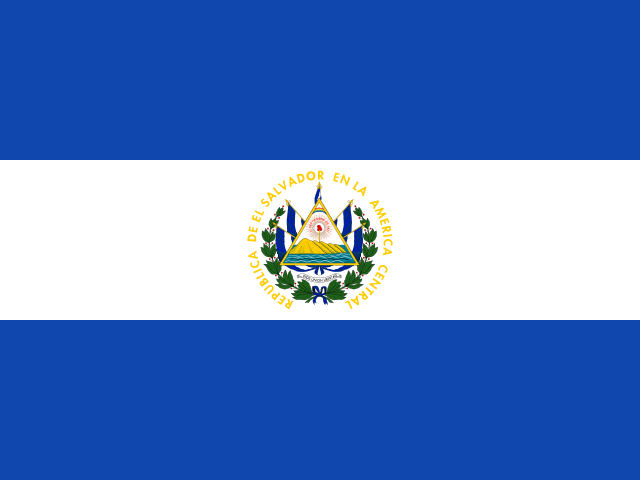
Period:
(1823—1841)
Currency:
(1828—1889)
Demonetization: 14 February 1835
Material
References
KM: #Click to copy to clipboard11
Numista: #44394
Value
Bullion value: $15.62
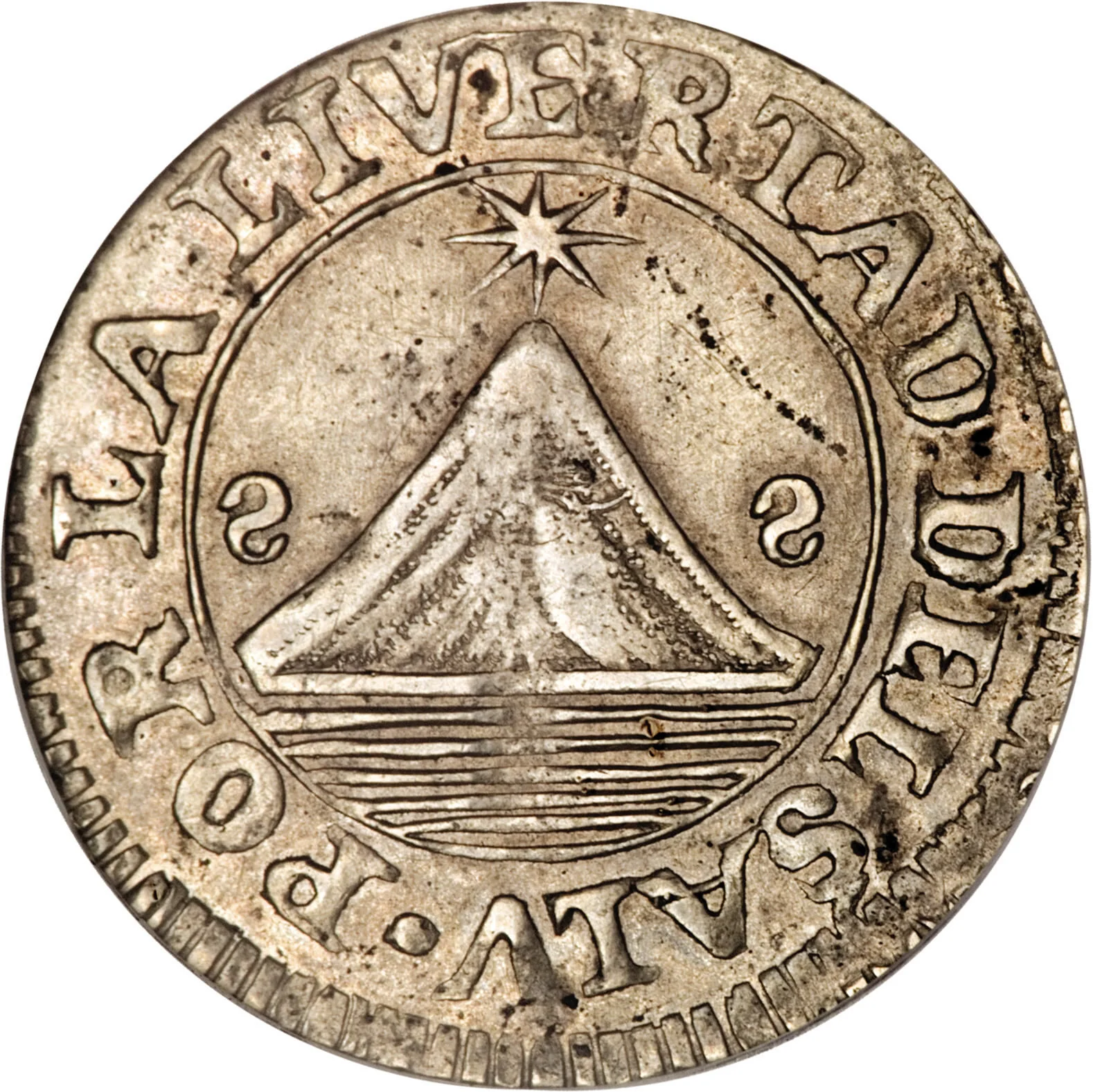
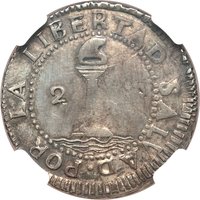
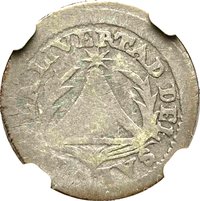
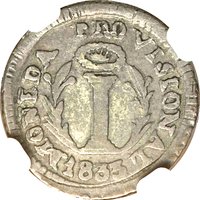
Obverse
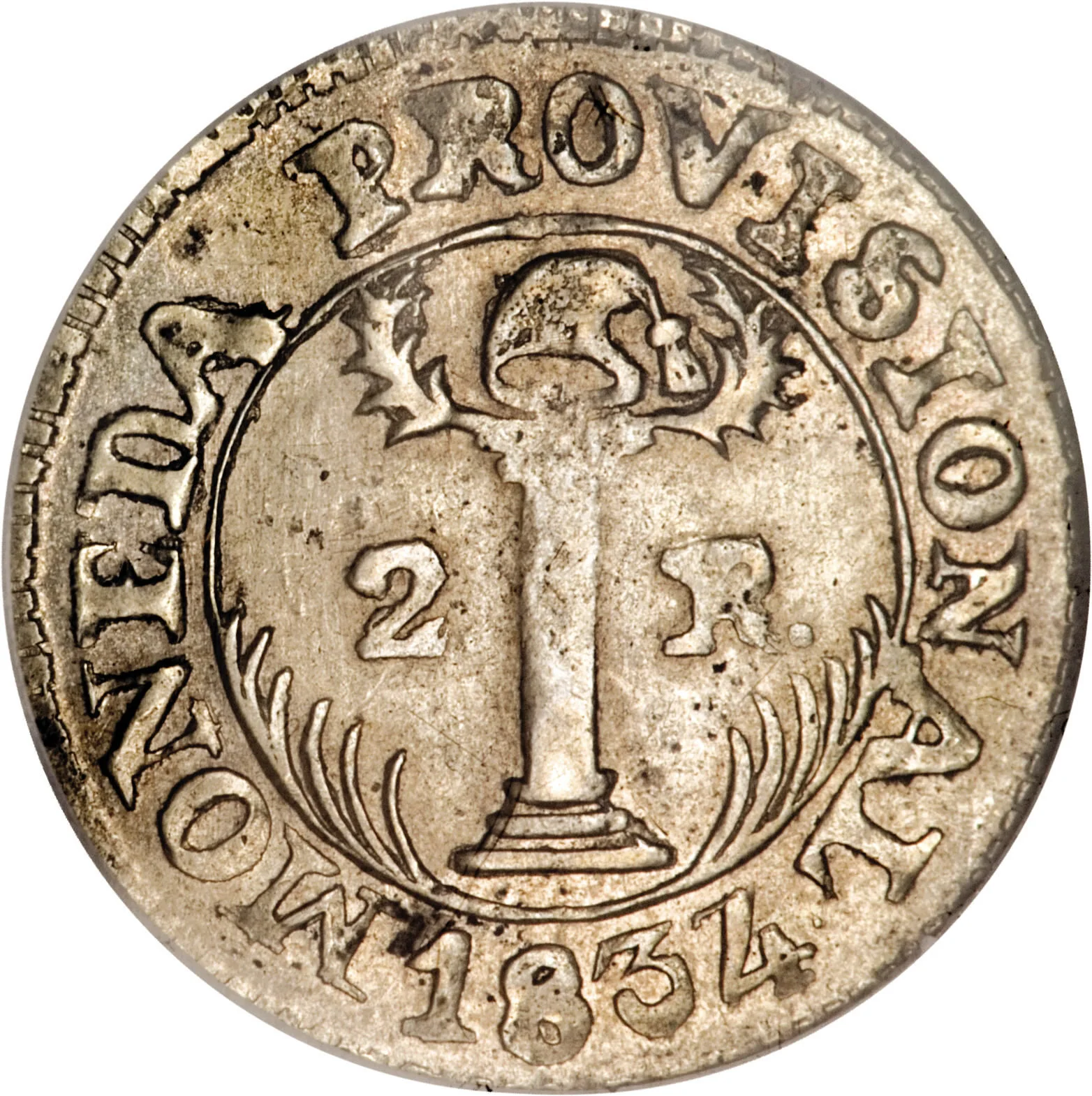
Reverse
Edge
Mintings
| Year | Mint Mark | Mintage | Quality | Collection |
|---|---|---|---|---|
| 1832 | — | — | ||
| 1832 | RL | — | ||
| 1833 | L | — | ||
| 1833 | RL | — | ||
| 1833 | — | — | ||
| 1834 | T | — | ||
| 1834 | — | — |
Historical background
In 1832, El Salvador was navigating a complex and challenging monetary landscape as a state within the Federal Republic of Central America. The young federation, established in 1824, struggled to impose a unified economic policy, leading to a chaotic currency environment. While the federal government had authorized the minting of national coins in Guatemala, these were in short supply. Consequently, El Salvador’s economy operated with a confusing mix of Spanish colonial coins (like pesos, reales, and maravedís), coins from other Spanish American nations (especially Mexican silver), and even cut and counterstamped pieces of eight to create smaller change. This scarcity of official, low-denomination coinage severely hampered everyday commerce.
The Salvadoran state attempted to address this crisis by authorizing its own provisional solutions. In the late 1820s and early 1830s, local mints in San Salvador and Sensuntepeque produced crude, low-value copper and silver tokens, often stamped with the state’s seal. These were intended to facilitate small transactions, but their value was not always trusted, and they circulated alongside the foreign and colonial silver. The fundamental problem was a lack of standardized, high-quality coinage that could be used across the federation, leading to uncertainty in trade and valuation.
This monetary disarray reflected and exacerbated the broader political and economic fragility of the period. Reliance on foreign silver made El Salvador vulnerable to external economic shifts, while the proliferation of local tokens highlighted the weak central authority of the federal government. The currency situation of 1832 was, therefore, more than a mere inconvenience; it was a symptom of the federation's failing cohesion and a significant obstacle to domestic economic stability and growth, contributing to the tensions that would eventually lead to the federation's dissolution and El Salvador's emergence as an independent republic in 1839.
The Salvadoran state attempted to address this crisis by authorizing its own provisional solutions. In the late 1820s and early 1830s, local mints in San Salvador and Sensuntepeque produced crude, low-value copper and silver tokens, often stamped with the state’s seal. These were intended to facilitate small transactions, but their value was not always trusted, and they circulated alongside the foreign and colonial silver. The fundamental problem was a lack of standardized, high-quality coinage that could be used across the federation, leading to uncertainty in trade and valuation.
This monetary disarray reflected and exacerbated the broader political and economic fragility of the period. Reliance on foreign silver made El Salvador vulnerable to external economic shifts, while the proliferation of local tokens highlighted the weak central authority of the federal government. The currency situation of 1832 was, therefore, more than a mere inconvenience; it was a symptom of the federation's failing cohesion and a significant obstacle to domestic economic stability and growth, contributing to the tensions that would eventually lead to the federation's dissolution and El Salvador's emergence as an independent republic in 1839.
✨ Legendary