

1 franc – Belgium
Add to wishlist
Belgium
Context
Years: 1941–1947
Issuer: Belgium
Ruler: Leopold III
Currency:
(1832—2001)
Demonetization: 1 December 1952
Total mintage: 72,175,000
Material
References
KM: #
Numista: #754
Value
Exchange value: 1 BEF
Obverse
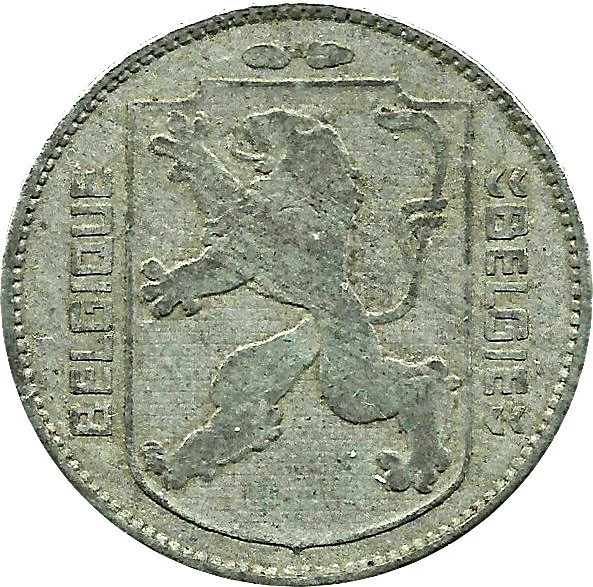
Description:
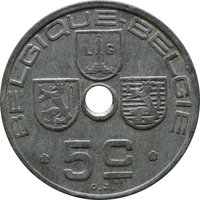
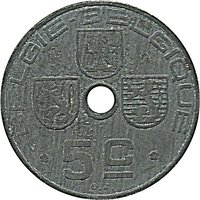
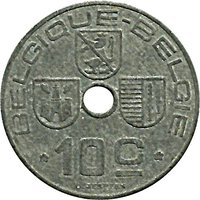
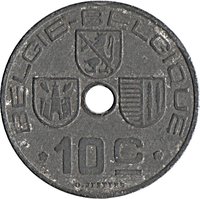
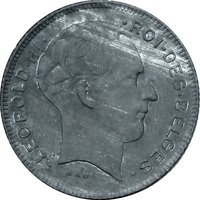
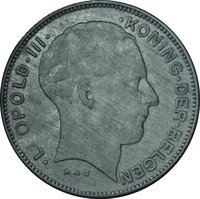
National coat of arms with bilingual French/Dutch legends.
Inscription:
BELGIQUE BELGIE
Translation:
Belgium Belgium
Script: Latin
Engraver: Marcel Rau
Reverse
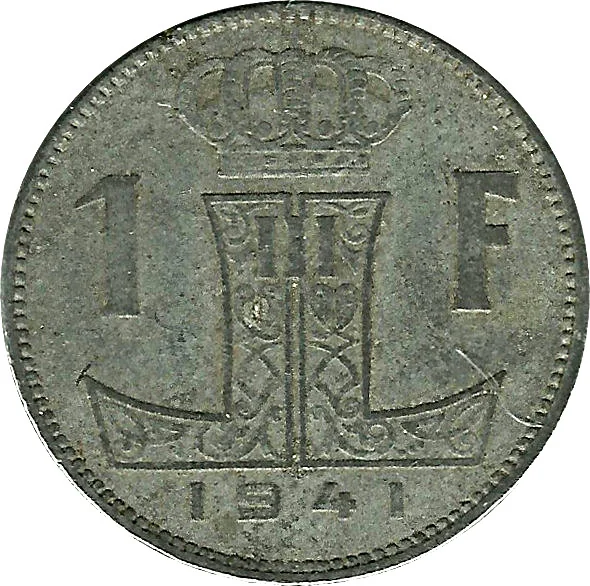
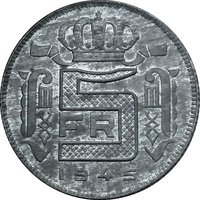
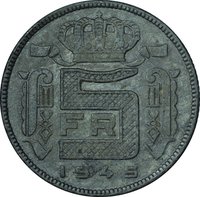
Description:
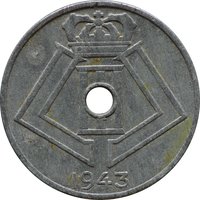
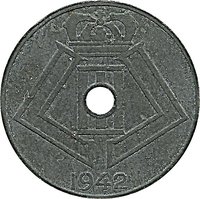
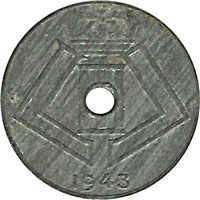
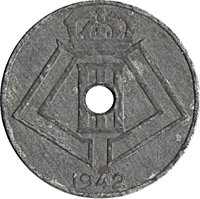
Leopold III monogram flanking value, date beneath.
Inscription:
1 F
1941
1941
Script: Latin
Engraver: Marcel Rau
Edge
Reeded
Categories
| Symbols> Coat of Arms |
| Symbols> Monogram |
Mints
| Name | Mark |
|---|---|
| Royal Mint of Belgium | — |
Mintings
| Year | Mint Mark | Mintage | Quality | Collection |
|---|---|---|---|---|
| 1941 | — | 16,000,000 | ||
| 1942 | — | 25,000,000 | ||
| 1943 | — | 28,000,000 | ||
| 1947 | — | 3,175,000 |
Historical background
In 1941, Belgium was in the second year of a harsh military occupation by Nazi Germany, which had begun in May 1940. The country's currency, the Belgian franc, remained in circulation but was now subordinated to the economic demands of the German war machine. The Reichsbank imposed a fixed, highly advantageous exchange rate of 10 Belgian francs to 1 Reichsmark, a form of financial plunder that systematically drained Belgian resources to fund the occupation and Germany's wider war effort.
This exploitative monetary policy fueled rampant inflation and a severe scarcity of goods. The occupiers financed their costs by compelling the Belgian National Bank to grant "occupation costs" credits, effectively forcing Belgium to pay for its own subjugation. This led to a massive increase in the money supply without a corresponding increase in goods, as the economy was redirected toward German needs. A thriving black market emerged where prices soared far beyond official levels, making essential items unaffordable for many citizens under the rigid wage and price controls.
Consequently, the population faced a dual currency reality: the officially controlled but depreciating franc, and the much stronger, sought-after Reichsmark which held greater purchasing power, especially for acquiring scarce commodities. This period was characterized by economic repression, the erosion of savings, and a daily struggle for survival, as the monetary system became a key tool of exploitation and control within the broader context of wartime deprivation and oppression.
This exploitative monetary policy fueled rampant inflation and a severe scarcity of goods. The occupiers financed their costs by compelling the Belgian National Bank to grant "occupation costs" credits, effectively forcing Belgium to pay for its own subjugation. This led to a massive increase in the money supply without a corresponding increase in goods, as the economy was redirected toward German needs. A thriving black market emerged where prices soared far beyond official levels, making essential items unaffordable for many citizens under the rigid wage and price controls.
Consequently, the population faced a dual currency reality: the officially controlled but depreciating franc, and the much stronger, sought-after Reichsmark which held greater purchasing power, especially for acquiring scarce commodities. This period was characterized by economic repression, the erosion of savings, and a daily struggle for survival, as the monetary system became a key tool of exploitation and control within the broader context of wartime deprivation and oppression.
Series: 1941 Belgium circulation coins
🌱 Very Common