

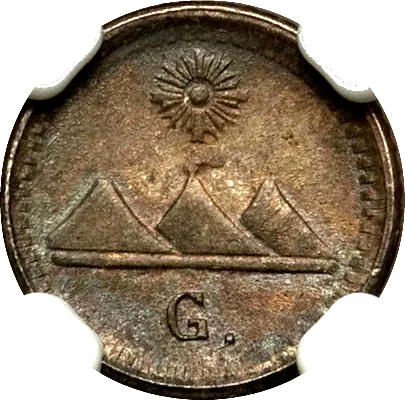
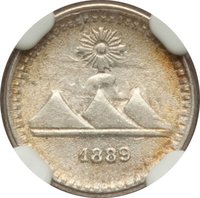
Obverse
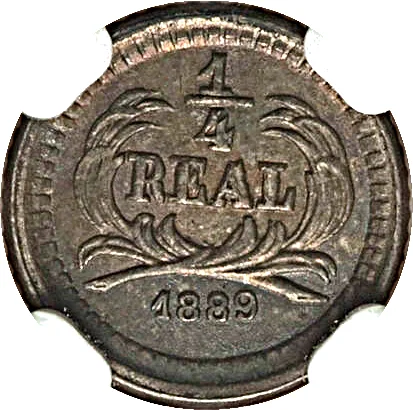
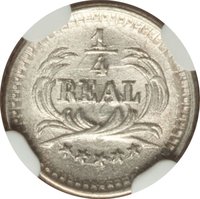
Reverse
Edge
Mints
| Name | Mark |
|---|---|
| Casa de Moneda de Guatemala | — |
Mintings
| Year | Mint Mark | Mintage | Quality | Collection |
|---|---|---|---|---|
| 1889 | G | 870,048 |
Historical background
In 1889, Guatemala’s currency system was in a state of transition and instability, deeply influenced by the liberal economic policies of President Manuel Lisandro Barillas Bercián. The country had officially adopted the silver peso as its unit of currency following the creation of the Quetzal in 1859, but the reality was a complex monetary landscape. Alongside limited government-issued coinage, a significant volume of foreign silver, particularly Mexican and Peruvian pesos, circulated freely within the economy. This created practical challenges for commerce, as the value and purity of these coins could vary.
The period was marked by a chronic shortage of official, low-denomination coinage for everyday transactions. To fill this void, private entities such as haciendas, merchants, and municipal governments issued their own paper notes and tokens, known as fichas or vales. While this practice facilitated local trade, it led to a fragmented and unreliable monetary environment where the authenticity and redeemability of these private scrips were always in question. This scarcity of sound fractional currency was a persistent irritant to both the public and the growing commercial class.
Underpinning this situation was a broader commitment to the gold standard, which Guatemala had formally adopted in 1870. However, the government struggled to maintain sufficient gold reserves to back its currency fully, leading to a de facto bimetallic system where silver still played a major role. The instability and lack of uniform currency in 1889 highlighted the tensions between the government's modernizing ambitions for a centralized, gold-backed monetary system and the on-the-ground economic realities of a primarily agricultural society reliant on informal and foreign coinage. This friction would eventually lead to major monetary reforms in the early 20th century.
The period was marked by a chronic shortage of official, low-denomination coinage for everyday transactions. To fill this void, private entities such as haciendas, merchants, and municipal governments issued their own paper notes and tokens, known as fichas or vales. While this practice facilitated local trade, it led to a fragmented and unreliable monetary environment where the authenticity and redeemability of these private scrips were always in question. This scarcity of sound fractional currency was a persistent irritant to both the public and the growing commercial class.
Underpinning this situation was a broader commitment to the gold standard, which Guatemala had formally adopted in 1870. However, the government struggled to maintain sufficient gold reserves to back its currency fully, leading to a de facto bimetallic system where silver still played a major role. The instability and lack of uniform currency in 1889 highlighted the tensions between the government's modernizing ambitions for a centralized, gold-backed monetary system and the on-the-ground economic realities of a primarily agricultural society reliant on informal and foreign coinage. This friction would eventually lead to major monetary reforms in the early 20th century.
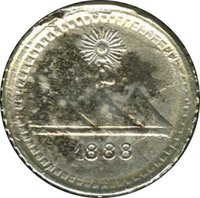
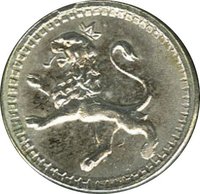
💎 Very Rare