

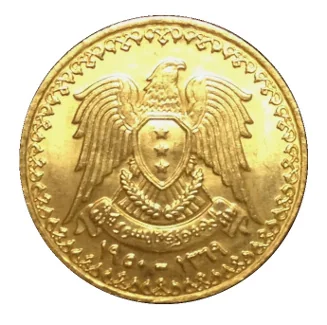
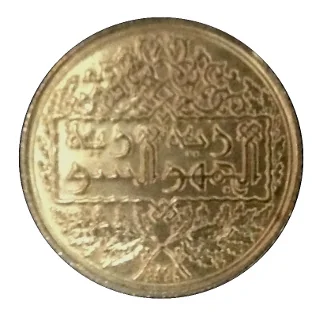
½ pound – Syria
Add to wishlist
Syria
Context
Year: 1950
Islamic (Hijri) Year:: 1369
Issuer: Syria
Period:
(1946—1958)
Currency:
(since 1919)
Demonetized: Yes
Total mintage: 100,000
Material
References
KM: #
Numista: #75075
Value
Exchange value: ½ SYP
Bullion value: $466.48
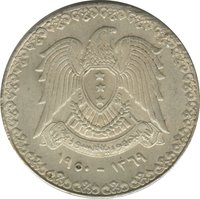
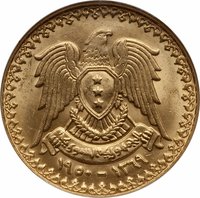
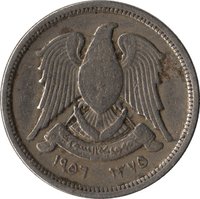
Obverse
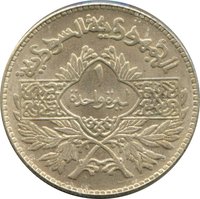
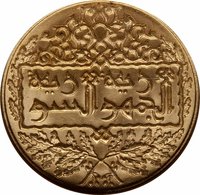
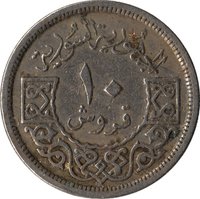
Reverse
Edge
Reeded
Categories
| Animal> Bird |
| Symbols> Coat of Arms |
Mints
| Name | Mark |
|---|---|
| United States Mint of Philadelphia | — |
Mintings
| Year | Mint Mark | Mintage | Quality | Collection |
|---|---|---|---|---|
| 1950 | — | 100,000 |
Historical background
In 1950, Syria's currency situation was characterized by transition and regional integration. Following independence from French mandate rule in 1946, the country initially used the Syrian pound, which was still pegged to the French franc and issued by a French-controlled bank. This arrangement was seen as an unwelcome vestige of colonial influence, prompting the newly sovereign government to seek full monetary independence. The primary goal was to establish a national currency managed by a Syrian institution to better control the economy and symbolize political autonomy.
This period saw Syria as a founding member of the Arab-led currency union. In 1950, Syria was part of the "Sterling Area" for international exchange but, more significantly, it operated under the Syrian-Lebanese Customs Union and a shared monetary agreement with Lebanon. Both countries used interchangeable currencies—the Syrian pound and the Lebanese pound—which were issued by separate national banks but maintained a fixed parity (1:1). This system facilitated trade and financial stability between the two nations, though it also required close, and sometimes tense, coordination of monetary policy.
Ultimately, 1950 was a precursor to major reform. The pressures of maintaining the joint currency system with Lebanon, coupled with the desire for an independent monetary policy, led to the establishment of the Central Bank of Syria in 1953. The following years would see the formal dissolution of the currency union with Lebanon (in 1954) and the issuance of a distinctly Syrian currency, marking the final step in the post-colonial consolidation of the country's financial sovereignty that had been actively pursued in the early 1950s.
This period saw Syria as a founding member of the Arab-led currency union. In 1950, Syria was part of the "Sterling Area" for international exchange but, more significantly, it operated under the Syrian-Lebanese Customs Union and a shared monetary agreement with Lebanon. Both countries used interchangeable currencies—the Syrian pound and the Lebanese pound—which were issued by separate national banks but maintained a fixed parity (1:1). This system facilitated trade and financial stability between the two nations, though it also required close, and sometimes tense, coordination of monetary policy.
Ultimately, 1950 was a precursor to major reform. The pressures of maintaining the joint currency system with Lebanon, coupled with the desire for an independent monetary policy, led to the establishment of the Central Bank of Syria in 1953. The following years would see the formal dissolution of the currency union with Lebanon (in 1954) and the issuance of a distinctly Syrian currency, marking the final step in the post-colonial consolidation of the country's financial sovereignty that had been actively pursued in the early 1950s.
💎 Extremely Rare