

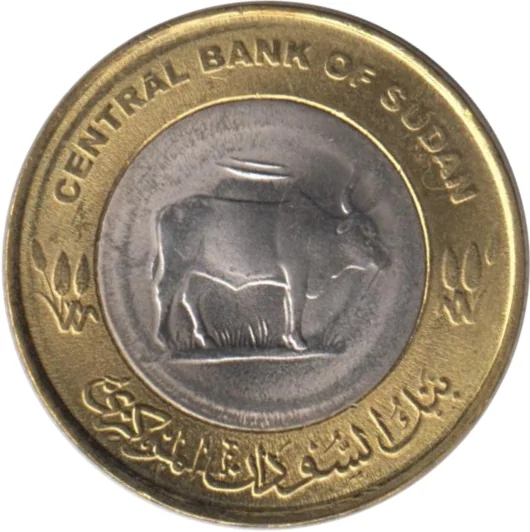
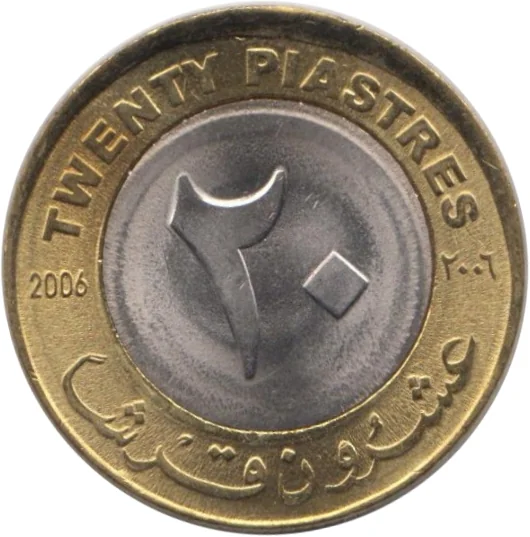
20 piastres – Sudan
Add to wishlist
Sudan
Context
Material
References
KM: #
Numista: #7464
Value
Exchange value: 0.20 SDG
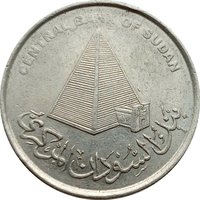
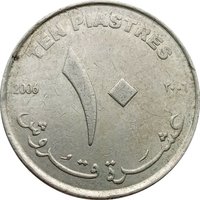
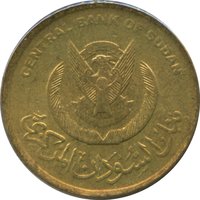
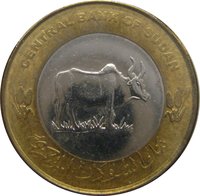
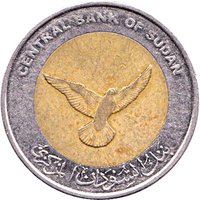
Obverse
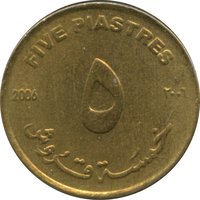
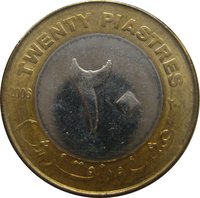
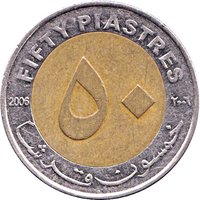
Reverse
Edge
Reeded (coarse reeding)
Mintings
| Year | Mint Mark | Mintage | Quality | Collection |
|---|---|---|---|---|
| 2006 | — | — |
Historical background
In 2006, Sudan's currency situation was characterized by significant instability and a stark duality, shaped by the ongoing civil war and the build-up to the Comprehensive Peace Agreement (CPA) of 2005. The country operated with two distinct currencies: the Sudanese dinar, used in the north, and the Sudanese pound, used in the south. This separation was a direct result of the peace deal, which granted the semi-autonomous Government of Southern Sudan (GoSS) the right to issue its own currency, leading to the introduction of the new Sudanese pound in the south in January 2007. Throughout 2006, this transitional period created confusion and economic fragmentation, with both currencies circulating at different values and with limited acceptance outside their respective regions.
Economically, the nation grappled with high inflation, a large budget deficit, and a heavy reliance on oil revenues, which were themselves a source of tension between north and south under the wealth-sharing protocols of the CPA. The Central Bank of Sudan in Khartoum, which managed monetary policy for the entire country, faced the immense challenge of controlling money supply and inflation while navigating the political imperative of financing post-war reconstruction and government spending. External debt, estimated at nearly $30 billion, further constrained economic options and limited access to international financial institutions.
The currency duality of 2006 was more than a monetary issue; it was a powerful symbol of the nation's deep political divide and the fragile, transitional nature of the peace. Managing this dual system was a critical test for the CPA's implementation, with the ultimate goal being eventual currency unification—a process fraught with technical difficulty and political mistrust. The situation underscored the profound economic challenges facing Sudan as it attempted to rebuild a single economy from two separate war-ravaged halves.
Economically, the nation grappled with high inflation, a large budget deficit, and a heavy reliance on oil revenues, which were themselves a source of tension between north and south under the wealth-sharing protocols of the CPA. The Central Bank of Sudan in Khartoum, which managed monetary policy for the entire country, faced the immense challenge of controlling money supply and inflation while navigating the political imperative of financing post-war reconstruction and government spending. External debt, estimated at nearly $30 billion, further constrained economic options and limited access to international financial institutions.
The currency duality of 2006 was more than a monetary issue; it was a powerful symbol of the nation's deep political divide and the fragile, transitional nature of the peace. Managing this dual system was a critical test for the CPA's implementation, with the ultimate goal being eventual currency unification—a process fraught with technical difficulty and political mistrust. The situation underscored the profound economic challenges facing Sudan as it attempted to rebuild a single economy from two separate war-ravaged halves.
Series: 2006 Sudan circulation coins
🌱 Common