

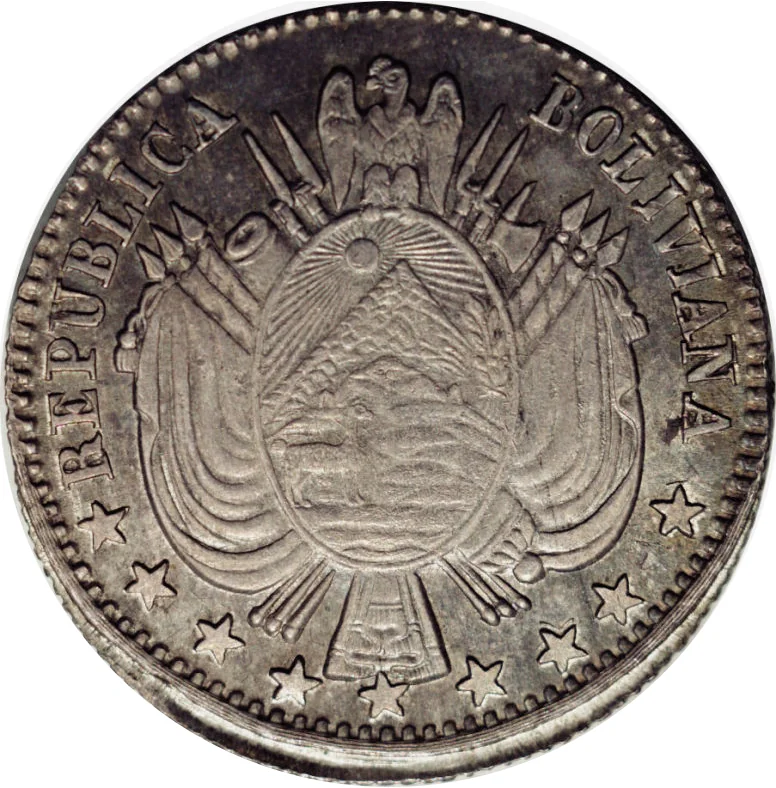
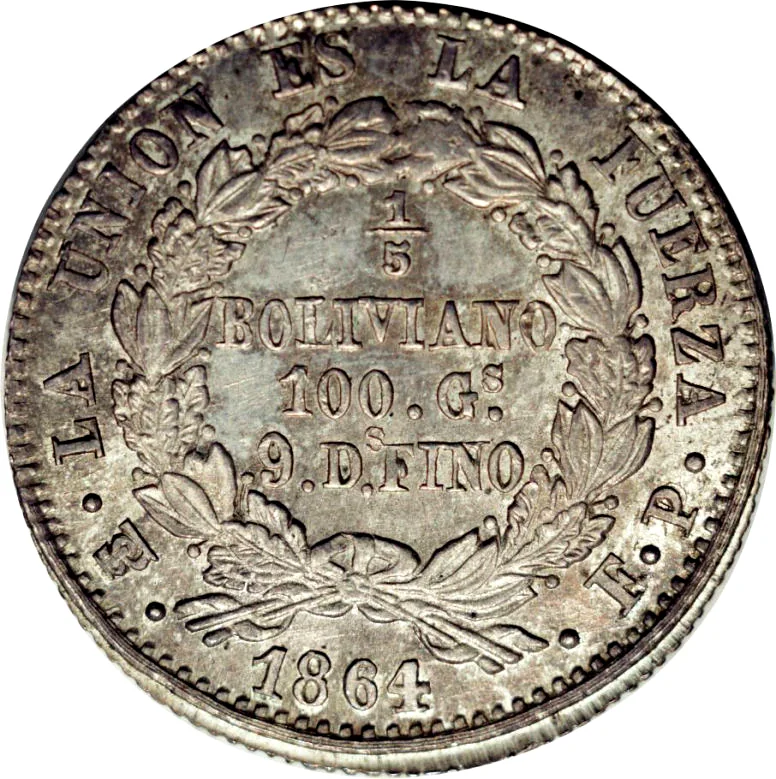
⅕ boliviano – Bolivia
Add to wishlist
Bolivia
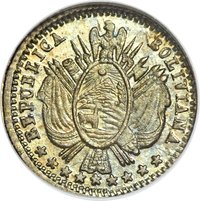
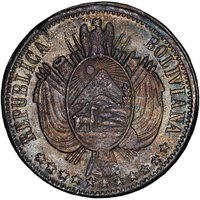
Obverse
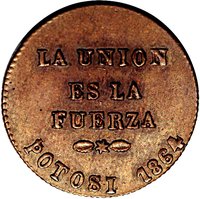
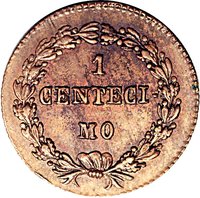
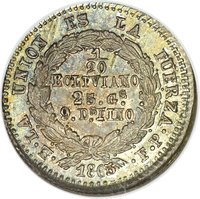
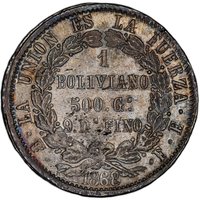
Reverse
Edge
Reeded
Mints
| Name | Mark |
|---|---|
| Potosi | PTS |
Historical background
In 1864, Bolivia's currency situation was characterized by profound instability and fragmentation, a direct legacy of the economic devastation following the War of the Pacific (1879-1883) and earlier regional conflicts. The national treasury was severely depleted, and the country struggled with a chronic lack of a unified, trusted monetary system. While the Bolivian peso was the official unit of account, its value was highly volatile, and the actual money in circulation was a chaotic mix of foreign coins—particularly Peruvian and Chilean pesos, British sovereigns, and French francs—alongside worn and often counterfeit domestic coinage.
This monetary anarchy was exacerbated by the government's frequent recourse to debasement and the issuance of low-value copper and billon (silver-copper alloy) coins to finance its deficits. Public trust in these fractional currencies was extremely low, leading to widespread discounting and rejection in commercial transactions, especially in indigenous highland communities that often preferred to revert to barter. The scarcity of full-bodied silver coins, despite Bolivia's historic silver mining wealth, reflected both the decline of the Potosí mines and the export of high-value silver bullion, leaving the domestic economy starved of sound money.
Consequently, the year 1864 fell within a prolonged period of monetary crisis that stifled internal trade and complicated fiscal administration. The government of General Mariano Melgarejo (1864-1871) did little to rectify the situation, as his regime focused more on consolidating power and distributing land to allies than on implementing coherent financial reform. This pervasive instability would only deepen, culminating in the complete monetary collapse following the loss of the Pacific coast and its nitrate revenues in the war with Chile, forcing a long and difficult process of monetary reconstruction in the decades to follow.
This monetary anarchy was exacerbated by the government's frequent recourse to debasement and the issuance of low-value copper and billon (silver-copper alloy) coins to finance its deficits. Public trust in these fractional currencies was extremely low, leading to widespread discounting and rejection in commercial transactions, especially in indigenous highland communities that often preferred to revert to barter. The scarcity of full-bodied silver coins, despite Bolivia's historic silver mining wealth, reflected both the decline of the Potosí mines and the export of high-value silver bullion, leaving the domestic economy starved of sound money.
Consequently, the year 1864 fell within a prolonged period of monetary crisis that stifled internal trade and complicated fiscal administration. The government of General Mariano Melgarejo (1864-1871) did little to rectify the situation, as his regime focused more on consolidating power and distributing land to allies than on implementing coherent financial reform. This pervasive instability would only deepen, culminating in the complete monetary collapse following the loss of the Pacific coast and its nitrate revenues in the war with Chile, forcing a long and difficult process of monetary reconstruction in the decades to follow.
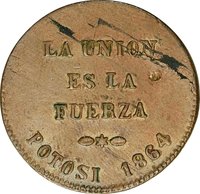
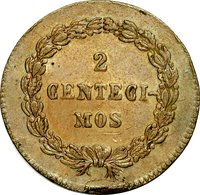
Series: 1864 Bolivia circulation coins
💎 Very Rare