

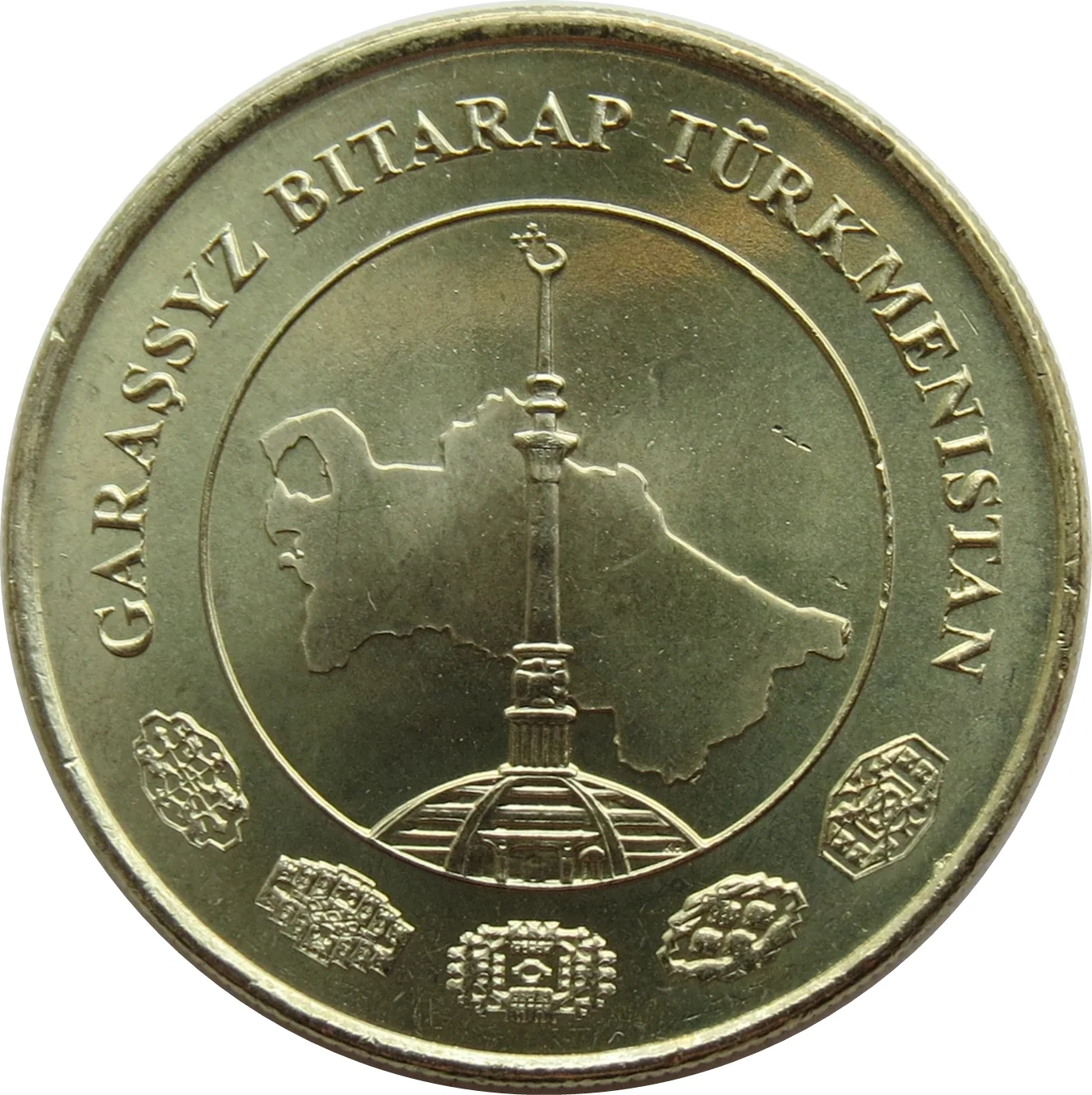

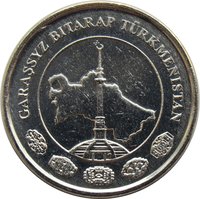
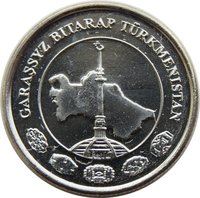
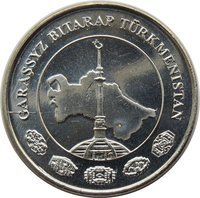
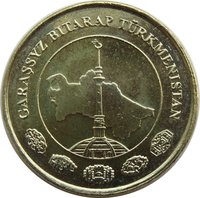
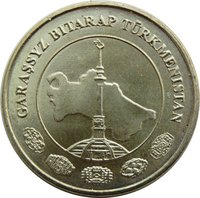
Obverse
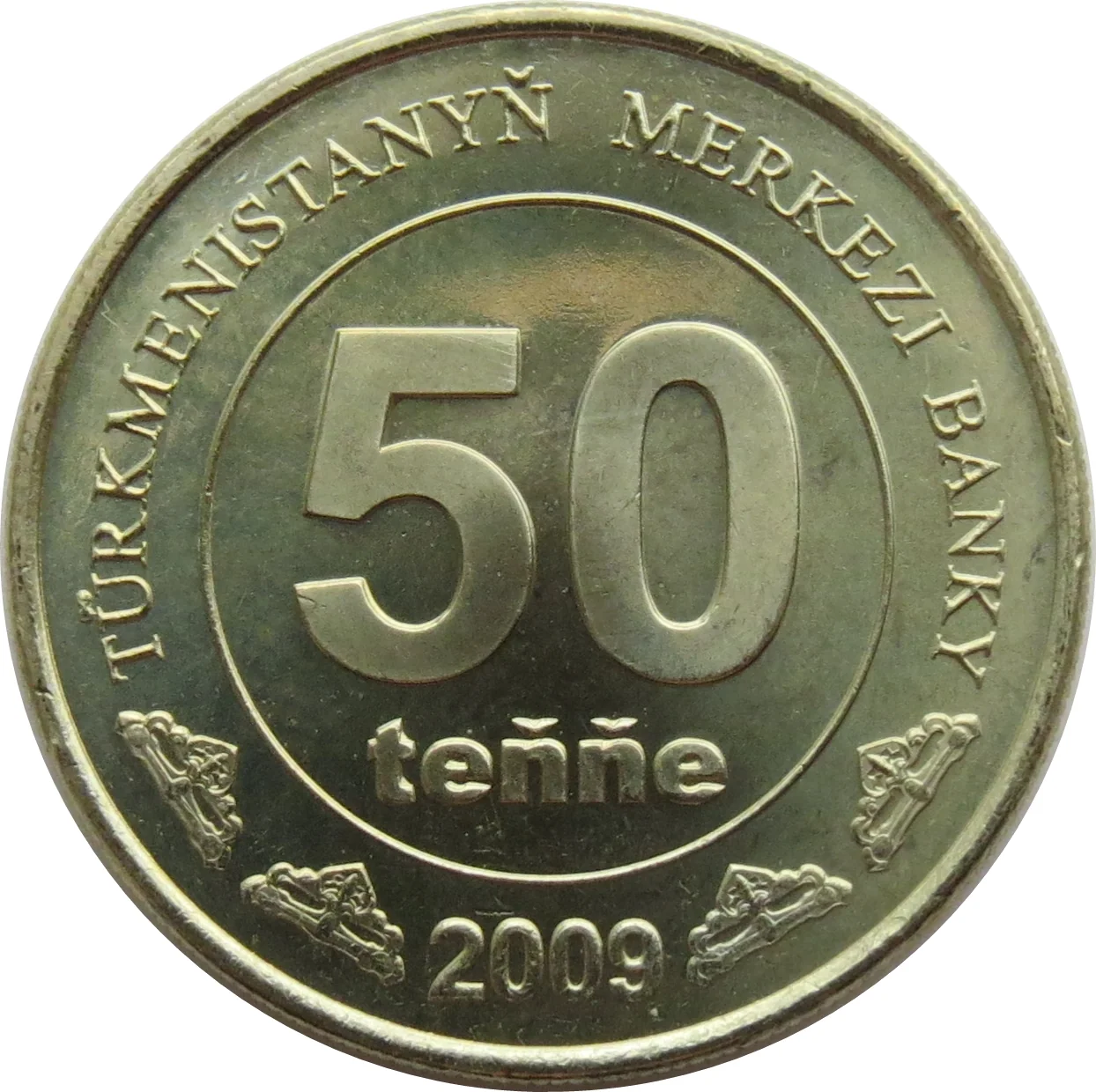
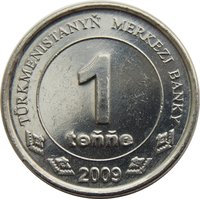
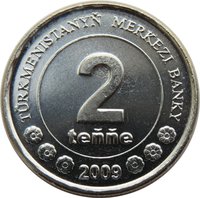
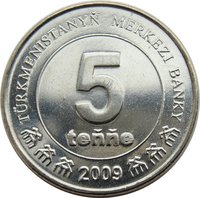
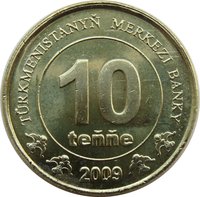
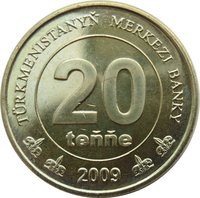
Reverse
Edge
Reeded
Mints
| Name | Mark |
|---|---|
| Royal Mint | — |
Mintings
| Year | Mint Mark | Mintage | Quality | Collection |
|---|---|---|---|---|
| 2009 | — | — | ||
| 2009 | — | — | BU | |
| 2009 | — | — | Proof |
Historical background
In 2009, Turkmenistan's currency situation was characterized by a highly controlled and distorted dual-exchange-rate system, a legacy of the Soviet era that persisted under President Gurbanguly Berdimuhamedow. The country maintained an official government exchange rate, which was set at a vastly overvalued 5,200 manat to the US dollar. This rate was used for state budget accounting and limited government transactions, but bore little relation to economic reality. Alongside this, a thriving black market existed where the actual value of the manat was significantly weaker, with rates reported to be between 18,000 to 24,000 manat per dollar. This wide gap created major economic inefficiencies, encouraged corruption, and severely limited foreign investment.
The government's strict currency controls and isolationist policies meant that access to foreign currency through official channels was extremely limited for both businesses and citizens. This created severe bottlenecks for importers, who needed hard currency to purchase goods abroad, and distorted the true cost of transactions. The overvalued official rate also artificially inflated the value of the country's primary export—natural gas—when converted into local currency for budget purposes, masking underlying fiscal pressures. While the 2006 introduction of a new manat (removing five zeros) had simplified accounting, it did not address the fundamental disconnect between the official and market values of the currency.
The year 2009 did not see a major reform of this system, as the government prioritized stability and control following the death of longtime autocrat Saparmurat Niyazov in 2006. The global financial crisis of 2008-2009 put additional pressure on Turkmenistan's economy through potentially lower energy demand, but its insulated financial system and substantial gas reserves provided a buffer. Consequently, the state maintained its tight grip on the currency, choosing to subsidize imports and essential goods through its energy revenues rather than undergo a risky and politically sensitive liberalization. The situation remained one of formal stability but underlying dysfunction, constraining private sector development.
The government's strict currency controls and isolationist policies meant that access to foreign currency through official channels was extremely limited for both businesses and citizens. This created severe bottlenecks for importers, who needed hard currency to purchase goods abroad, and distorted the true cost of transactions. The overvalued official rate also artificially inflated the value of the country's primary export—natural gas—when converted into local currency for budget purposes, masking underlying fiscal pressures. While the 2006 introduction of a new manat (removing five zeros) had simplified accounting, it did not address the fundamental disconnect between the official and market values of the currency.
The year 2009 did not see a major reform of this system, as the government prioritized stability and control following the death of longtime autocrat Saparmurat Niyazov in 2006. The global financial crisis of 2008-2009 put additional pressure on Turkmenistan's economy through potentially lower energy demand, but its insulated financial system and substantial gas reserves provided a buffer. Consequently, the state maintained its tight grip on the currency, choosing to subsidize imports and essential goods through its energy revenues rather than undergo a risky and politically sensitive liberalization. The situation remained one of formal stability but underlying dysfunction, constraining private sector development.
🌱 Common