

Guinea
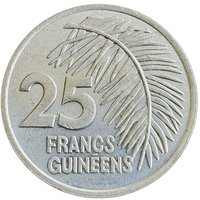
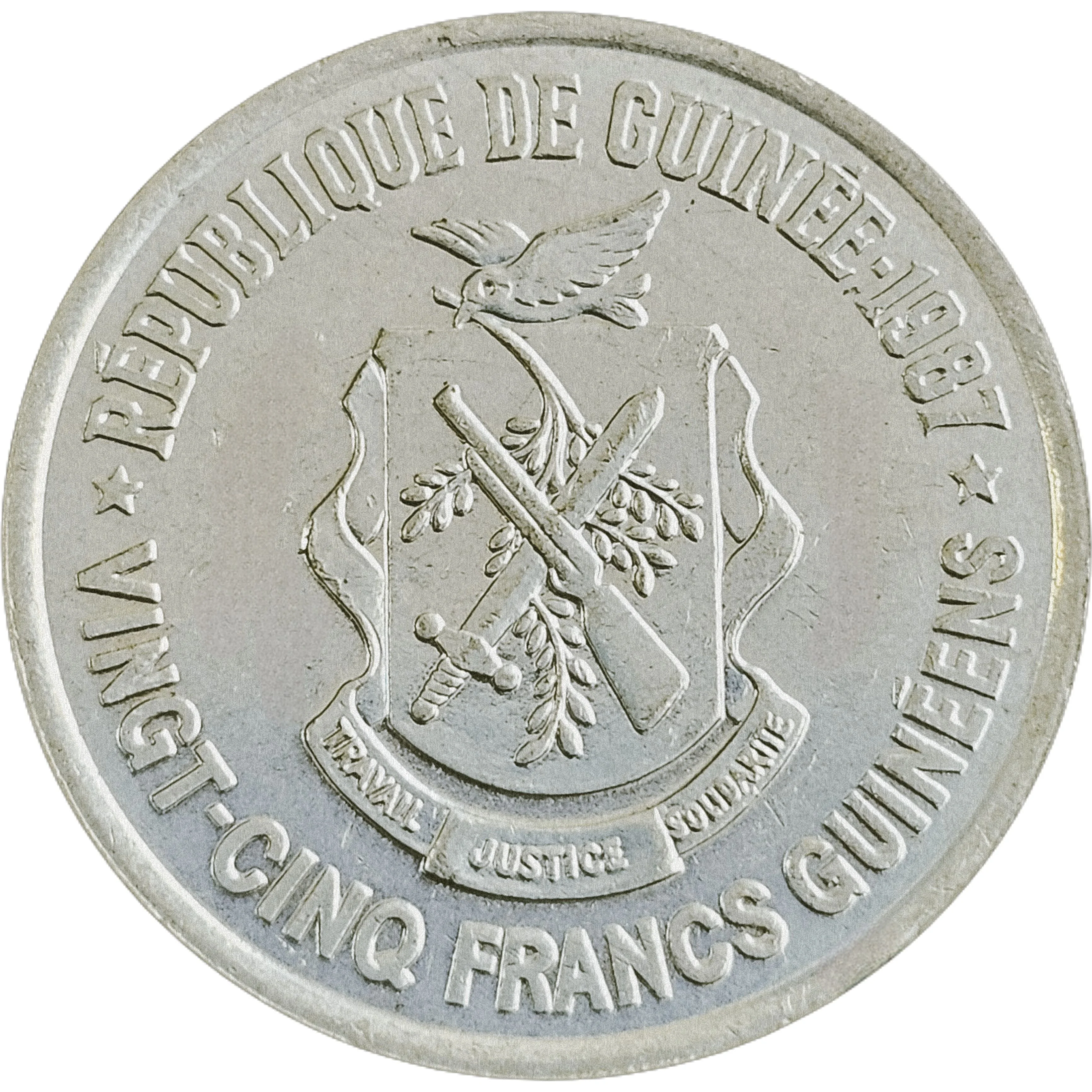
Obverse
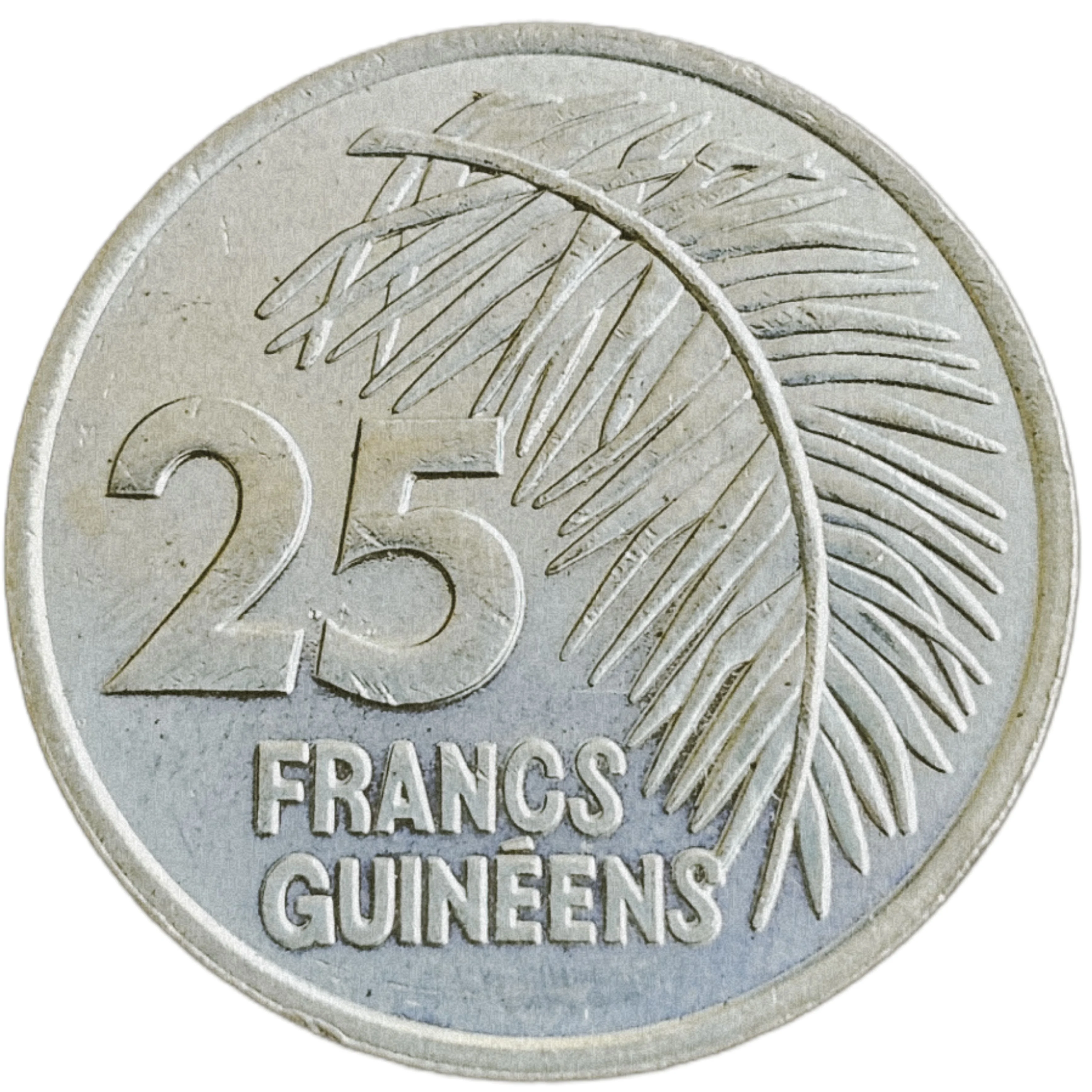
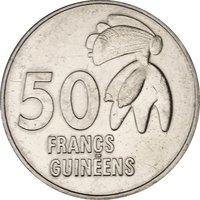
Reverse
Edge
Milled
Categories
| Object> Firearms |
| Animal> Bird |
| Symbols> Coat of Arms |
| Object> Cold weapons |
Mintings
| Year | Mint Mark | Mintage | Quality | Collection |
|---|---|---|---|---|
| 1987 | — | — |
Historical background
In 1987, Guinea was in the midst of a profound economic crisis under the 23-year rule of President Ahmed Sékou Touré, who had died just three years prior. The country's currency, the Guinean syli (GS), introduced in 1971 to replace the Guinean franc, was virtually worthless on the international market and subject to severe devaluation. This was a direct result of Touré's isolationist "Guinean Road to Socialism," which featured a state-controlled economy, disastrous agricultural policies, and the expulsion of foreign capital, leading to crippling shortages and a reliance on smuggling.
The currency situation was characterized by a vast disparity between the official exchange rate and the thriving black market. While the government maintained an artificial official rate, the real value of the syli was determined by informal traders, with the black market rate being many times higher. This dual system fostered corruption, as those with access to official rates could profit enormously, while ordinary citizens and legitimate businesses struggled. The economy was heavily dollarized, with major transactions often conducted in US dollars or neighboring countries' CFA francs, further undermining the national currency.
Recognizing the need for radical reform, the new government of President Lansana Conté, who took power in 1984, was actively laying the groundwork for a major monetary overhaul. In 1987, preparations were underway to abandon the failed syli and reintroduce the Guinean franc (GNF) as part of a broader structural adjustment program mandated by the IMF and World Bank. This planned shift, which would occur in 1988, aimed to unify exchange rates, restore monetary stability, and reintegrate Guinea into the international financial system, marking a decisive break from the previous regime's economic policies.
The currency situation was characterized by a vast disparity between the official exchange rate and the thriving black market. While the government maintained an artificial official rate, the real value of the syli was determined by informal traders, with the black market rate being many times higher. This dual system fostered corruption, as those with access to official rates could profit enormously, while ordinary citizens and legitimate businesses struggled. The economy was heavily dollarized, with major transactions often conducted in US dollars or neighboring countries' CFA francs, further undermining the national currency.
Recognizing the need for radical reform, the new government of President Lansana Conté, who took power in 1984, was actively laying the groundwork for a major monetary overhaul. In 1987, preparations were underway to abandon the failed syli and reintroduce the Guinean franc (GNF) as part of a broader structural adjustment program mandated by the IMF and World Bank. This planned shift, which would occur in 1988, aimed to unify exchange rates, restore monetary stability, and reintegrate Guinea into the international financial system, marking a decisive break from the previous regime's economic policies.
🌱 Common