

Guinea
Material
Diameter: 26 mm
Weight: 7 g
Thickness: 1.75 mm
Shape: Round
Composition: Copper-nickel
Technique: Milled
Alignment: Coin alignment
flip
References
KM: #Click to copy to clipboard63
Numista: #2655
Value
Exchange value: 50 GNF
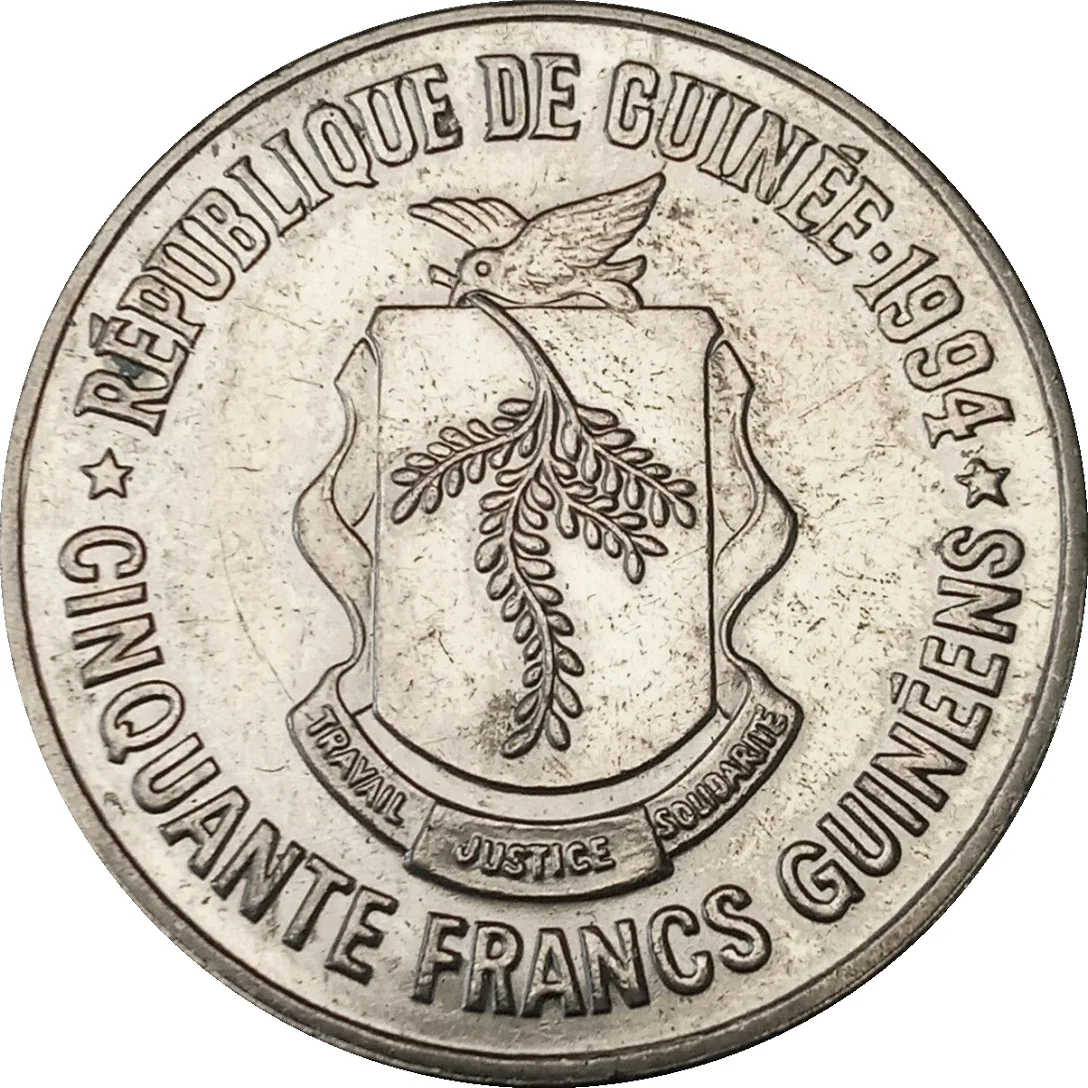
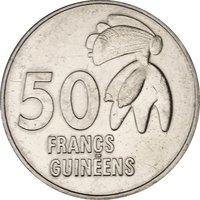
Obverse
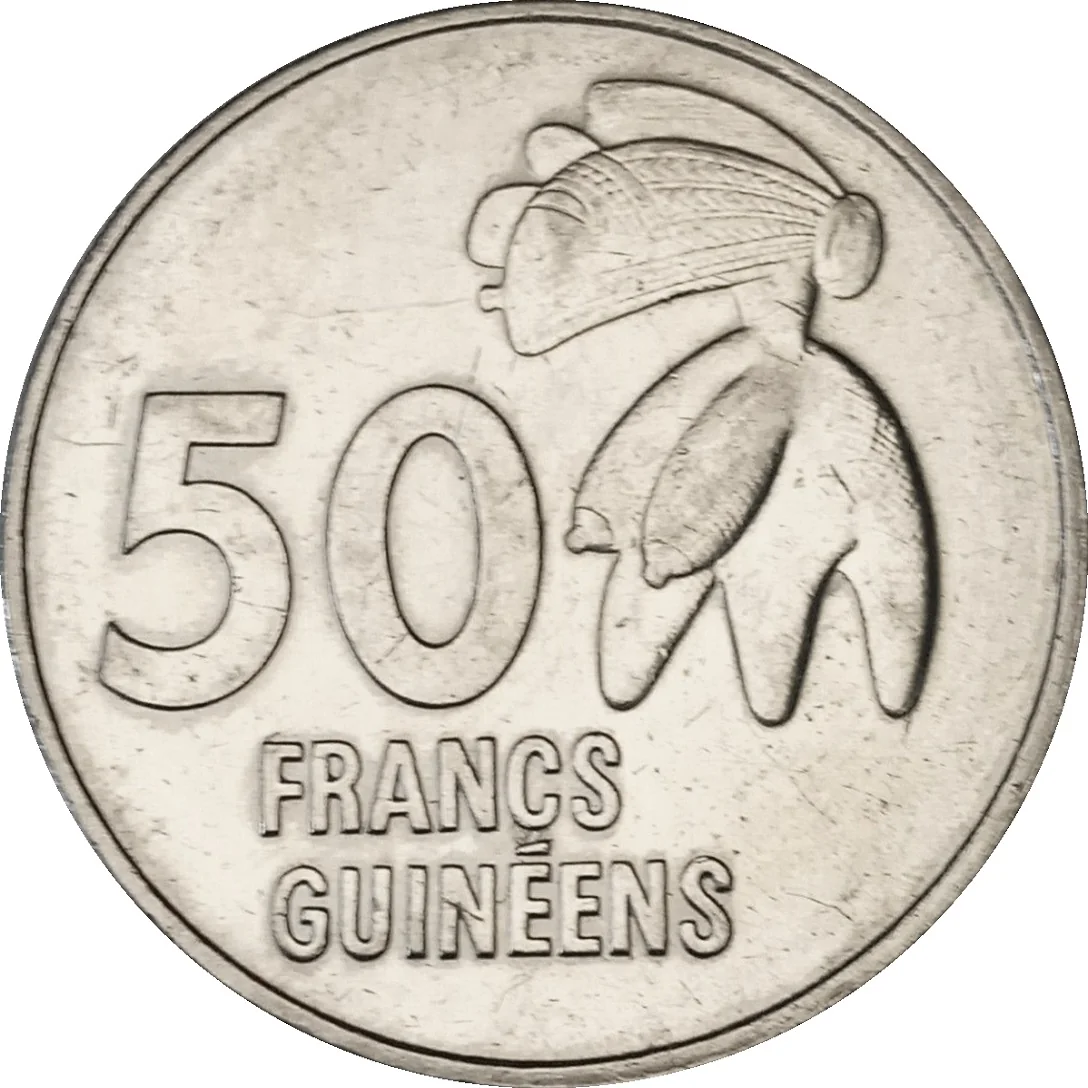
Reverse
Edge
Reeded
Mintings
| Year | Mint Mark | Mintage | Quality | Collection |
|---|---|---|---|---|
| 1994 | — | — |
Historical background
In 1994, Guinea's currency situation was defined by a critical transition from a state-controlled, non-convertible currency to a market-driven one, under intense pressure from the International Monetary Fund (IMF). For decades, the Guinean franc (GNF) existed in a complex multi-tier system with official, interbank, and parallel market rates, leading to a vast and destabilizing black market where the currency traded at a fraction of its official value. This system fostered corruption, crippled foreign investment, and created severe shortages of essential imported goods, as the government's attempts to maintain an overvalued exchange rate depleted its foreign reserves.
The breaking point came in 1994 when Guinea, facing economic collapse, agreed to a structural adjustment program with the IMF and World Bank. A cornerstone of this reform was a drastic currency devaluation and unification. In January 1994, the official exchange rate was devalued by approximately 50%, moving from about 900 GNF to the US dollar to a unified rate near 1,800 GNF. This painful but necessary shock aimed to align the official rate with the black-market reality, eliminate the multi-tier system, and restore fiscal and monetary discipline.
The immediate aftermath was socially difficult, causing a sharp spike in inflation that eroded purchasing power and triggered public discontent. However, this reform marked a fundamental turning point. By unifying and floating the currency, Guinea laid the groundwork for macroeconomic stabilization, regained some international credibility, and began to attract limited foreign investment. The 1994 devaluation, therefore, represents the painful yet pivotal moment when Guinea abandoned its isolated monetary policy and began its difficult integration into the global financial system.
The breaking point came in 1994 when Guinea, facing economic collapse, agreed to a structural adjustment program with the IMF and World Bank. A cornerstone of this reform was a drastic currency devaluation and unification. In January 1994, the official exchange rate was devalued by approximately 50%, moving from about 900 GNF to the US dollar to a unified rate near 1,800 GNF. This painful but necessary shock aimed to align the official rate with the black-market reality, eliminate the multi-tier system, and restore fiscal and monetary discipline.
The immediate aftermath was socially difficult, causing a sharp spike in inflation that eroded purchasing power and triggered public discontent. However, this reform marked a fundamental turning point. By unifying and floating the currency, Guinea laid the groundwork for macroeconomic stabilization, regained some international credibility, and began to attract limited foreign investment. The 1994 devaluation, therefore, represents the painful yet pivotal moment when Guinea abandoned its isolated monetary policy and began its difficult integration into the global financial system.
🌱 Common