

1 piastre – French Indochina
Add to wishlist
Context
Years: 1895–1928
Issuer: French Indochina
Period:
(1870—1940)
Currency:
(1880—1952)
Demonetized: Yes
Total mintage: 160,355,099
Material
References
KM: #
Numista: #11287
Value
Exchange value: 1 ICFP
Bullion value: $62.09
Obverse
Description:
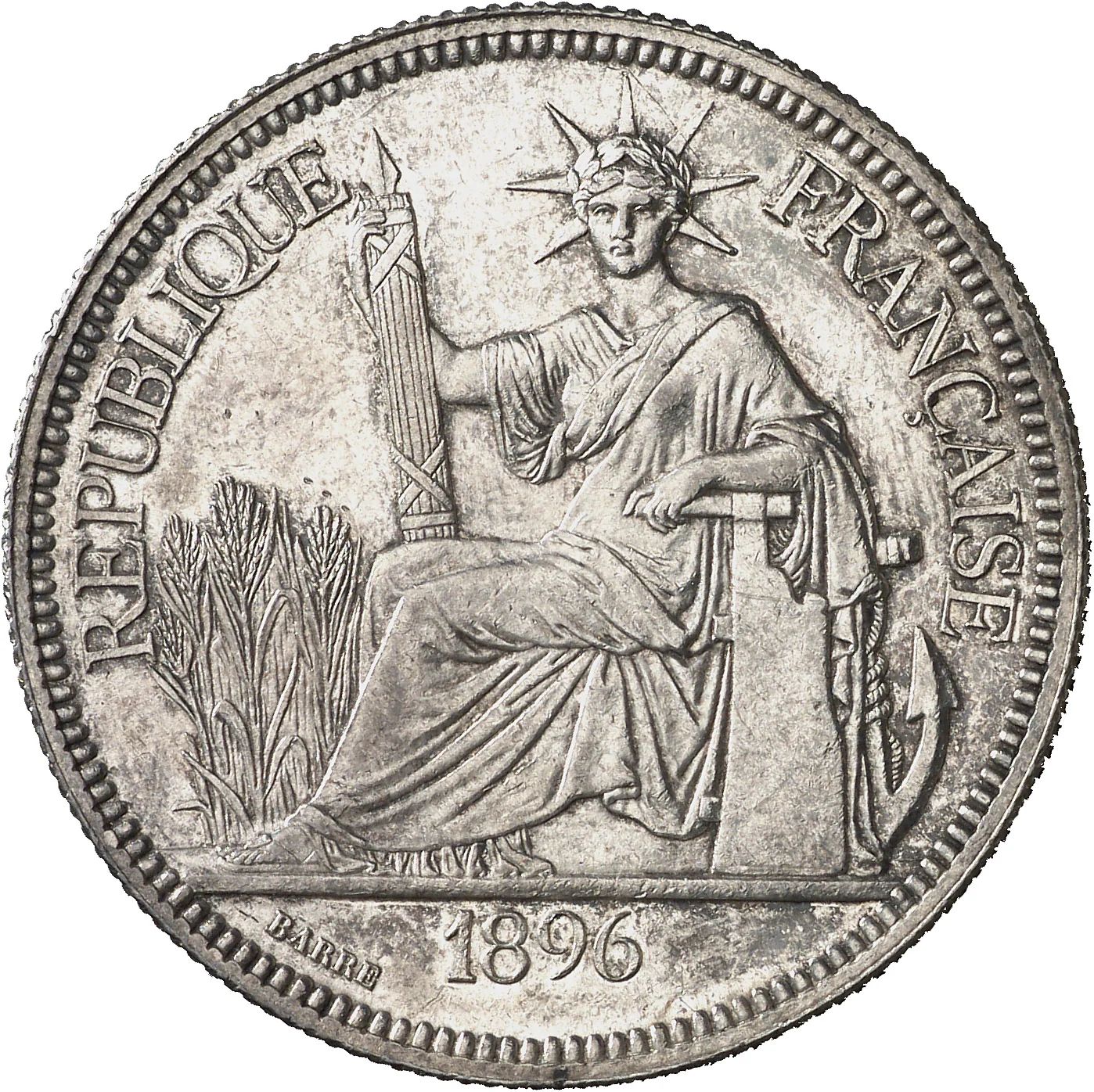
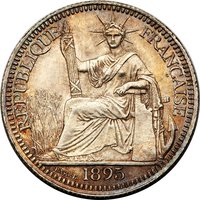
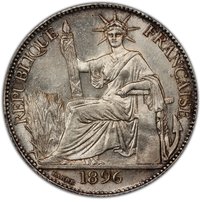
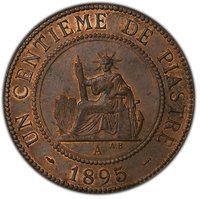
Marianne seated left, holding fasces, date below.
Inscription:
REPUBLIQUE FRANÇAISE
1926
BARRE
1926
BARRE
Translation:
FRENCH REPUBLIC
1926
BARRE
1926
BARRE
Script: Latin
Language: French
Engraver: Jean-Auguste Barre
Reverse
Description:
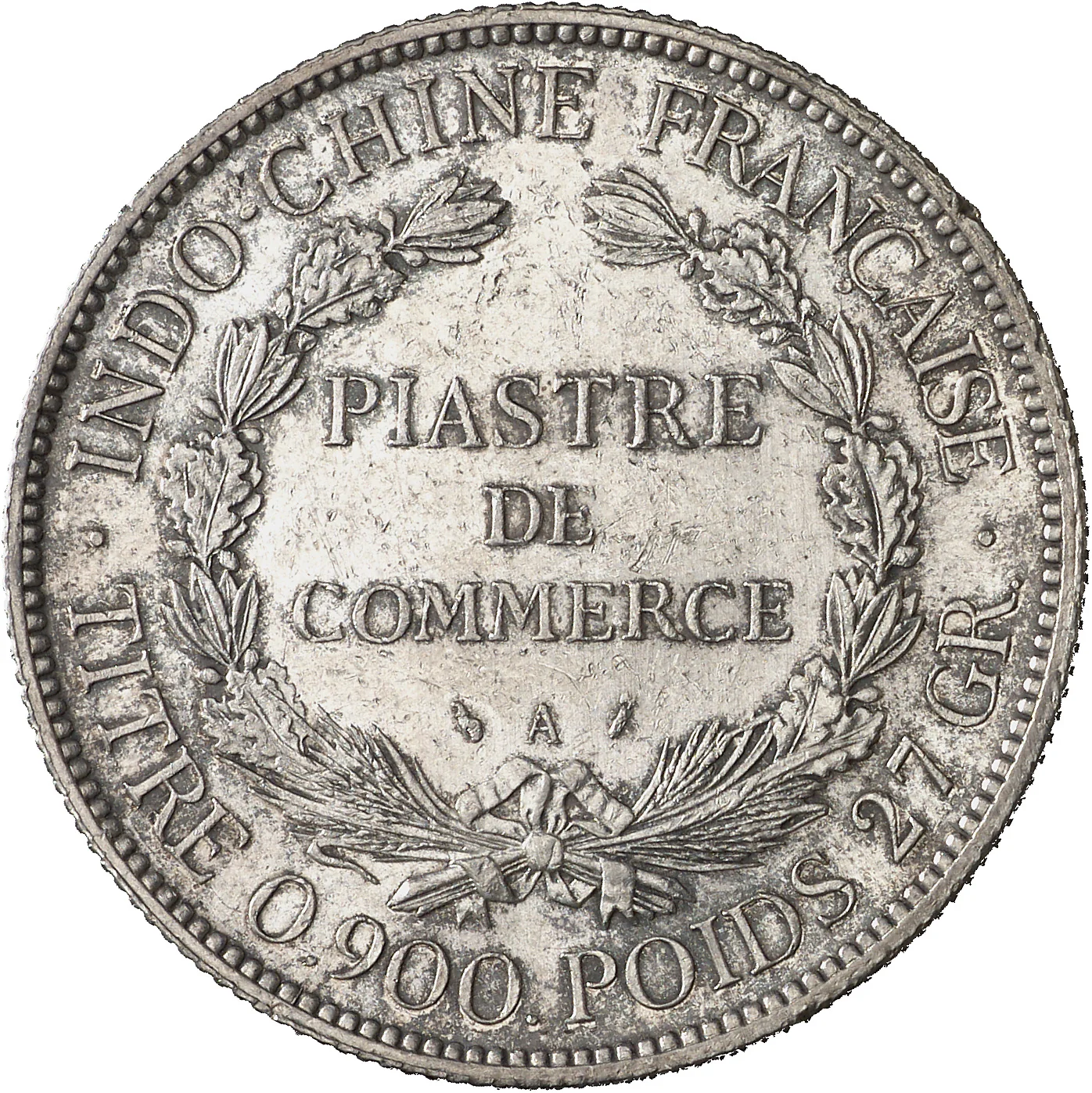
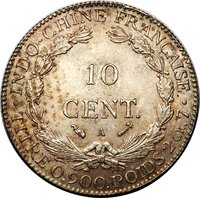
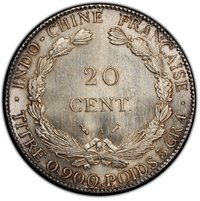
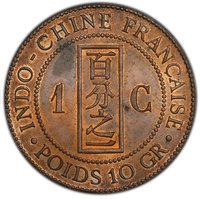
Wreath denomination
Inscription:
· INDO-CHINE FRANCAISE ·
PIASTRE
DE
COMMERCE
H
TITRE 0,900. POIDS 27 GR.
PIASTRE
DE
COMMERCE
H
TITRE 0,900. POIDS 27 GR.
Translation:
· FRENCH INDO-CHINA ·
PIASTER
OF
COMMERCE
H
FINENESS 0.900. WEIGHT 27 GR.
PIASTER
OF
COMMERCE
H
FINENESS 0.900. WEIGHT 27 GR.
Script: Latin
Language: French
Engraver: Jean-Auguste Barre
Edge
Reeded
Mints
| Name | Mark |
|---|---|
| United States Mint of San Francisco | — |
| Monnaie de Paris | (A) |
| Heaton and Sons / The Mint Birmingham | H |
Mintings
| Year | Mint Mark | Mintage | Quality | Collection |
|---|---|---|---|---|
| 1895 | A | 3,798,000 | ||
| 1896 | A | 11,858,000 | ||
| 1897 | A | 2,511,000 | ||
| 1898 | A | 4,304,000 | ||
| 1899 | A | 4,681,000 | ||
| 1900 | A | 13,319,000 | ||
| 1900 | A | 100 | BU | |
| 1901 | A | 3,150,000 | ||
| 1902 | A | 3,327,000 | ||
| 1903 | A | 10,077,000 | ||
| 1904 | A | 5,751,000 | ||
| 1905 | A | 3,561,000 | ||
| 1906 | A | 10,194,000 | ||
| 1907 | A | 14,062,000 | ||
| 1908 | A | 13,986,000 | ||
| 1909 | A | 9,201,000 | ||
| 1910 | A | 761,000 | ||
| 1913 | A | 3,244,000 | ||
| 1921 | — | 4,850,000 | ||
| 1921 | H | 3,580,000 | ||
| 1922 | — | 1,150,000 | ||
| 1922 | H | 7,420,000 | ||
| 1924 | A | 2,831,000 | ||
| 1925 | A | 2,882,000 | ||
| 1926 | A | 6,383,000 | ||
| 1927 | A | 8,183,999 | ||
| 1928 | A | 5,290,000 |
Historical background
In 1895, the currency situation in French Indochina was a complex and transitional system, reflecting the colony's recent political consolidation. The French had established the Union of Indochina (comprising Cochinchina, Annam, Tonkin, and Cambodia) just five years prior, and were actively working to replace a multitude of existing currencies with a unified, metropolitan-controlled system. The monetary landscape was a patchwork of Mexican silver pesos (still widely trusted in regional trade), Vietnamese silver ligatures and zinc sapèques, and French-issued silver piastres.
The cornerstone of French policy was the Piastre de Commerce, a large silver coin introduced in 1885. Its value was officially pegged to the French franc at a rate of 1 piastre = 2.70 francs, but this was an artificial, non-convertible rate maintained only for government accounting. In reality, the piastre's value was determined by its intrinsic silver content on the open market, where it often traded at a significant premium—frequently above 5 francs—due to high regional demand for silver. This created a persistent and problematic two-tier economy: one for official state transactions and another for the vibrant private commercial sector.
This duality led to economic distortions and opportunities for arbitrage, frustrating both colonial administrators and local merchants. The situation underscored France's struggle to fully integrate Indochina into its imperial economic sphere, as the colony remained financially oriented toward the silver-based trade networks of East and Southeast Asia rather than the gold-standard franc zone. Consequently, 1895 represents a period where French monetary authority was formally declared but not yet fully realized, with the silver piastre reigning as the dominant, yet unstable, unit of high-value trade.
The cornerstone of French policy was the Piastre de Commerce, a large silver coin introduced in 1885. Its value was officially pegged to the French franc at a rate of 1 piastre = 2.70 francs, but this was an artificial, non-convertible rate maintained only for government accounting. In reality, the piastre's value was determined by its intrinsic silver content on the open market, where it often traded at a significant premium—frequently above 5 francs—due to high regional demand for silver. This created a persistent and problematic two-tier economy: one for official state transactions and another for the vibrant private commercial sector.
This duality led to economic distortions and opportunities for arbitrage, frustrating both colonial administrators and local merchants. The situation underscored France's struggle to fully integrate Indochina into its imperial economic sphere, as the colony remained financially oriented toward the silver-based trade networks of East and Southeast Asia rather than the gold-standard franc zone. Consequently, 1895 represents a period where French monetary authority was formally declared but not yet fully realized, with the silver piastre reigning as the dominant, yet unstable, unit of high-value trade.
🌱 Very Common