

5 Cents – Newfoundland
Canada
Context
Years: 1944–1947
Country: Canada 
Issuer: Newfoundland
Ruler: George VI
Currency:
(1865—1949)
Total mintage: 530,773
Material
References
KM: #Click to copy to clipboard19a
Numista: #7427
Value
Exchange value: 0.05 NFD
Bullion value: $2.59
Inflation-adjusted value: 0.90 NFD
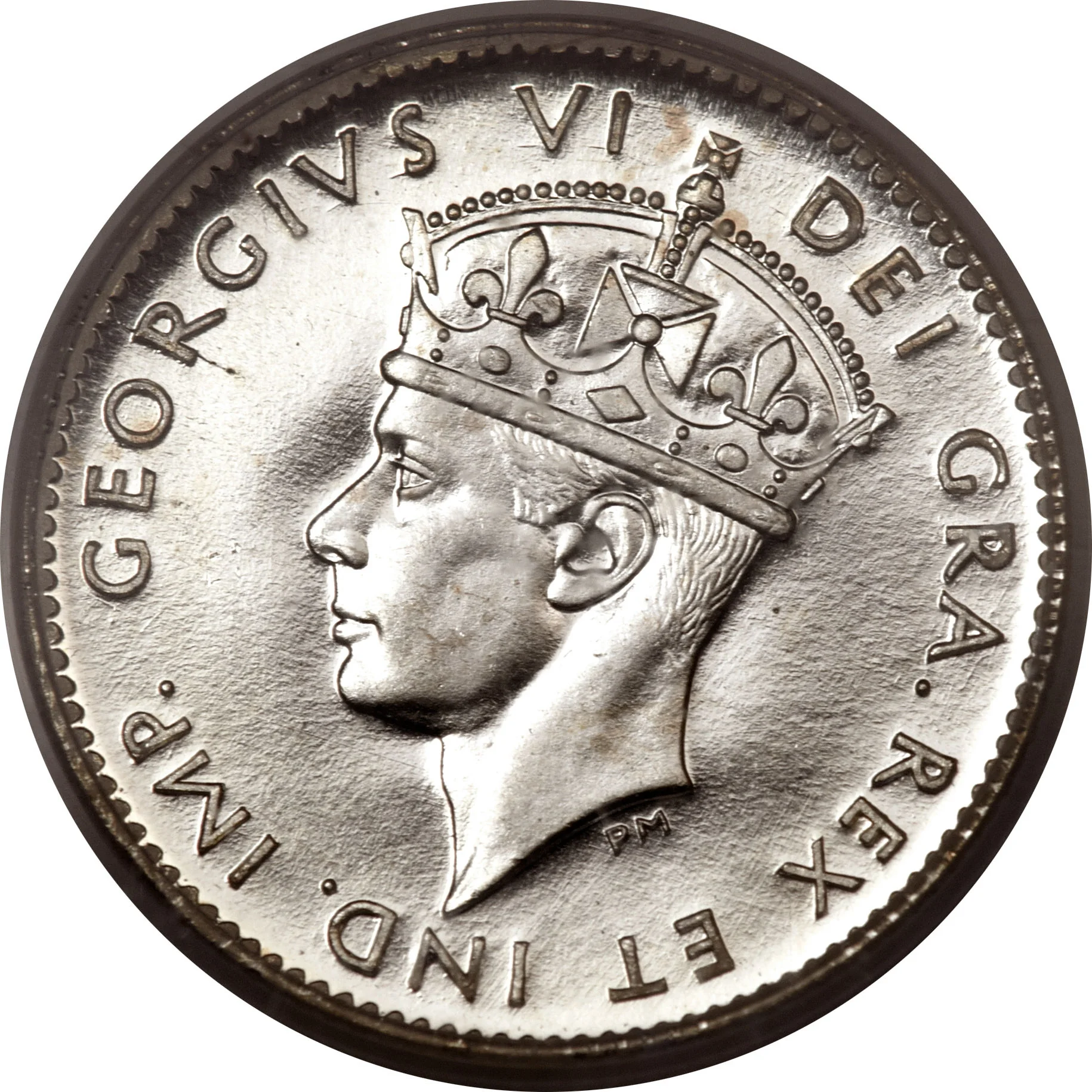
Obverse
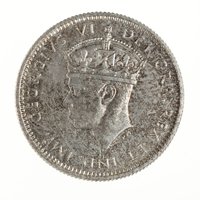
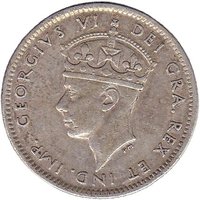
Description:
King George VI, crowned.
Inscription:
GEORGIVS VI DEI GRA. REX ET IND. IMP.
PM
PM
Translation:
George VI by the Grace of God King and Emperor of India.
Script: Latin
Language: Latin
Engraver: Percy Metcalfe
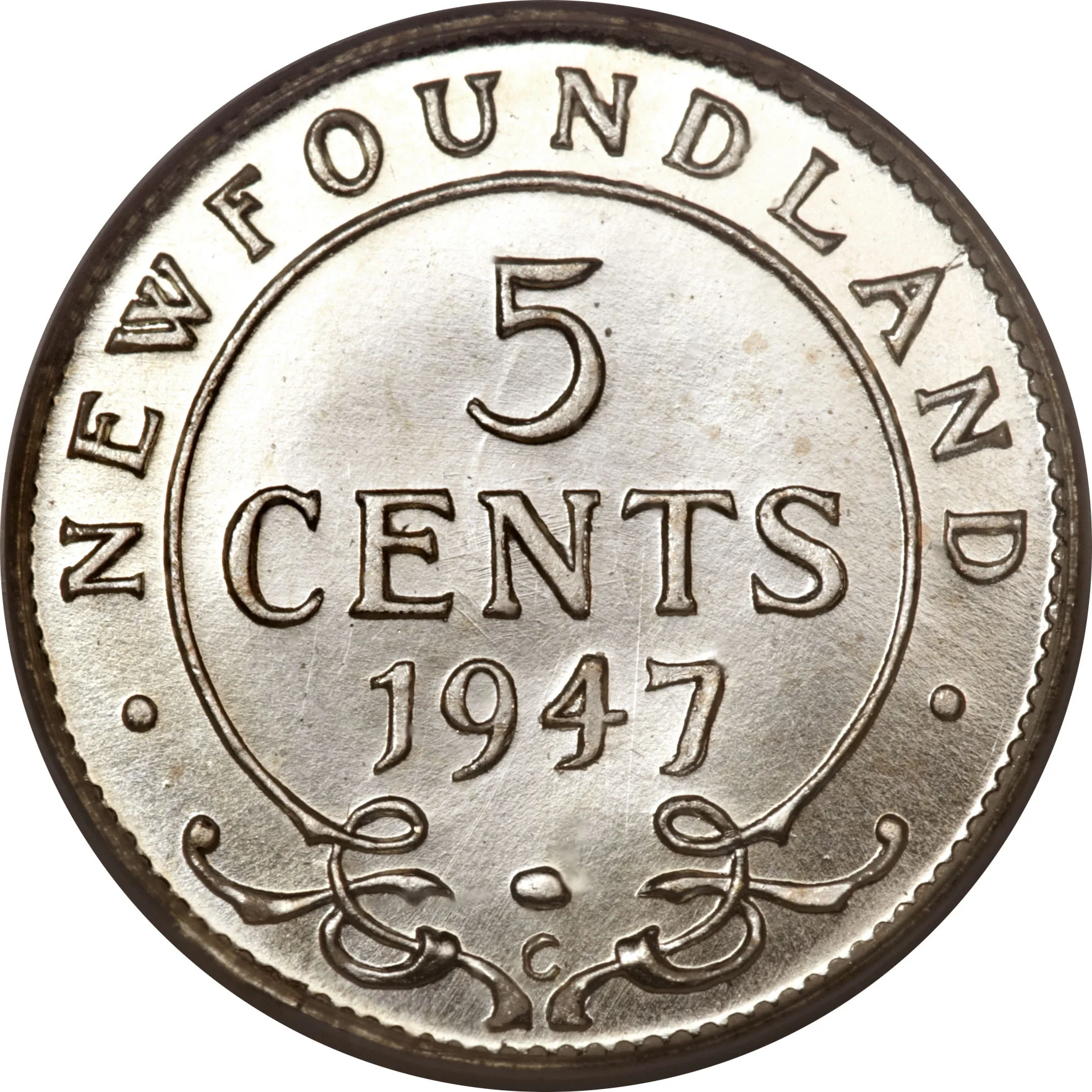
Reverse
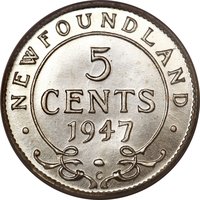
Description:
"Newfoundland" arched above value, date below.
Inscription:
· NEWFOUNDLAND ·
5
CENTS
1947
C
5
CENTS
1947
C
Script: Latin
Edge
Milled
Mints
| Name | Mark |
|---|---|
| Royal Canadian Mint of Ottawa | C |
Mintings
Historical background
In 1944, Newfoundland was in a unique and complex currency situation, operating as a commission of government under direct British administration following its economic collapse in the 1930s. The island did not have its own central bank or issue its own paper currency. Instead, the primary circulating medium was the Canadian dollar, a practical reality driven by Newfoundland's deep economic ties and proximity to its dominant North American neighbor. This informal "dollarization" facilitated trade and stabilized everyday transactions, but it also meant Newfoundland had no independent monetary policy, ceding control over its currency to the Bank of Canada and the Canadian government.
Alongside the dominant Canadian currency, the British sterling system also played a significant, though secondary, role. The Newfoundland government's accounts were kept in sterling, and transactions with the United Kingdom and for certain official purposes were conducted in pounds, shillings, and pence. This created a dual-currency environment where both dollars and sterling were legally recognized, with exchange rates fixed by the commission. The system was manageable but underscored Newfoundland's lack of financial sovereignty and its precarious position as a ward of the British Empire with an economy increasingly integrated with Canada.
This monetary arrangement was a direct reflection of Newfoundland's unresolved political future. The commission government, focused on wartime administration and fiscal recovery, maintained the status quo. However, the currency question was intrinsically linked to the larger constitutional debate that would culminate three years later. The widespread use of the Canadian dollar in 1944 not only reflected existing economic realities but also subtly paved the way for the 1948 referendums, as it made the prospect of Confederation with Canada seem a more natural and financially continuous choice for many Newfoundlanders.
Alongside the dominant Canadian currency, the British sterling system also played a significant, though secondary, role. The Newfoundland government's accounts were kept in sterling, and transactions with the United Kingdom and for certain official purposes were conducted in pounds, shillings, and pence. This created a dual-currency environment where both dollars and sterling were legally recognized, with exchange rates fixed by the commission. The system was manageable but underscored Newfoundland's lack of financial sovereignty and its precarious position as a ward of the British Empire with an economy increasingly integrated with Canada.
This monetary arrangement was a direct reflection of Newfoundland's unresolved political future. The commission government, focused on wartime administration and fiscal recovery, maintained the status quo. However, the currency question was intrinsically linked to the larger constitutional debate that would culminate three years later. The widespread use of the Canadian dollar in 1944 not only reflected existing economic realities but also subtly paved the way for the 1948 referendums, as it made the prospect of Confederation with Canada seem a more natural and financially continuous choice for many Newfoundlanders.
🌱 Common