Logo Title
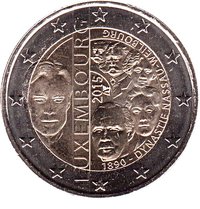
obverse
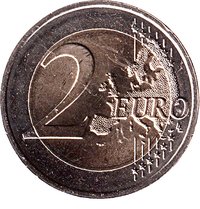
reverse
Cyrillius

2 Euro (accession to the throne of H.R.H. the Grand Duke) – Grand Duchy of Luxembourg

Circulating commemorative coins
Commemoration: 15th Anniversary of the accession to the throne of H.R.H. the Grand Duke
Luxembourg
Context
Year: 2015
Country: Luxembourg Country flag
Ruler: Henry
Currency:
(since 2002)
Total mintage: 509,000
Material
Diameter: 25.75 mm
Weight: 8.5 g
Thickness: 2.2 mm
Shape: Round
Composition: Bimetallic (Nickel brass center, Copper-nickel ring)
Technique: Milled
Alignment: Medal alignment
Obverse
OBVERSE ↑
flip
Reverse
REVERSE ↑
References
KM: #Click to copy to clipboard136
Numista: #73857
Value
Exchange value: 2 EUR = $2.36
Inflation-adjusted value: 2.53 EUR

Obverse

Description:
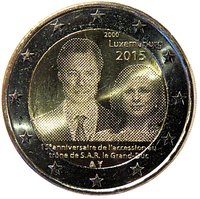
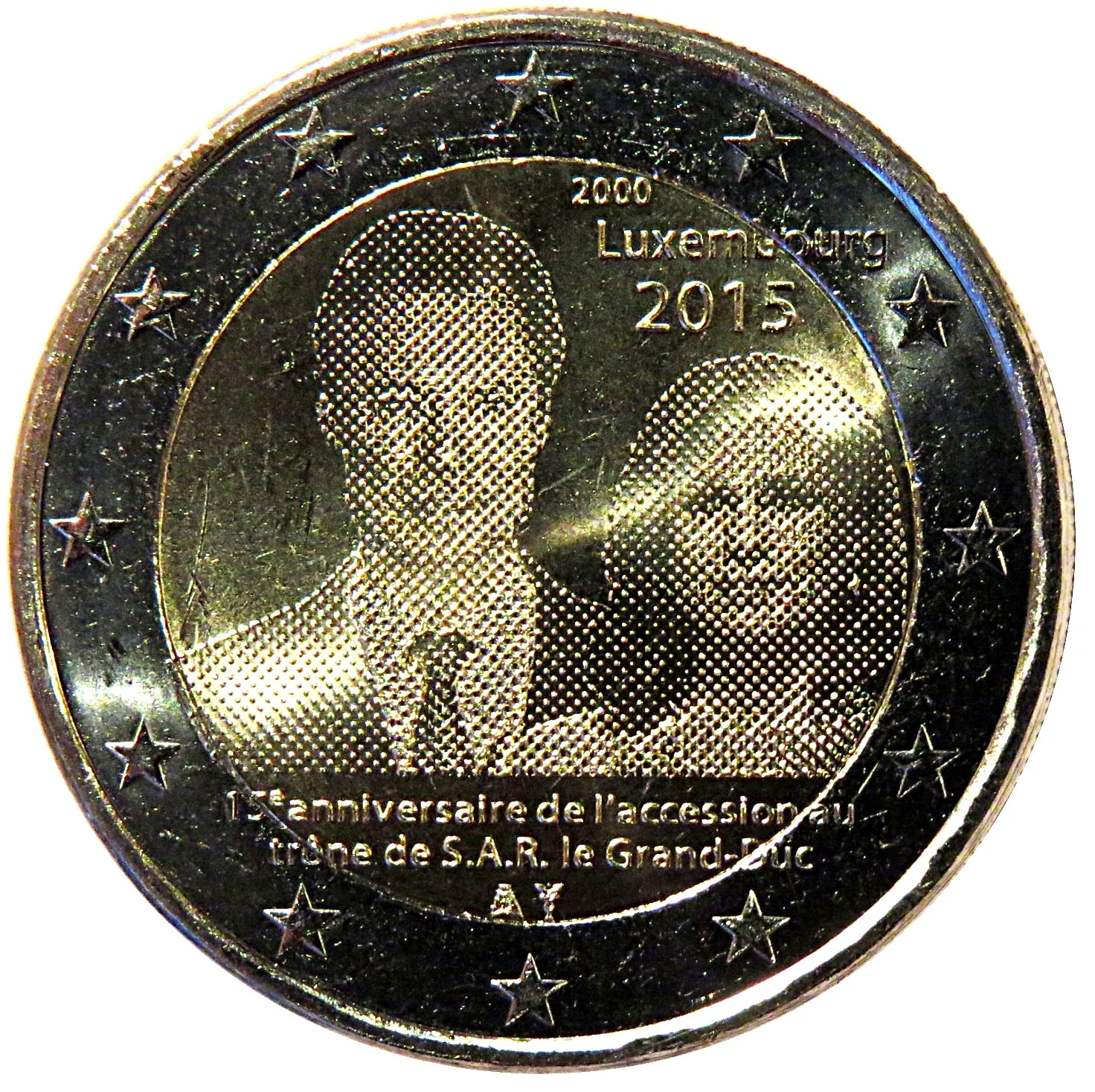
This coin features Their Royal Highnesses Grand Duke Henri and the Grand Duchess. Above them are the accession year '2000', 'Luxembourg', and the year mark '2015'. Below is the inscription '15e anniversaire de l’accession au trône de S.A.R. le Grand-Duc'. The outer ring bears the 12 stars of the European Union.
Inscription:
2000

Luxembourg

2015

15ͤ anniversaire de l'accession au

trône de S.A.R. le Grand-Duc
Translation:
2000

Luxembourg

2015

15th anniversary of the accession to the throne of H.R.H. the Grand Duke
Script: Latin
Language: French
Engraver: Alain Hoffmann

Reverse

Description:
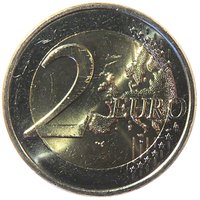
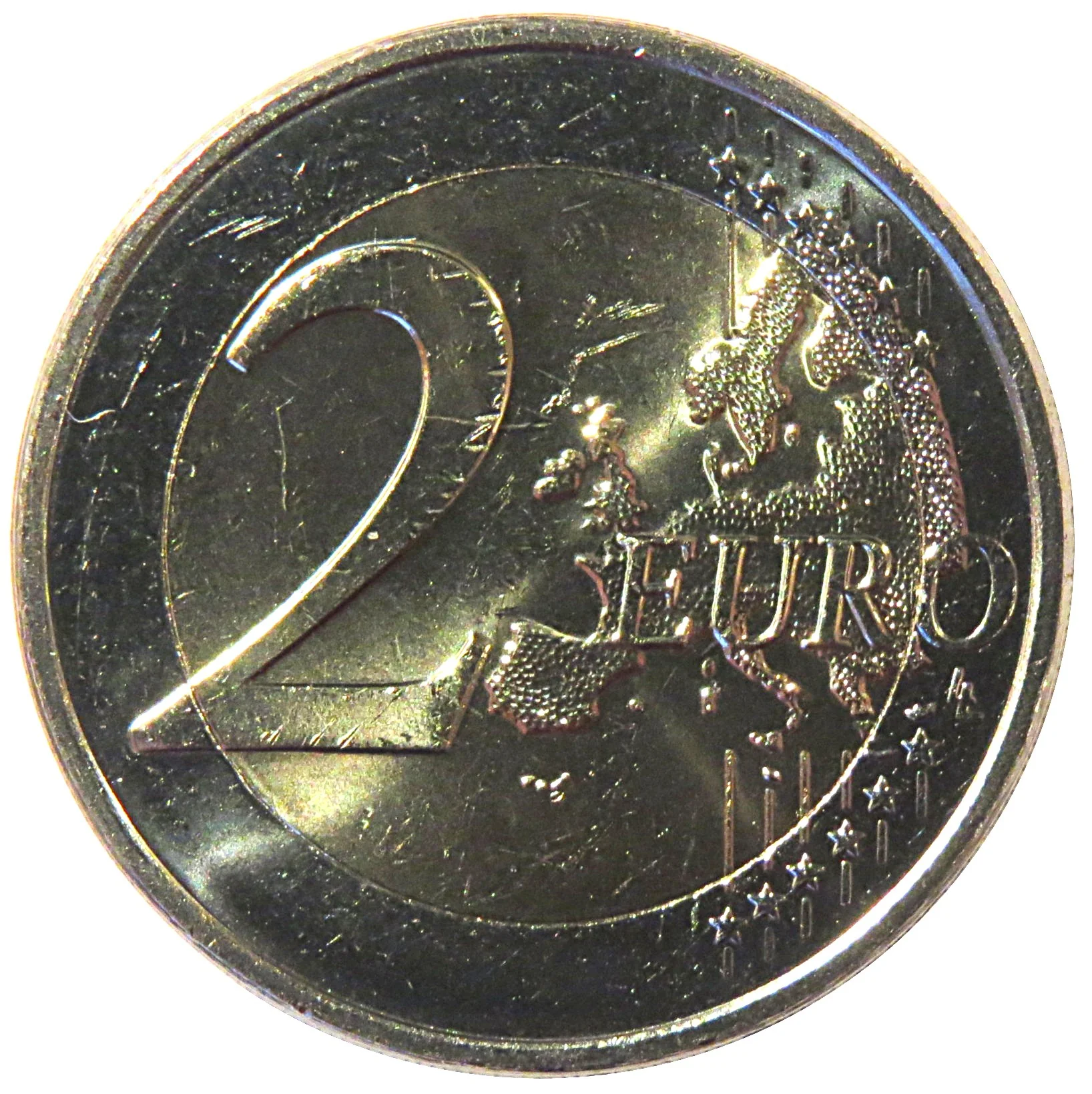
A map shows Europe borderless beside its face value.
Inscription:
2 EURO LL
Script: Latin
Engraver: Luc Luycx

Edge

Legend:
2 ** 2 ** 2 ** 2 ** 2 ** 2 **

Mints

NameMark
Royal Dutch Mint

Mintings

YearMint MarkMintageQualityCollection
2015500,000
20151,500Proof
20157,500BU

Historical background

In 2015, the Grand Duchy of Luxembourg was a fully integrated member of the Eurozone, having adopted the euro as its sole legal tender in 1999 (in its non-physical form) and using euro banknotes and coins since their introduction in 2002. As such, its monetary policy was entirely set by the European Central Bank (ECB), with Luxembourg’s central bank, the Banque Centrale du Luxembourg (BCL), participating in the Eurosystem. The year was characterized by the ECB’s ongoing efforts to combat deflationary risks and stimulate the euro area economy through unconventional measures, most notably the launch of a comprehensive quantitative easing (QE) program in March 2015.

The domestic currency situation was stable and unremarkable, reflecting Luxembourg’s robust and highly developed financial sector. The country’s economy, with its strong focus on banking, investment funds, and wealth management, benefited from the euro's stability and the seamless cross-border transactions it facilitated with its key neighbors: Belgium, France, and Germany. There were no discussions or movements toward altering the currency regime; the euro was firmly entrenched and seen as a cornerstone of Luxembourg’s economic success and international financial identity.

However, the broader Eurozone context of 2015 did present indirect challenges. The ECB's low-interest-rate environment and expansive monetary policy, while supportive for growth, compressed bank profitability margins—a relevant factor for Luxembourg's large banking sector. Furthermore, ongoing debates about Eurozone governance and the aftermath of the Greek government-debt crisis (which peaked in the summer of 2015) underscored the interconnected risks within the currency union. For Luxembourg, a founding EU member and strong proponent of European integration, maintaining euro stability and supporting deeper banking and fiscal union were key policy priorities that framed its approach to the currency situation that year.

Series: Grand Duchy of Luxembourg 2 euro commemoratives

2 Euro obverse
2 Euro reverse
2 Euro
2013
2 Euro obverse
2 Euro reverse
2 Euro
2014
2 Euro obverse
2 Euro reverse
2 Euro
2014
2 Euro obverse
2 Euro reverse
2 Euro
2015
2 Euro obverse
2 Euro reverse
2 Euro
2015
2 Euro obverse
2 Euro reverse
2 Euro
2015
2 Euro obverse
2 Euro reverse
2 Euro
2016-2018
🌱 Very Common