

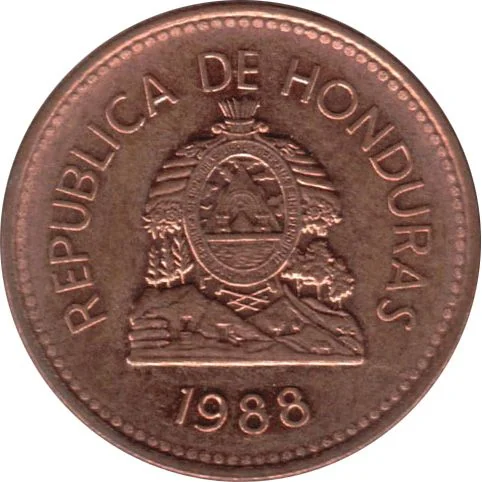
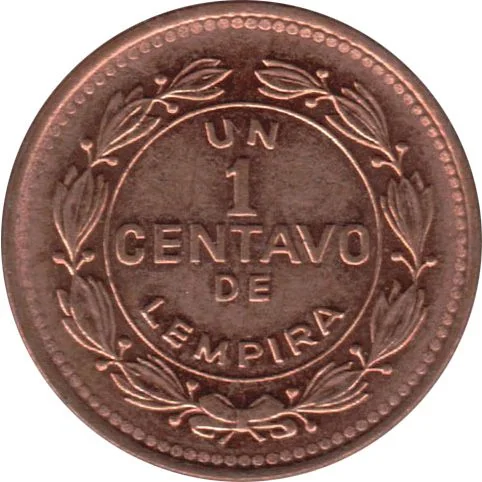
1 centavo – Honduras
Add to wishlist
Honduras
Context
Year: 1988
Issuer: Honduras
Issuing organization: Central Bank of Honduras
Period:
(since 1862)
Currency:
(since 1931)
Total mintage: 50,000,000
Material
References
KM: #
Numista: #7368
Value
Exchange value: 0.01 HNL
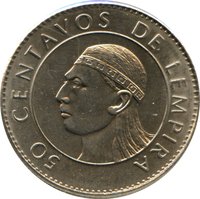
Obverse
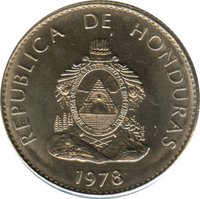
Reverse
Edge
Plain
Categories
| Symbols> Coat of Arms |
| Symbol> Wreath |
Mints
| Name | Mark |
|---|---|
| Royal Mint | — |
Mintings
| Year | Mint Mark | Mintage | Quality | Collection |
|---|---|---|---|---|
| 1988 | — | 50,000,000 |
Historical background
In 1988, Honduras was grappling with a severe economic crisis characterized by hyperinflation, a collapsing currency, and deep structural imbalances. The national currency, the lempira, which had been pegged to the US dollar at 2:1 for decades, came under unsustainable pressure. Years of fiscal deficits, driven by high military spending, a large public sector, and the economic fallout from regional conflicts, forced the government to finance itself by printing money. This led to rampant inflation, officially reaching 4.7% per month by mid-1988, eroding purchasing power and triggering a rapid, unofficial devaluation of the lempira on the black market.
The government of President José Azcona del Hoyo attempted to manage the crisis through a dual-exchange-rate system. An official rate, maintained at L2:US$1 for priority imports and debt servicing, was artificially supported. Alongside it, a free-market "financial" rate was allowed to depreciate, reaching approximately L3.5:US$1 by year's end. This system created significant distortions, fostering a lucrative black market for dollars, encouraging capital flight, and creating bottlenecks for businesses that lacked access to the coveted official rate. The disparity between the rates highlighted the currency's fundamental overvaluation and the scarcity of foreign reserves.
This currency instability was a symptom of broader economic turmoil, including a heavy external debt burden and declining prices for key exports like coffee and bananas. The situation compelled Honduras to seek stabilization agreements with the International Monetary Fund (IMF) and the World Bank. Under mounting pressure, the government began a hesitant move toward unification and devaluation of the exchange rates, setting the stage for the more drastic economic liberalization and a unified, floating currency that would be implemented in the early 1990s. Thus, 1988 represented the painful climax of a monetary policy crisis that necessitated a complete overhaul of Honduras's exchange rate regime.
The government of President José Azcona del Hoyo attempted to manage the crisis through a dual-exchange-rate system. An official rate, maintained at L2:US$1 for priority imports and debt servicing, was artificially supported. Alongside it, a free-market "financial" rate was allowed to depreciate, reaching approximately L3.5:US$1 by year's end. This system created significant distortions, fostering a lucrative black market for dollars, encouraging capital flight, and creating bottlenecks for businesses that lacked access to the coveted official rate. The disparity between the rates highlighted the currency's fundamental overvaluation and the scarcity of foreign reserves.
This currency instability was a symptom of broader economic turmoil, including a heavy external debt burden and declining prices for key exports like coffee and bananas. The situation compelled Honduras to seek stabilization agreements with the International Monetary Fund (IMF) and the World Bank. Under mounting pressure, the government began a hesitant move toward unification and devaluation of the exchange rates, setting the stage for the more drastic economic liberalization and a unified, floating currency that would be implemented in the early 1990s. Thus, 1988 represented the painful climax of a monetary policy crisis that necessitated a complete overhaul of Honduras's exchange rate regime.
🌱 Common