

10 francs – Comoro Islands
Add to wishlist
Context
Year: 1964
Issuer: Comoro Islands
Period:
(1961—1975)
Currency:
(1945—1975)
Demonetized: Yes
Total mintage: 600,000
Material
References
KM: #
Numista: #11274
Obverse
Description:
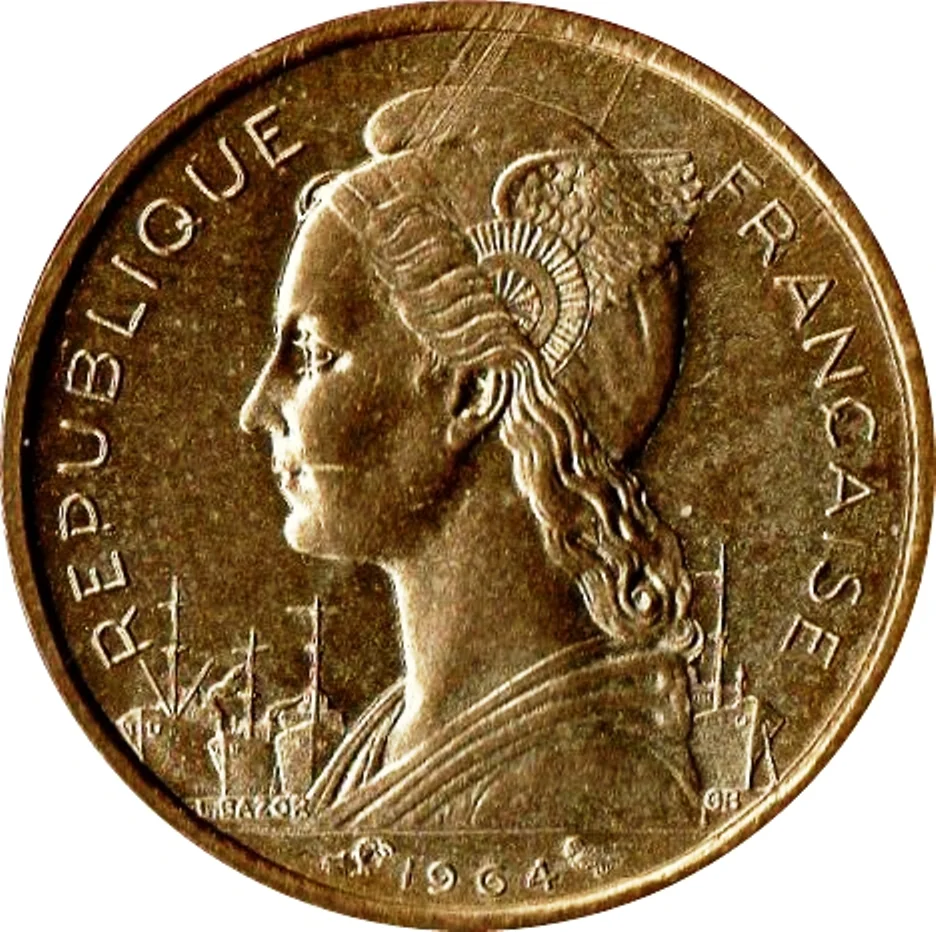
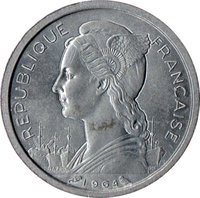
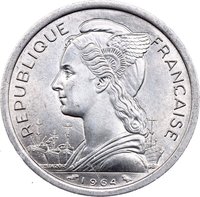
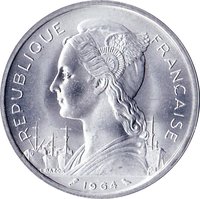
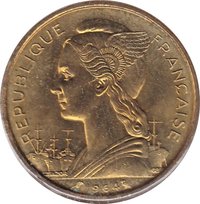
Liberty left, ships behind, date below.
Inscription:
REPUBLIQUE FRANÇAISE
L.BAZOR GB
1964
L.BAZOR GB
1964
Translation:
FRENCH REPUBLIC
L.BAZOR GB
1964
L.BAZOR GB
1964
Script: Latin
Language: French
Engravers: Lucien Georges Bazor, GB
Reverse
Description:
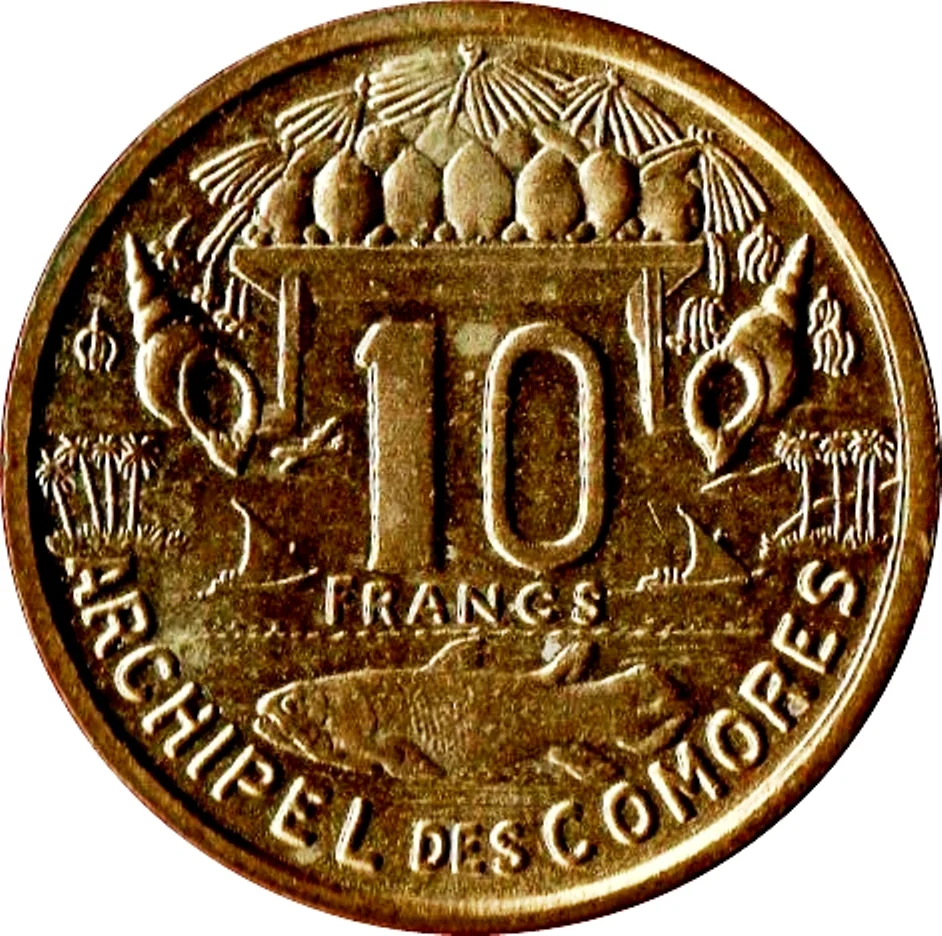
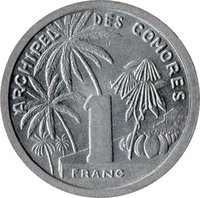
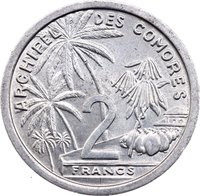
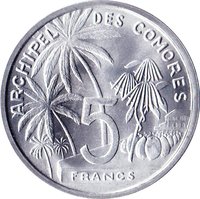
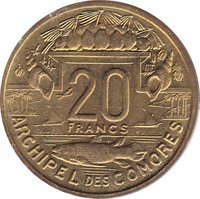
Plants on mantle, shells on sides, fish below, name centered.
Inscription:
10
FRANCS
ARCHIPEL DES COMORES
FRANCS
ARCHIPEL DES COMORES
Translation:
10 Francs
Comoros Archipelago
Comoros Archipelago
Script: Latin
Language: French
Engravers: Lucien Georges Bazor, GB
Edge
Plain
Categories
| Symbol> Allegory |
| Animal> Fish |
| Symbol> Shell |
| Plant> Tree |
| Symbol> Phrygian cap |
| Transportation> Watercraft |
Mints
| Name | Mark |
|---|---|
| Monnaie de Paris | — |
Mintings
| Year | Mint Mark | Mintage | Quality | Collection |
|---|---|---|---|---|
| 1964 | — | 600,000 |
Historical background
In 1964, the Comoro Islands were a French overseas territory, and as such, their currency situation was an extension of France's colonial monetary system. The official currency was the CFA franc, specifically the CFA franc (KMF) issued by the Institut d'Émission des Départements d'Outre-Mer (IEDOM). This placed the islands within the "Franc Zone," a framework guaranteeing currency convertibility with the French franc at a fixed and guaranteed parity. This arrangement provided monetary stability and facilitated trade primarily with France, but it also meant the Comoros had no independent monetary policy, with its currency supply and value decisions made in Paris.
The economy underpinning this currency was overwhelmingly agricultural and underdeveloped, reliant on the export of a few plantation crops like vanilla, ylang-ylang, and cloves. The fixed exchange rate of the CFA franc benefited the French import-export companies and the small planter class by simplifying transactions with the metropole. However, it also tied the islands' economic fortunes directly to France and did little to stimulate diversified local industry or broader regional trade within the Indian Ocean.
This monetary context in 1964 existed on the cusp of significant political change. While there were growing local voices advocating for greater autonomy or independence, the currency system remained a tangible symbol of colonial integration. The fixed CFA franc regime would continue even after the Comoros unilaterally declared independence in 1975, persisting until the country eventually established its own central bank and introduced the independent Comorian franc in 1981, though still maintaining a fixed link to the French franc.
The economy underpinning this currency was overwhelmingly agricultural and underdeveloped, reliant on the export of a few plantation crops like vanilla, ylang-ylang, and cloves. The fixed exchange rate of the CFA franc benefited the French import-export companies and the small planter class by simplifying transactions with the metropole. However, it also tied the islands' economic fortunes directly to France and did little to stimulate diversified local industry or broader regional trade within the Indian Ocean.
This monetary context in 1964 existed on the cusp of significant political change. While there were growing local voices advocating for greater autonomy or independence, the currency system remained a tangible symbol of colonial integration. The fixed CFA franc regime would continue even after the Comoros unilaterally declared independence in 1975, persisting until the country eventually established its own central bank and introduced the independent Comorian franc in 1981, though still maintaining a fixed link to the French franc.
🌱 Fairly Common