

5 cents – The Bahamas
Add to wishlist
Bahamas
Context
Material
References
KM: #
Numista: #73629
Value
Exchange value: 0.05 BSD
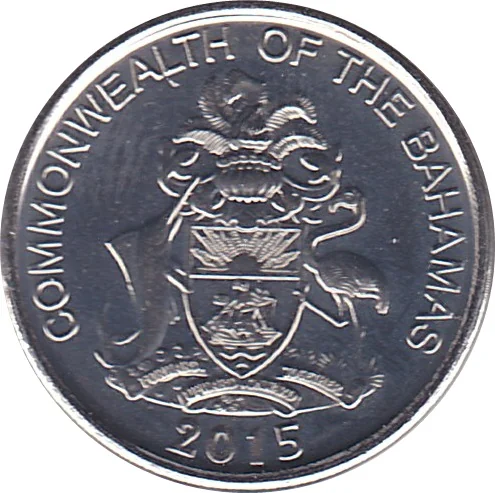
Obverse
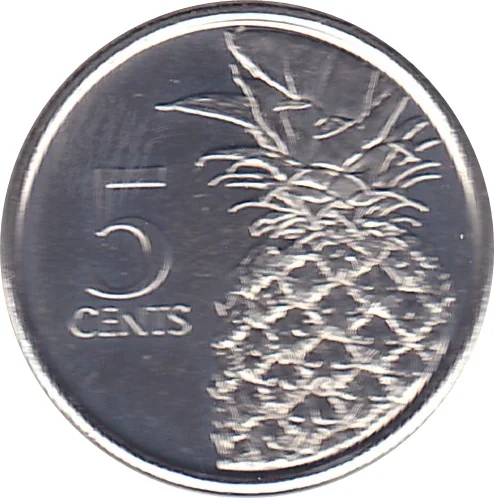
Reverse
Description:
Pineapple (Ananas comosus), denomination to the left.
Inscription:
5
CENTS
CENTS
Script: Latin
Edge
Plain
Mints
| Name | Mark |
|---|---|
| Royal Canadian Mint of Winnipeg | — |
Mintings
| Year | Mint Mark | Mintage | Quality | Collection |
|---|---|---|---|---|
| 2015 | — | — | ||
| 2016 | — | — | ||
| 2024 | — | — |
Historical background
In 2015, The Bahamas' currency situation was defined by its long-standing and stable peg to the US dollar, a policy maintained by the Central Bank of The Bahamas (CBOB) since 1973. The fixed exchange rate of B$1.00 to US$1.00 provided critical stability for the nation's tourism and financial services sectors, its two largest economic pillars. This peg fostered investor confidence, controlled inflation, and simplified transactions for the millions of American visitors, who could use US dollars interchangeably with Bahamian dollars throughout the islands.
However, this stability existed against a backdrop of persistent economic challenges. The country was still grappling with the aftermath of the 2008 global financial crisis and the lingering effects of major hurricanes, which had strained public finances and contributed to high levels of government debt, exceeding 65% of GDP. While foreign reserves were adequate to defend the peg, there was ongoing pressure from credit rating agencies and international bodies like the IMF to implement fiscal consolidation reforms. The need to bolster reserves and maintain the peg was a central concern for monetary policy.
Consequently, the CBOB's focus in 2015 was on careful management to preserve the currency regime. Key strategies included modest interest rate adjustments to manage liquidity and encourage foreign currency inflows, alongside advocating for stronger fiscal discipline from the government. The overall situation was one of vigilant stability—the peg was not under immediate threat, but sustaining it required navigating the tightrope of supporting a sluggish economic recovery while ensuring sufficient reserves to maintain unwavering confidence in the one-to-one link with the US dollar.
However, this stability existed against a backdrop of persistent economic challenges. The country was still grappling with the aftermath of the 2008 global financial crisis and the lingering effects of major hurricanes, which had strained public finances and contributed to high levels of government debt, exceeding 65% of GDP. While foreign reserves were adequate to defend the peg, there was ongoing pressure from credit rating agencies and international bodies like the IMF to implement fiscal consolidation reforms. The need to bolster reserves and maintain the peg was a central concern for monetary policy.
Consequently, the CBOB's focus in 2015 was on careful management to preserve the currency regime. Key strategies included modest interest rate adjustments to manage liquidity and encourage foreign currency inflows, alongside advocating for stronger fiscal discipline from the government. The overall situation was one of vigilant stability—the peg was not under immediate threat, but sustaining it required navigating the tightrope of supporting a sluggish economic recovery while ensuring sufficient reserves to maintain unwavering confidence in the one-to-one link with the US dollar.
🌱 Very Common