

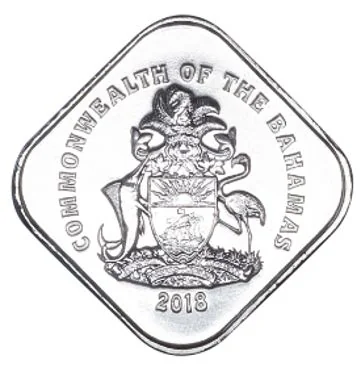
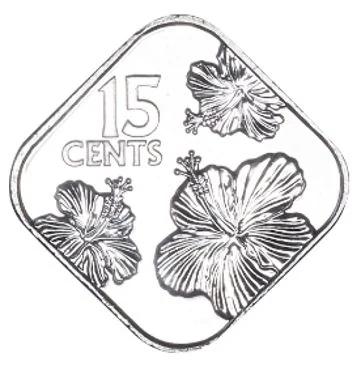
15 cents – The Bahamas
Add to wishlist
Bahamas
Context
Material
Weight: 6.48 g
Thickness: 2 mm
Shape: Square with rounded corners
Magnetic: Yes
Technique: Milled
Alignment: Medal alignment
flip
References
KM: #
Numista: #159114
Value
Exchange value: 0.15 BSD
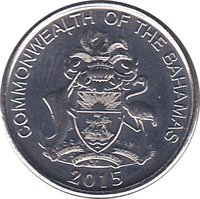
Obverse
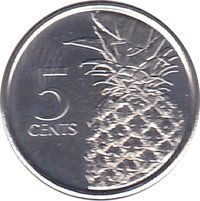
Reverse
Edge
Mints
| Name | Mark |
|---|---|
| Royal Mint | — |
Mintings
| Year | Mint Mark | Mintage | Quality | Collection |
|---|---|---|---|---|
| 2018 | — | — |
Historical background
In 2018, The Bahamas' currency situation was defined by its long-standing and stable peg to the US dollar, a policy maintained by the Central Bank of The Bahamas (CBOB) since 1973. The fixed exchange rate of B$1.00 to US$1.00 provided crucial stability for the nation's tourism- and import-dependent economy, anchoring investor confidence and controlling inflation. However, this stability required consistent foreign exchange reserves, which were under periodic pressure due to the country's high trade deficit and fiscal challenges, including significant government debt.
The year saw the CBOB actively managing these pressures. While reserves were adequate, concerns lingered about their vulnerability to external shocks, such as natural disasters or a downturn in the key tourism sector. The government's efforts to implement fiscal reforms, including the introduction of Value-Added Tax (VAT), aimed to strengthen public finances and, by extension, support the currency peg. Nevertheless, the high level of non-performing loans within the domestic banking sector remained a latent risk to financial stability and the efficient flow of foreign currency.
Looking forward, 2018 was also a year of modernization, with growing public and governmental discussion around the potential for a digital Bahamian currency. This dialogue set the stage for the future launch of the "Sand Dollar," the world's first central bank digital currency (CBDC) for a whole nation, which was piloted the following year. Thus, the 2018 currency landscape was one of traditional peg management amid fiscal stresses, while simultaneously laying the groundwork for a groundbreaking digital evolution in the Bahamian monetary system.
The year saw the CBOB actively managing these pressures. While reserves were adequate, concerns lingered about their vulnerability to external shocks, such as natural disasters or a downturn in the key tourism sector. The government's efforts to implement fiscal reforms, including the introduction of Value-Added Tax (VAT), aimed to strengthen public finances and, by extension, support the currency peg. Nevertheless, the high level of non-performing loans within the domestic banking sector remained a latent risk to financial stability and the efficient flow of foreign currency.
Looking forward, 2018 was also a year of modernization, with growing public and governmental discussion around the potential for a digital Bahamian currency. This dialogue set the stage for the future launch of the "Sand Dollar," the world's first central bank digital currency (CBDC) for a whole nation, which was piloted the following year. Thus, the 2018 currency landscape was one of traditional peg management amid fiscal stresses, while simultaneously laying the groundwork for a groundbreaking digital evolution in the Bahamian monetary system.
🌟 Uncommon