

1 franc – Réunion
Add to wishlist
France
Context
Material
Diameter: 26 mm
Weight: 4.48 g
Thickness: 1.8 mm
Shape: Round
Composition: Copper-nickel
Technique: Milled
Alignment: Coin alignment
flip
References
KM: #
Numista: #11272
Obverse
Description:
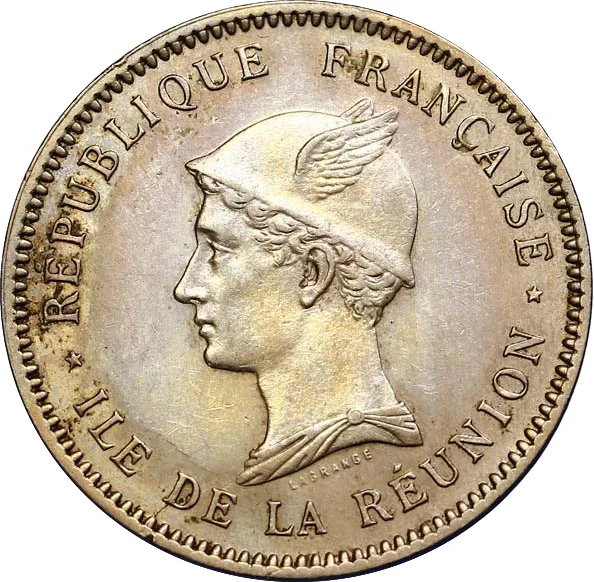
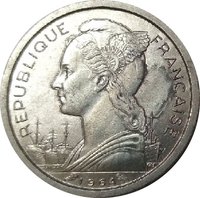
Mercure's left-facing head in winged helmet. Island and country names around rim.
Inscription:
RÉPUBLIQUE FRANÇAISE
LAGRANGE
* ILE DE LA RÉUNION *
LAGRANGE
* ILE DE LA RÉUNION *
Translation:
FRENCH REPUBLIC
LAGRANGE
* REUNION ISLAND *
LAGRANGE
* REUNION ISLAND *
Script: Latin
Language: French
Engraver: Jean Lagrange
Reverse
Description:
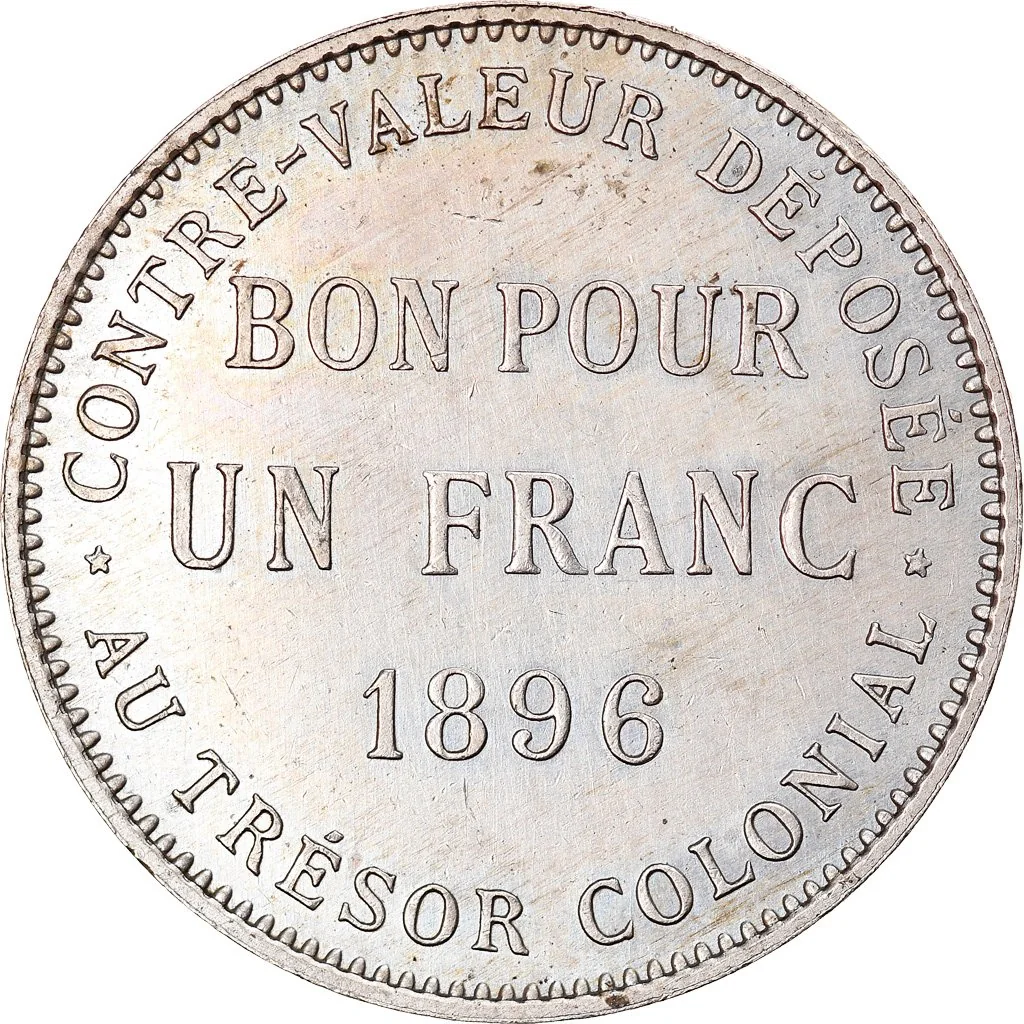
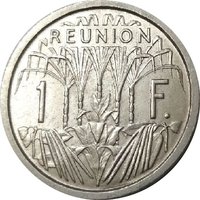
Face value, year.
Inscription:
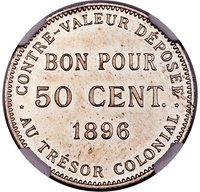
BON POUR UN FRANC
1898
CONTRE-VALEUR DÉPOSÉE
* AU TRÉSOR COLONIAL *
1898
CONTRE-VALEUR DÉPOSÉE
* AU TRÉSOR COLONIAL *
Translation:
Good for One Franc
1898
Counter-Value Deposited
* At the Colonial Treasury *
1898
Counter-Value Deposited
* At the Colonial Treasury *
Script: Latin
Language: French
Engraver: Jean Lagrange
Edge
Plain
Mintings
| Year | Mint Mark | Mintage | Quality | Collection |
|---|---|---|---|---|
| 1896 | — | 500,000 |
Historical background
In 1896, Réunion was a French colony operating under a complex and often problematic dual-currency system. The official currency was the French franc, which was used for government transactions, major commerce, and trade with the metropole. However, alongside the franc, the British gold sovereign and the Indian rupee circulated widely and were often preferred in everyday local trade and for paying agricultural labourers, particularly on the sugar plantations that dominated the island's economy. This created a fluctuating exchange environment where the value of these foreign coins against the franc was subject to local market pressures and speculation.
The situation was a legacy of Réunion's position in Indian Ocean trade networks. The rupee's prevalence stemmed from centuries of commerce with British India, while the sovereign's introduction was linked to financing the sugar boom and the need for a reliable gold standard. The system was inefficient and unstable; merchants and planters faced constant exchange risks, and the colonial administration struggled to collect taxes in a stable currency. The unofficial but dominant circulation of foreign coinage effectively limited French monetary sovereignty and complicated economic planning.
The year 1896 marked a turning point, as it was then that the French government enacted a decisive monetary reform for its colony. A law was passed to demonetize the British sovereign and the Indian rupee, making the French franc the sole legal tender. This move was part of a broader imperial policy to standardize currency across the French empire, ensuring tighter economic control and integration. The transition, however, was not instantaneous and involved a managed withdrawal of foreign coins, finally bringing Réunion's monetary system into a unified and state-controlled framework after decades of hybrid circulation.
The situation was a legacy of Réunion's position in Indian Ocean trade networks. The rupee's prevalence stemmed from centuries of commerce with British India, while the sovereign's introduction was linked to financing the sugar boom and the need for a reliable gold standard. The system was inefficient and unstable; merchants and planters faced constant exchange risks, and the colonial administration struggled to collect taxes in a stable currency. The unofficial but dominant circulation of foreign coinage effectively limited French monetary sovereignty and complicated economic planning.
The year 1896 marked a turning point, as it was then that the French government enacted a decisive monetary reform for its colony. A law was passed to demonetize the British sovereign and the Indian rupee, making the French franc the sole legal tender. This move was part of a broader imperial policy to standardize currency across the French empire, ensuring tighter economic control and integration. The transition, however, was not instantaneous and involved a managed withdrawal of foreign coins, finally bringing Réunion's monetary system into a unified and state-controlled framework after decades of hybrid circulation.

⭐ Somewhat Rare