

5 Dinars – Yugoslavia
Circulating commemorative coins
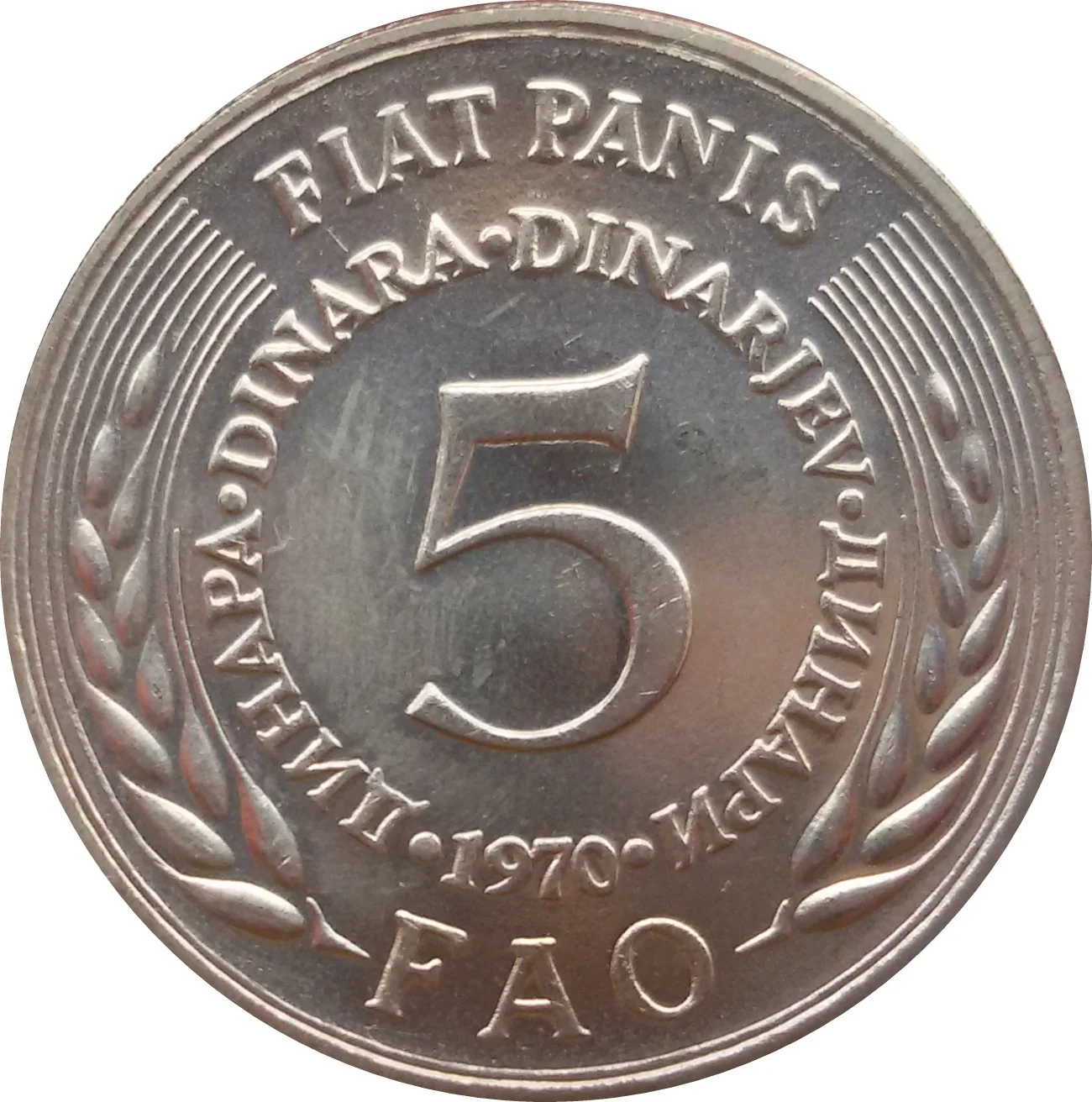
Commemoration: FAO
Context
Year: 1970
Issuer: Yugoslavia
Issuing organization: National Bank of Yugoslavia
Period:
(1963—1992)
Currency:
(1966—1989)
Demonetization: 30 September 1988
Total mintage: 500,000
Material
References
KM: #Click to copy to clipboard56
Numista: #7333
Value
Exchange value: 5 YUD
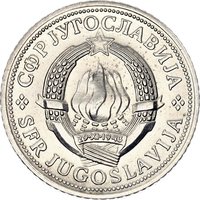
Obverse
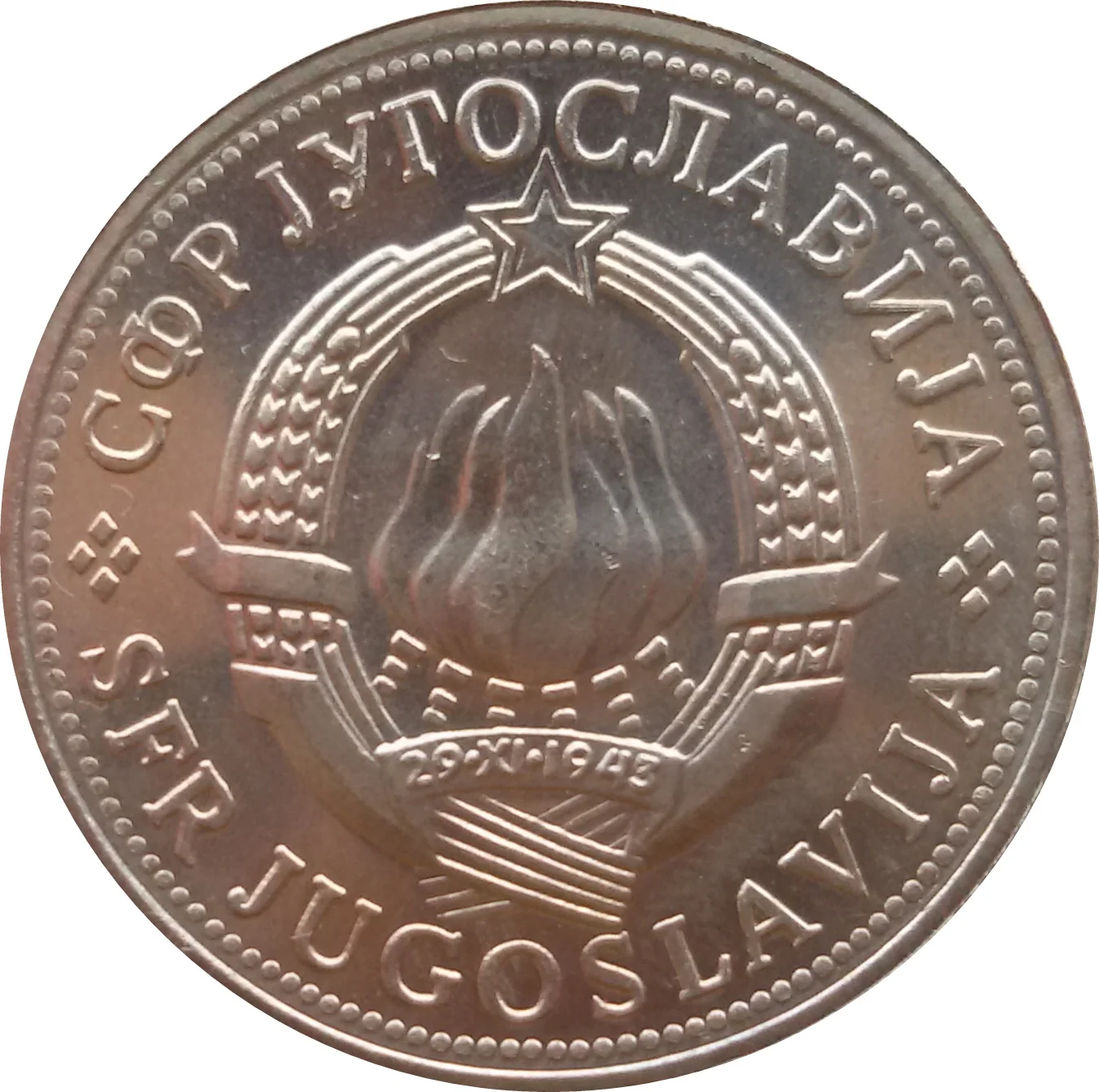
Description:
State symbol
Inscription:
СФР ЈУГОСЛАВИЈА
29·XI·1943
SFR JUGOSLAVIJA
29·XI·1943
SFR JUGOSLAVIJA
Translation:
SOCIALIST FEDERAL REPUBLIC OF YUGOSLAVIA
29·XI·1943
29·XI·1943
Language: Serbian
Designer: Dragomir Mileusnić
Reverse
Edge
Reeded
Categories
| Symbol> Wreath |
| Organization> FAO |
| Symbols> Coat of Arms |
Mints
| Name | Mark |
|---|---|
| Belgrade | — |
Mintings
| Year | Mint Mark | Mintage | Quality | Collection |
|---|---|---|---|---|
| 1970 | — | 500,000 |
Historical background
By 1970, the Yugoslav dinar existed within a unique and increasingly strained economic model known as "market socialism." The currency was not freely convertible and its value was officially set by the state, but the economy was decentralized, with significant autonomy granted to worker-managed enterprises in the six constituent republics. This created a complex duality: a fixed official exchange rate for essential imports and debt servicing, alongside a more realistic "tourist rate" and a thriving black market that reflected the dinar's true depreciating value. The system was underpinned by heavy foreign borrowing to finance development and consumption, masking underlying inefficiencies.
The fundamental pressure on the currency stemmed from Yugoslavia's persistent trade deficits and rampant inflation. Worker-managed enterprises, focused on maintaining employment and wages, had little incentive for fiscal discipline, leading to excessive money creation by the republic-level banking systems to cover losses. This fueled domestic inflation, which in turn made Yugoslav exports less competitive internationally, worsening the trade balance. The fixed official dinar rate thus became increasingly overvalued, distorting trade and encouraging capital flight.
Recognizing these systemic flaws, the Yugoslav leadership initiated a major economic reform in 1965 aimed at liberalization, including a significant devaluation of the dinar. However, by 1970, the results were mixed. While some export competitiveness was briefly restored, the core structural problems remained unresolved. The decentralized political structure prevented coherent monetary control, and inflationary financing continued. Consequently, 1970 found the dinar in a precarious state, caught between the legacy of administrative controls and the pressures of a partially liberalized, deficit-ridden economy, foreshadowing the severe instability that would escalate in the following decades.
The fundamental pressure on the currency stemmed from Yugoslavia's persistent trade deficits and rampant inflation. Worker-managed enterprises, focused on maintaining employment and wages, had little incentive for fiscal discipline, leading to excessive money creation by the republic-level banking systems to cover losses. This fueled domestic inflation, which in turn made Yugoslav exports less competitive internationally, worsening the trade balance. The fixed official dinar rate thus became increasingly overvalued, distorting trade and encouraging capital flight.
Recognizing these systemic flaws, the Yugoslav leadership initiated a major economic reform in 1965 aimed at liberalization, including a significant devaluation of the dinar. However, by 1970, the results were mixed. While some export competitiveness was briefly restored, the core structural problems remained unresolved. The decentralized political structure prevented coherent monetary control, and inflationary financing continued. Consequently, 1970 found the dinar in a precarious state, caught between the legacy of administrative controls and the pressures of a partially liberalized, deficit-ridden economy, foreshadowing the severe instability that would escalate in the following decades.
🌱 Common