

2 shillings – Zambia
Add to wishlist
Zambia
Obverse
Description:
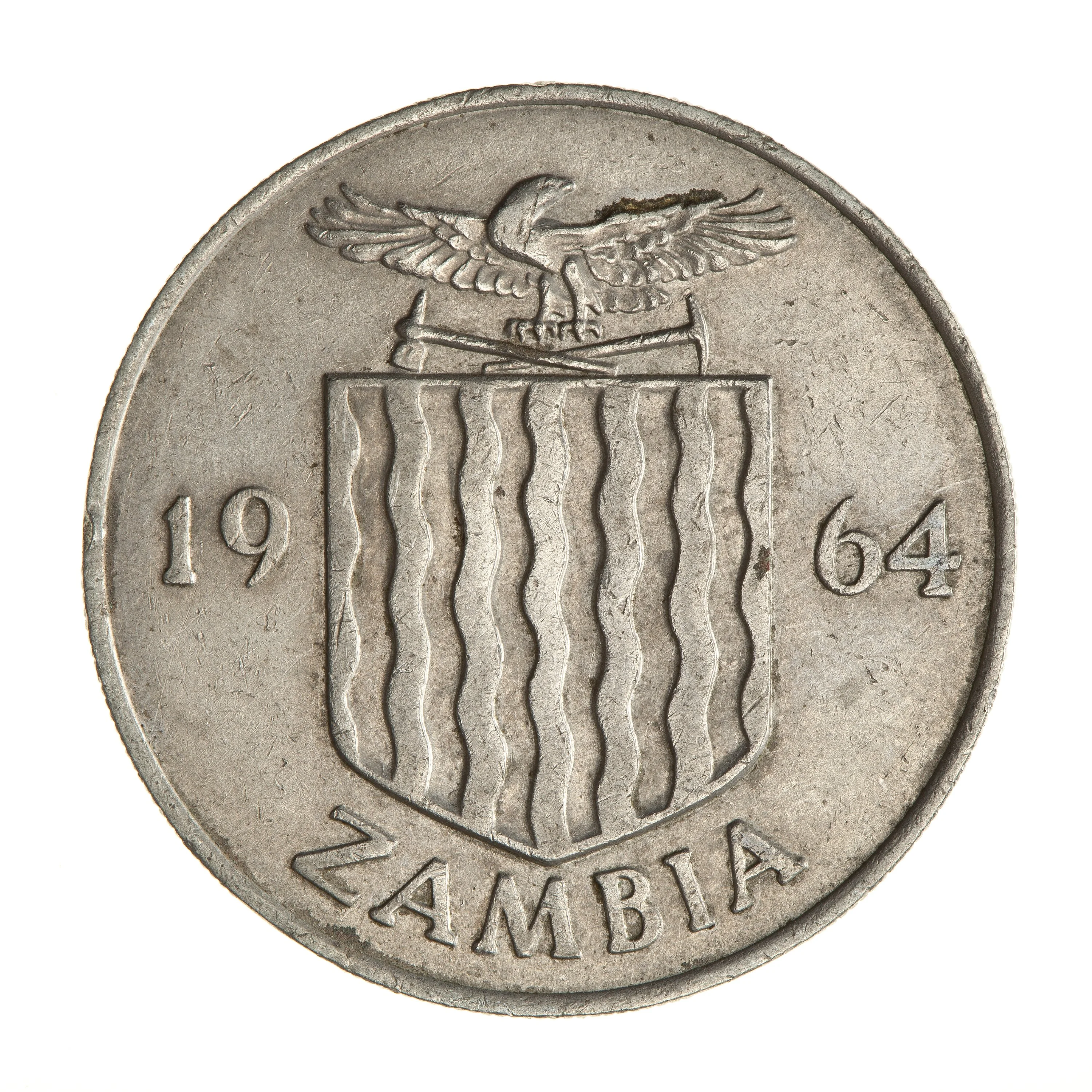
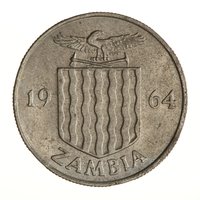
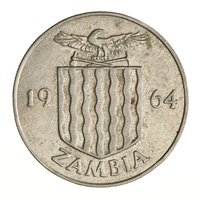
Zambia's national emblem divides the date.
Inscription:
19 64
ZAMBIA
ZAMBIA
Script: Latin
Designer: Norman Sillman
Reverse
Description:
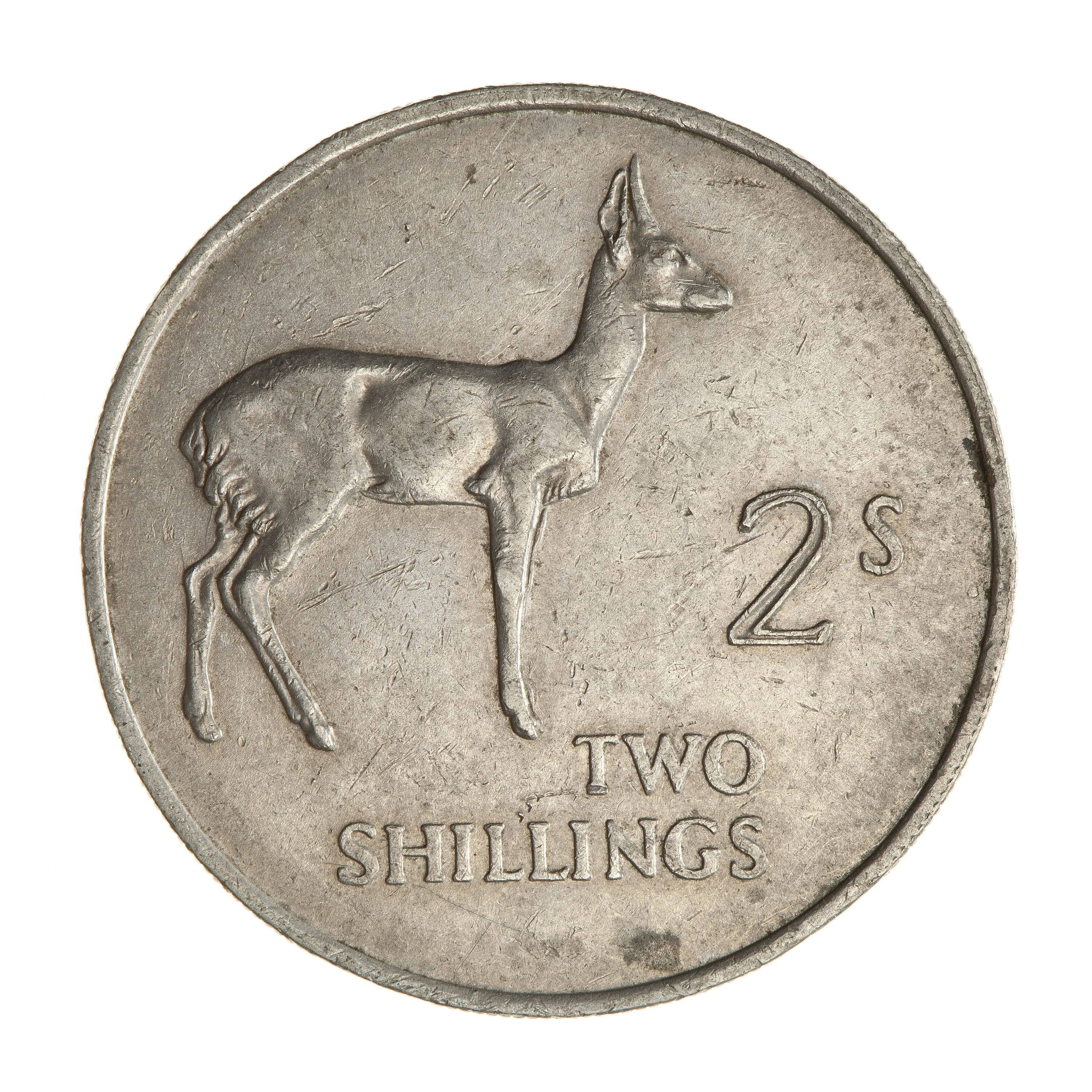
Bohor Reedbuck details.
Inscription:
2S
TWO
SHILLINGS
TWO
SHILLINGS
Script: Latin
Designer: Norman Sillman
Edge
Six reeded segments.
Mints
| Name | Mark |
|---|---|
| Royal Mint (Tower Hill) | — |
Mintings
| Year | Mint Mark | Mintage | Quality | Collection |
|---|---|---|---|---|
| 1964 | — | 7,000,000 | ||
| 1964 | — | 5,000 | Proof |
Historical background
Upon gaining independence in October 1964, Zambia inherited a currency system deeply integrated with that of Southern Rhodesia (now Zimbabwe) and Nyasaland (now Malawi). This was the legacy of the Federation of Rhodesia and Nyasaland (1953-1963), which had used the Rhodesia and Nyasaland pound. Although the Federation had dissolved in 1963, the three nations continued to share a common currency board and the pound as legal tender, with notes and coins issued by the Bank of Rhodesia and Nyasaland, headquartered in Salisbury (Harare).
This arrangement posed an immediate political and economic dilemma for Kenneth Kaunda's new government. Economically, it provided stability, but politically, it was untenable to have Zambia's currency controlled from a foreign capital, particularly one governed by a white-minority regime that was moving towards a Unilateral Declaration of Independence (UDI). Zambia's leadership feared that Southern Rhodesia could manipulate the shared currency to destabilize the young nation or that Zambia's reserves held in Salisbury could be frozen.
Consequently, one of the new government's most urgent sovereign acts was to establish a national currency. Plans were swiftly set in motion to create the Bank of Zambia and introduce the Zambian pound, which would be pegged at par to the British pound sterling. This decisive move, achieved in 1965, was a critical step in asserting economic independence and insulating the nation from the impending political crisis with Southern Rhodesia.
This arrangement posed an immediate political and economic dilemma for Kenneth Kaunda's new government. Economically, it provided stability, but politically, it was untenable to have Zambia's currency controlled from a foreign capital, particularly one governed by a white-minority regime that was moving towards a Unilateral Declaration of Independence (UDI). Zambia's leadership feared that Southern Rhodesia could manipulate the shared currency to destabilize the young nation or that Zambia's reserves held in Salisbury could be frozen.
Consequently, one of the new government's most urgent sovereign acts was to establish a national currency. Plans were swiftly set in motion to create the Bank of Zambia and introduce the Zambian pound, which would be pegged at par to the British pound sterling. This decisive move, achieved in 1965, was a critical step in asserting economic independence and insulating the nation from the impending political crisis with Southern Rhodesia.
🌱 Common